

Ford Explorer Sport Trac Lift Kit Guide (1995–2005)
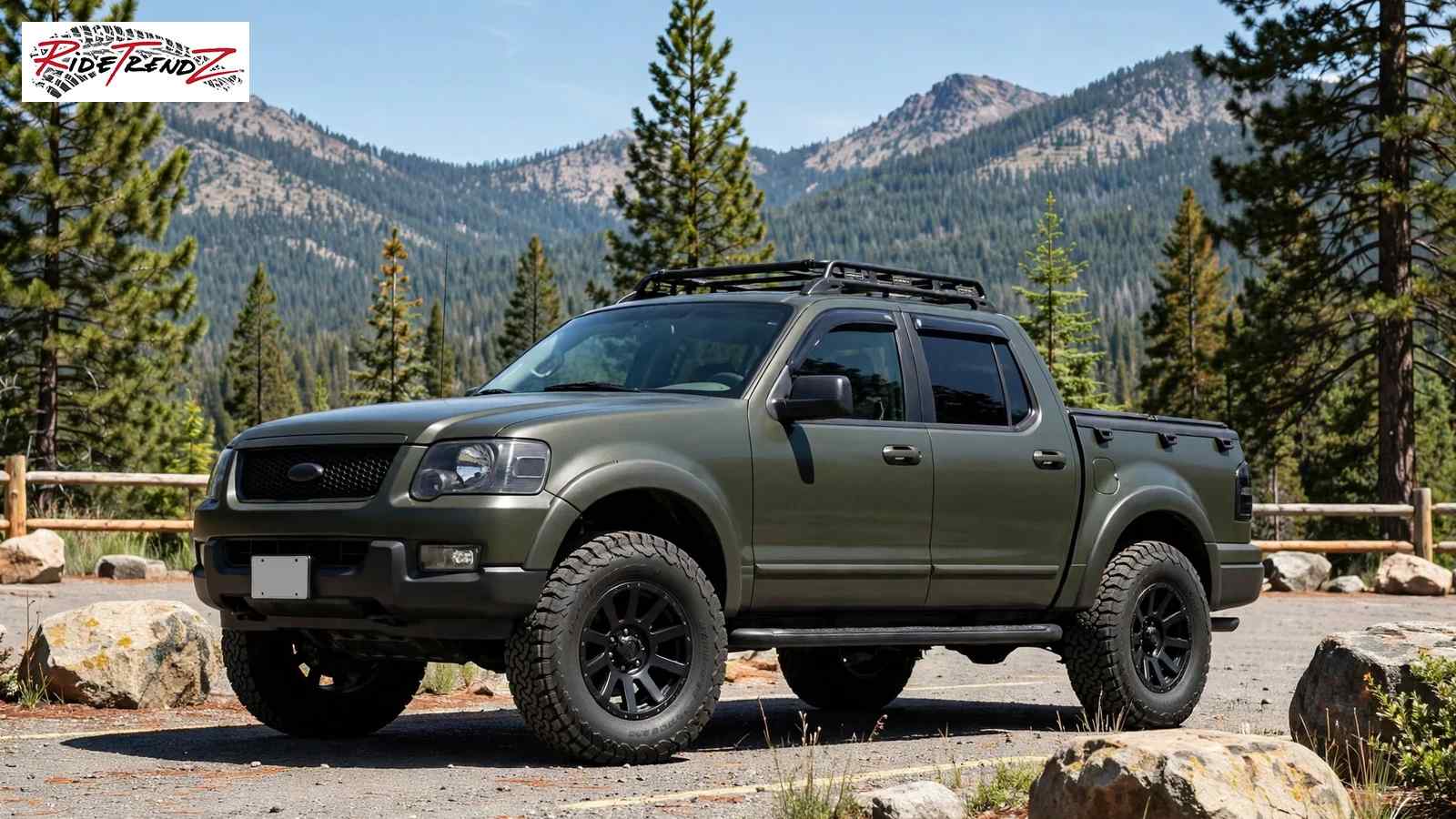
The ford explorer sport trac lift kit depends on one thing most listings never explain, the torsion bar front end your truck has. This guide from Ridetrendz walks through keys, shackles, body lift and tire choices for the 1995 to 2005 trucks, starting with the rear adjustable lift leveling shackle kit many owners fit. Updated for the 2026 build season, it covers every ford explorer sport trac lift kit route.
Quick Summary
- A ford explorer sport trac lift kit lifts the 1995 to 2005 Explorer and Sport Trac with torsion keys front and shackles rear.
- The torsion twist gives 1 to 2 inches of front lift from stock keys, while forged keys open up 1 to 3 inches with adjustability.
- A rear leveling lift kit with adjustable shackles adds 1 to 2 inches at the back and levels the stance on 2wd and 4wd trucks.
- Most owners run 31s on a mild lift, 33s with trimming, and 35s only with tall kits and gearing work.
- Every front lift on these trucks needs a wheel alignment after the install, because torsion changes move toe and camber out of spec.
What a lift changes on the 1995 to 2005 Explorer platform?
A lift on this platform raises the body and tire clearance without changing the basic layout Ford built, independent front suspension with torsion bars and a solid rear axle on leaf springs. Clearance grows under the frame, approach angles improve, and bigger tires fit the arches. Our explainer on how a truck suspension lift kit works covers the moving parts for beginners.
Second generation Explorer and the 95-01 torsion bar layout
The 95-01 Explorer swapped the old twin traction beam front end for a short and long arm independent setup sprung by torsion bars, and that change defines every lift option today. The rear kept a solid axle on leaf springs, so rear lift stays simple. Compare generations in our truck suspension basics for beginners notes before ordering.
The 01-05 Sport Trac and its pickup bed layout
The 2001-2005 Ford Explorer Sport Trac stretched the Explorer wagon into a four door pickup with a short composite bed, keeping the torsion bar front end and leaf spring rear axle. That shared hardware is why one ford explorer sport trac lift kit family covers both body styles. Owners get wagon comfort and real cargo space, which explains their loyal following.
Why the 2002 to 2005 Explorer SUV needs a different plan?
Ford redesigned the Explorer wagon for 2002 with independent suspension at both ends and coil springs instead of the torsion bar and leaf spring pairing. Those wagons cannot use shackles or torsion keys, and their lift options are spacer based and limited. The Sport Trac kept the older layout through 2005, so confirm which truck you own before copying wagon builds.
Explorer features that decide your lift route
The explorer features that matter here are not trim badges or interior options, they are the drivetrain, front spring type and rear axle hardware your truck left the factory with. Two trucks that look identical can need completely different kits, so read the 1995 to 2005 lift kit listing against your build plate before ordering.
Explorer 4wd hardware versus 2wd hardware
An explorer 4wd model carries a transfer case, a front differential and CV axles that all react when the front end rises, while a 2wd truck skips it and tolerates a touch more front lift. Both share the same torsion bars and rear leaves. Our comparison of 2wd versus 4wd lift options shows how drivetrain changes the plan.
Sport Trac 4x4 and Sport Trac 2wd fitment differences
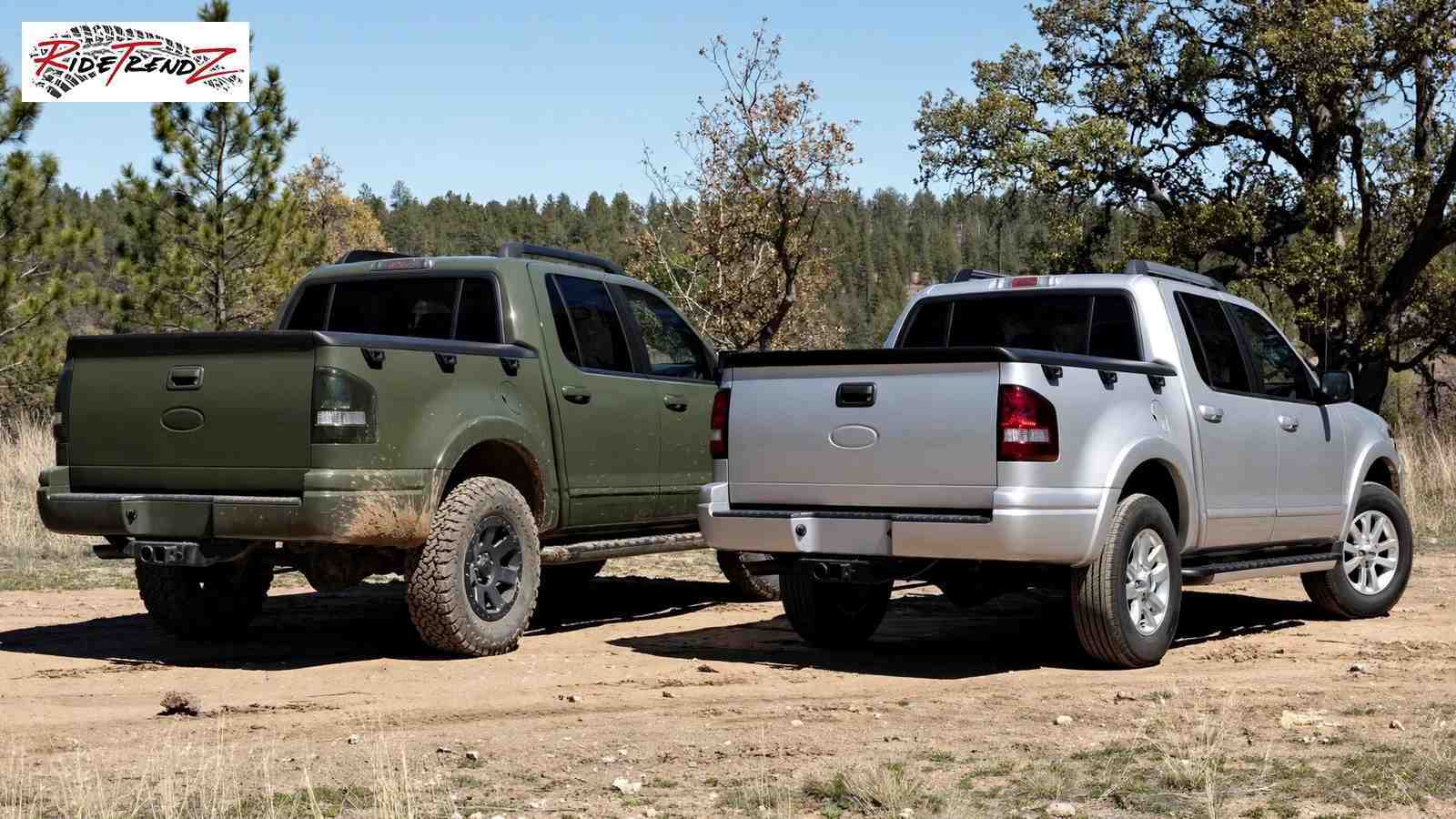
A ford explorer sport trac 2wd and its 4x4 brother share the same frame and suspension points, and the difference shows in front axle clearance and how far the torsion bars can be cranked safely. The 4x4 route usually pairs keys with rear shackles, while 2wd owners often level the rear first. Check the front axle before choosing.
The torsion bar front end explained
Torsion bars are long steel rods that twist to spring the front wheels, anchored to the lower control arms at one end and to crossmember keys at the other. Turning the adjuster bolt preloads the bar and raises ride height, which is why these trucks lift differently from coil spring rivals. The Ford Ranger lift kit guide shows the same layout at work.
How torsion bars hold the front end up?
Each torsion bar works like a spring unrolled into a rod, storing energy in twist instead of compression. The key at the frame end sets the bar index, and the adjuster bolt tunes height. Because the bar rate stays fixed, cranking preload raises the truck but never softens it. Worn bars sag, so a tired truck may measure low before lift work.
The torsion twist, free front lift and its limits
The torsion twist is the free mod on these trucks, tightening the adjuster bolts for 1 to 2 inches of front lift from the stock keys. It costs nothing but time and an alignment, yet it firms the ride and eats droop travel. The ford explorer community repeats the warning, and the pros and cons below keep the balance honest.
Pros
- The twist costs nothing beyond an alignment and basic hand tools.
- It levels the factory rake and clears 31s on most builds.
- It is fully reversible, so the truck can return to stock height.
Cons
- Ride quality firms up because the bars sit deeper into their travel.
- Ball joint and CV angles grow steeper and can shorten service life.
- Stock keys run out of adjustment on sagging high mile bars.
Forged torsion keys for front 3 inch potential
Forged torsion keys reindex the bar so the adjuster reaches its range sooner, opening a 3 inch front lift without maxing the hardware. A forged steel key with a clean hex broach that matches the bar, keeping thread engagement healthy at taller settings. The Dakota torsion keys versus coil spacers guide explains the same key logic on a rival truck.
Rear lift options, shackles and add-a-leaf springs
The rear of every 95-05 Explorer and Sport Trac rides on leaf springs over a solid axle, so rear lift comes from longer shackles, an add-a-leaf, or both. Shackles are the gentle option because they keep the factory spring rate, while an add-a-leaf also raises load capacity. A rear leveling kit for ford trucks does its work here.
Adjustable shackles for rear 2 inch lift settings
Adjustable shackles carry bolt holes along their length, so one part offers rear 1 inch or rear 2 inch settings without buying twice. Lift at the axle runs to roughly half the added shackle length, and at the longest setting these shackles lift rear 2 inches. Greasable bolts and thick side plates matter more than colour on any 1"-2" adjustable set.
The add-a-leaf option and the ford explorer sport trac add-a-leaf route
A ford explorer sport trac add-a-leaf inserts one extra steel leaf into the rear spring pack, arching the pack for lift and adding load support for towing or a loaded bed. The trade is a firmer empty ride, because spring rate climbs with the extra leaf. Owners who haul often accept that trade, while daily drivers usually prefer shackles.
Rear leveling lift kit steel parts and hardware checks
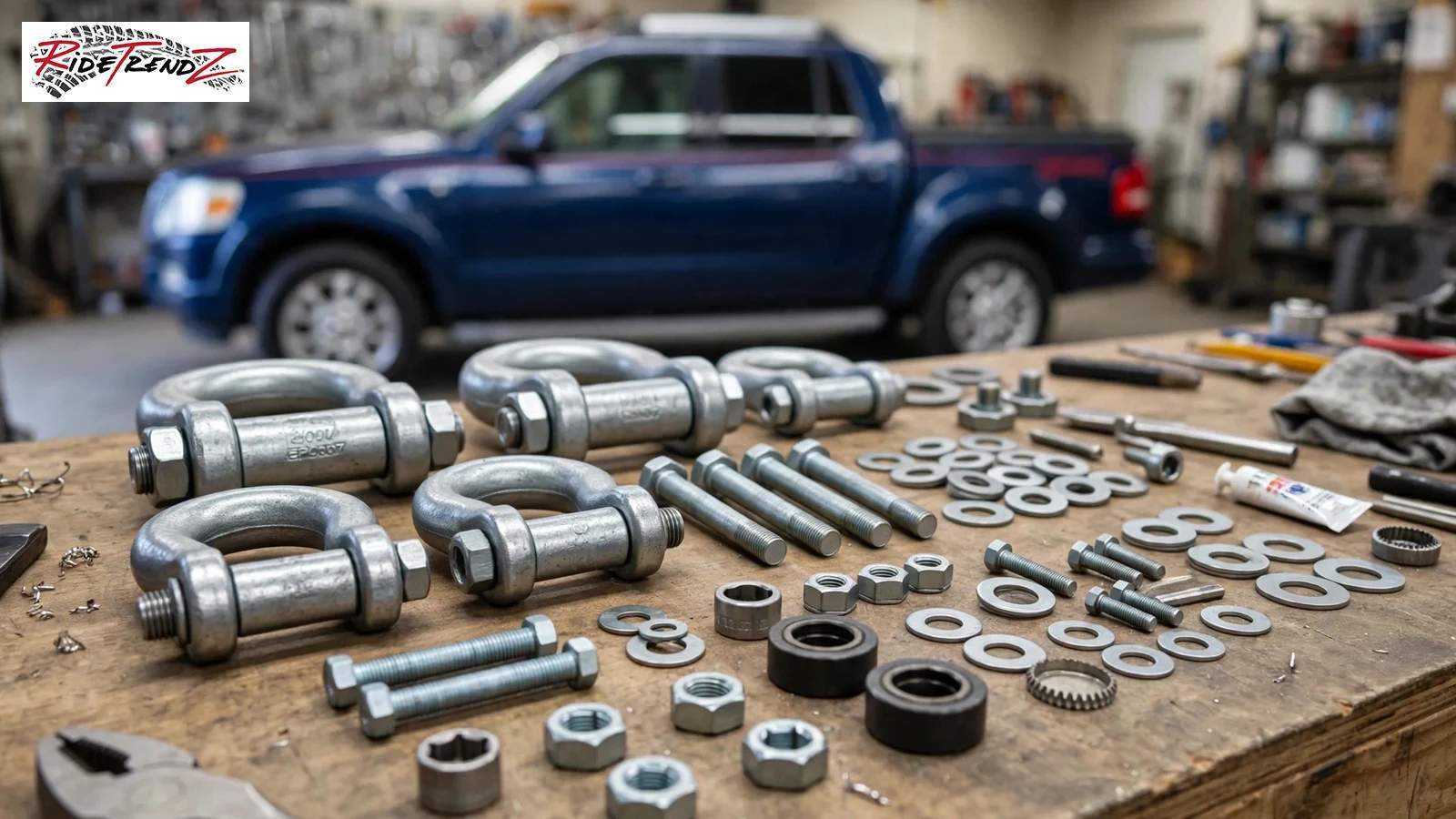
A rear leveling lift kit steel shackle set should arrive with grade marked bolts, sleeves and side plates thick enough to shrug off side loads on rutted trails. Check thread pitch against your factory hardware before the truck goes on stands, and confirm the bushings match your spring eye size. Our lift parts versus complete kit article helps you judge pieced parts.
Leveling kit versus full lift kit
A leveling kit raises only the front to match the rear, while a full ford explorer sport trac lift kit raises both ends and preserves some rake for towing. On these trucks the level comes from keys or a torsion twist, and the full lift adds rear shackles. Our head to head on lift kit versus leveling kit walks through the decision.
|
Method |
Front lift |
Rear lift |
Best for |
|
Torsion twist |
1 to 2 inches |
None |
Free level on a budget |
|
Forged torsion keys |
1 to 3 inches |
None |
Adjustable front lift |
|
Lift shackles |
None |
1 to 2 inches |
Rear lift and stance |
|
Add-a-leaf |
None |
1 to 2 inches |
Lift plus load support |
|
Full suspension kit |
1 to 3 inches |
1 to 2 inches |
Balanced front and rear lift |
|
Body lift |
1 to 3 inches |
1 to 3 inches |
Tire room without suspension change |
What a front 1.5 to 2 inch level does to stance?
A front 1.5 to 2 inch level removes most of the factory nose down rake these trucks wear, and the change reads bigger than the tape suggests. Headlight aim shifts up, so plan a check after the alignment. The leveling kit for ford explorer shoppers should measure both sides first, because torsion bars rarely sag evenly toward a 2 inch rear leveling target.
When a full lift beats a simple level?
A full lift wins when the plan includes bigger tires, a loaded bed or towing, because rear lift keeps the truck off its bump stops under weight. It also keeps headlights and handling closer to the design window. Our price guide on lifting a truck helps weigh cost, since labour and alignment often cost more than parts.
Body lift versus suspension lift
A body lift spaces the cab and bed upward off the frame on tall pucks, while a suspension lift raises the frame itself on the axles. Only the suspension route adds clearance under the frame rails, and only the body route leaves ride and steering geometry untouched. Our overview of suspension lift kit types and benefits covers the family tree.
What a body lift changes and what it leaves alone?
A body lift changes the relationship between body and frame, so bumpers, fan shrouds and shift linkages may need brackets or adjustment as the gap grows. It leaves the suspension, the gearing feel and the alignment as they were, which is its whole appeal. Gaps at the wheel wells show on some trucks, and gap guards exist for owners who care.
Combining a small body lift with suspension work
Combining a 1 or 2 inch body lift with a torsion twist and shackles is the classic budget recipe for these trucks, reaching tire clearance near a 2"-3 total gain without tall kit money. The work stacks, so plan a full weekend and fresh hardware for both jobs. Steering shaft angles and brake line slack still need respect.
Lift heights and tire sizes that actually fit
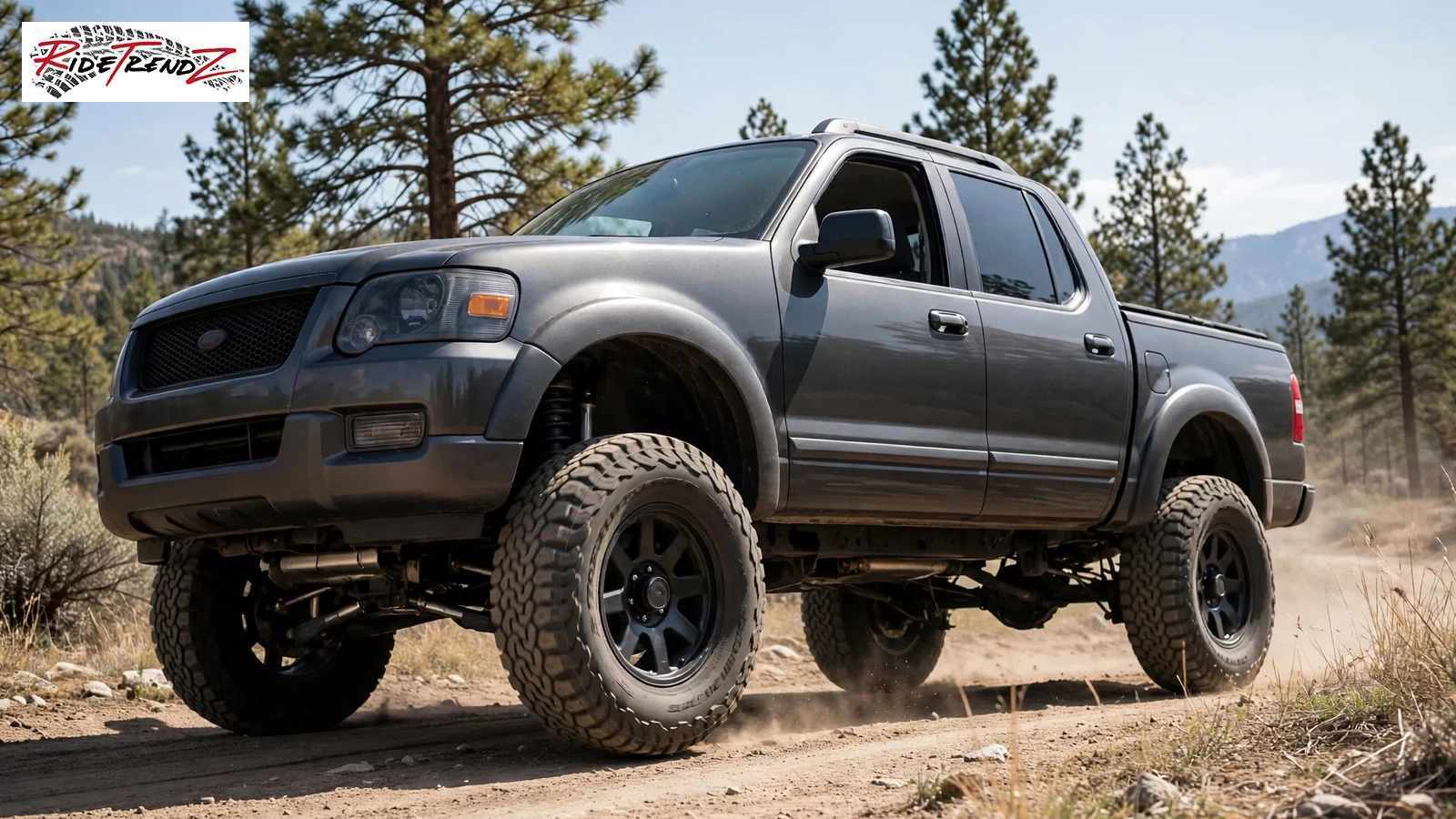
Tire fitment is where lift plans meet reality, because arch shape and torsion bar condition matter as much as lift height. The table under the next heading maps sizes to needs for the 95-05 platform, and a 2.5 inch setup covers most owners. A ford explorer sport trac lift kit chosen for the tire you run beats a tall kit bought for a tire you never fit.
|
Tire size |
Typical lift needed |
Notes |
|
31s |
Torsion twist or 2 inch kit |
Rub checks at full lock |
|
32s |
2 to 3 inch lift |
Light trimming likely |
|
33s |
3 inch lift |
Trimming and offset checks |
|
35s |
4 inch or taller kit |
Gearing work required |
Running 31s on a mild lift, the easy trail setup
The 31s setup is the sweet spot for these trucks, clearing with a torsion twist or a mild front 2 inch kit and keeping gearing, braking and steering feel close to stock. Trails open up, speedometer error stays small, and the spare still fits where Ford put it. For a daily Sport Trac on weekend dirt, the ford explorer community recommends this combination most.
Running 33s and the trimming they usually need
Stepping to 33s usually takes the full 3 inches of front lift plus rear lift to match, and most trucks still need minor trimming at the back of the front arch. Rub shows first at full lock on uneven ground, so test slowly before any trail run. Budget the alignment and a recheck of torsion settings after the first hundred miles.
Running 35s, Superlift benchmark kits and gearing reality
Fitting 35s moves the build into tall kit territory, where the Superlift 4 inch systems are the benchmark other brands get measured against, and Superlift remains a benchmark name rather than a Ridetrendz stocked line. Gearing, steering wear and braking all need honest planning at this size. Expect a project rather than a Saturday, and price the supporting work before ordering tires.
Install overview and realistic difficulty
Most owners fit keys and shackles at home with a floor jack, stands, a torsion bar unloading tool and patience, and the job rewards slow methodical work. The front half of any Sport Trac lift kit install is the fiddly half, while the rear shackles are simple bolt work. A good video guide helps first timers.
Tools and prep before you start
Gather the unloading tool, penetrating oil, a torque wrench, stands rated for the truck and a tape measure before anything comes apart. Measure all four corners on flat ground and write the numbers down, because they prove what the lift gained. Photograph the key position and bolt thread counts, since those photos settle arguments when the truck goes back together.
Install steps for keys and shackles in the right order
Follow the order below and the install stays calm, with the truck secure on stands and every fastener accounted for at each stage. Work one side at a time at the front so the other side stays as a reference for bolt positions, and never place any part of your body under a bar that is still loaded.
Install steps
- Measure and record stock fender heights on flat ground at all four corners.
- Lift the front, support the frame on stands, and unload each bar with the tool.
- Swap stock keys for forged keys, then set the adjuster bolts evenly on both sides.
- Lift the rear, support the axle, and swap stock shackles for the adjustable set.
- Lower the truck, roll it, then measure again and book the alignment.
Alignment and the first drive checks
Book the alignment before the install day, because a lifted torsion front end scrubs tires fast when toe is out. Ask the shop to check camber and caster against factory spec and to road test for pull. Recheck shackle and key bolt torque after one week, and read our lift shocks versus stock shocks guide if the front feels under damped.
Ride quality, handling and safety after the lift
A sensible lift keeps road manners friendly on this platform, because the suspension design itself never changes, only working angles and height. Push heights too far and the trade shows up as firmness, wander and steering wear. Treat the lift as one part of a package with shocks, alignment and tires, and these performance upgrades stay honest on a daily driver.
Shock length and when stock shocks run out of travel
Stock length shocks top out early once the front sits higher, because the shock becomes the droop limit instead of the suspension itself. A shock matched to the lifted height restores travel and calms the choppy ride many owners blame on the keys. Measure extended and compressed lengths at the new ride height, then compare against the listings before ordering.
Ball joint and CV angles at higher lift
Upper ball joints and CV joints live at steeper angles as front lift grows, and 4wd trucks feel the CV side first on tight turns and full lock. Keeping torsion based front lift at or under 2.5 inches protects these parts on daily drivers. Inspect boots and joints at every service once lifted, and respect the geometry behind the warning.
Choosing the right kit for your Explorer or Sport Trac
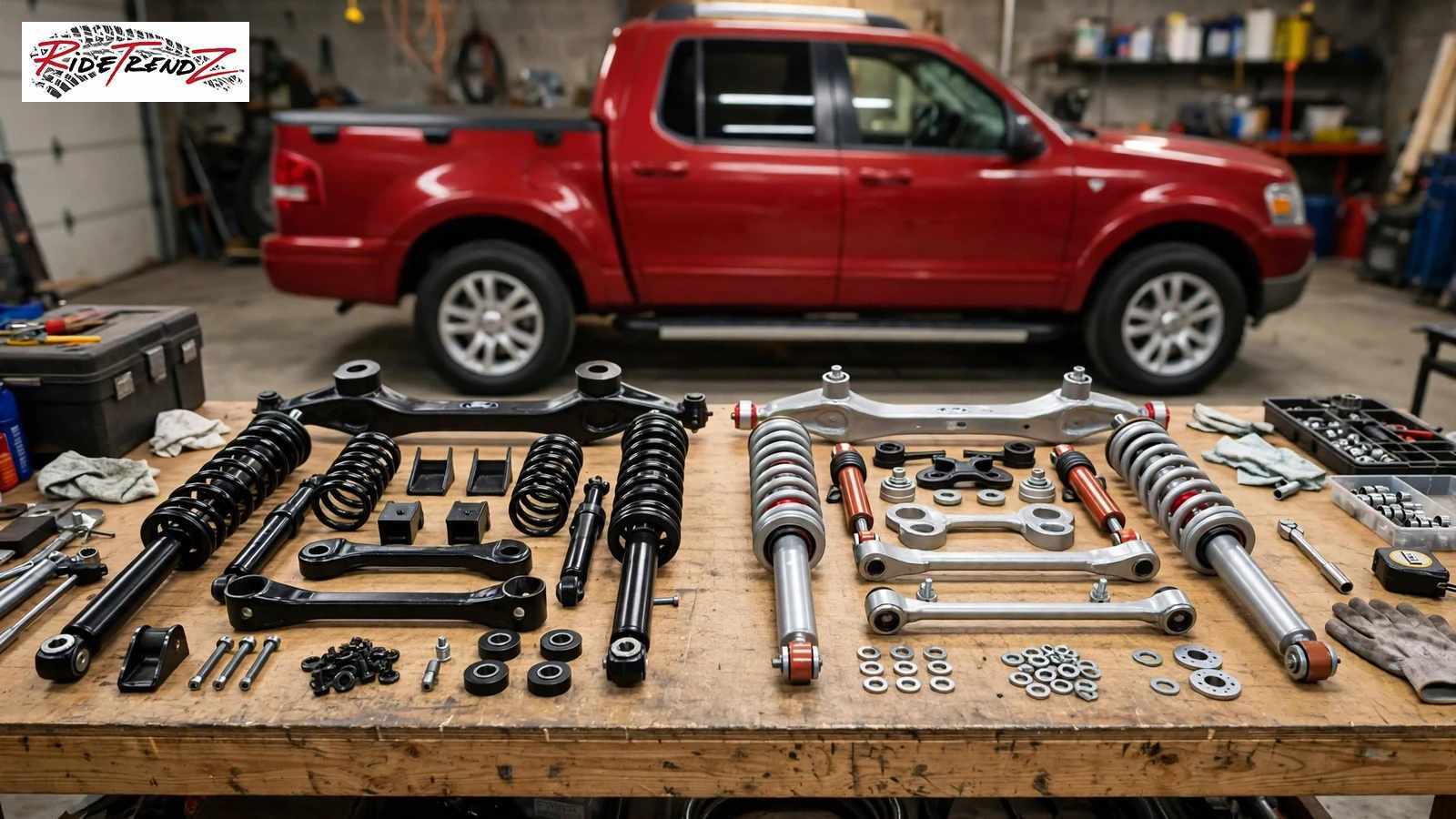
Choosing well starts with your drivetrain, your tire target and how the truck earns its keep. A Explorer lift kit can be as simple as rear shackles for stance or as complete as forged keys, shackles and matched shocks in one box. The two Ridetrendz options below cover that range, and both reward a fitment check before ordering.
The main Ridetrendz shackle kit and who it suits
The product for this guide is the rear adjustable 1 to 2 inch lift leveling shackle kit in black for the 2wd Sport Trac, built to lift or level the rear after a torsion adjustment. It suits owners who want stance and clearance with front geometry untouched. If a build starts with one this lift kit part, this is the first step.
The full lift kit with forged keys for 4wd trucks
Owners who want the whole job in one order should look at the full lift kit with front adjustable 1 to 3 inch forged torsion keys and rear adjustable 1 to 2 inch shackles for 4wd trucks, which balances both ends in one package. It turns a the lift kit purchase into a matched set whose heights adjust as tires and plans change.
Common mistakes that waste money on these trucks
The mistakes below repeat across ford explorer forums every season, and each costs more to undo than to avoid. None come from bad parts, they come from skipped measurements, skipped alignments and kits ordered for the wrong generation. Read this section before ordering any Sport Trac lift kit and the build stays boring in the best way.
Cranking the torsion bars too far
Cranking the adjuster bolts to the last thread chasing height is the classic error, leaving the truck riding on its bump stops with nervous steering at speed. The front end of a Explorer lift kit build should keep working travel in both directions. Back the bolts off, accept the height, and let keys do the lifting work.
Skipping the alignment and wearing out tires
Skipping the alignment after front lift work burns through front tires in one season, because toe changes the moment ride height moves. The saving feels smart for a week and expensive for a year, a pattern our article on how long lift kits last sees across every platform. Any this lift kit budget should carry an alignment line.
Fitment checklist before you order
Run this checklist with the truck in front of you and the order stays right the first time. Year and generation come first, then drivetrain, then a hard look at bar sag and bushing wear. A the lift kit is cheap insurance against guesswork when the answers are written down before the box ships.
Checks
- Confirm the truck is a 1995 to 2005 Explorer or a 2001 to 2005 Sport Trac, not the later independent wagon.
- Confirm 2wd or 4wd from the dash switch and front axle, not the badge alone.
- Measure all four corners and note any side to side sag.
- Check spring bushings and shackle condition, and plan hardware for seized bolts.
Year, drivetrain and suspension checks in detail
Write the year from the door sticker rather than title memory, because 2001-2002 Sport Trac builds and late wagon changes catch owners out. Owners search ford explorer mountaineer when hunting the same parts, because the Mercury twin shares this platform, and the kit is often typed ford explorer sport track. The full lift kit listing spells out its fitment notes.
Measuring your current stance before ordering
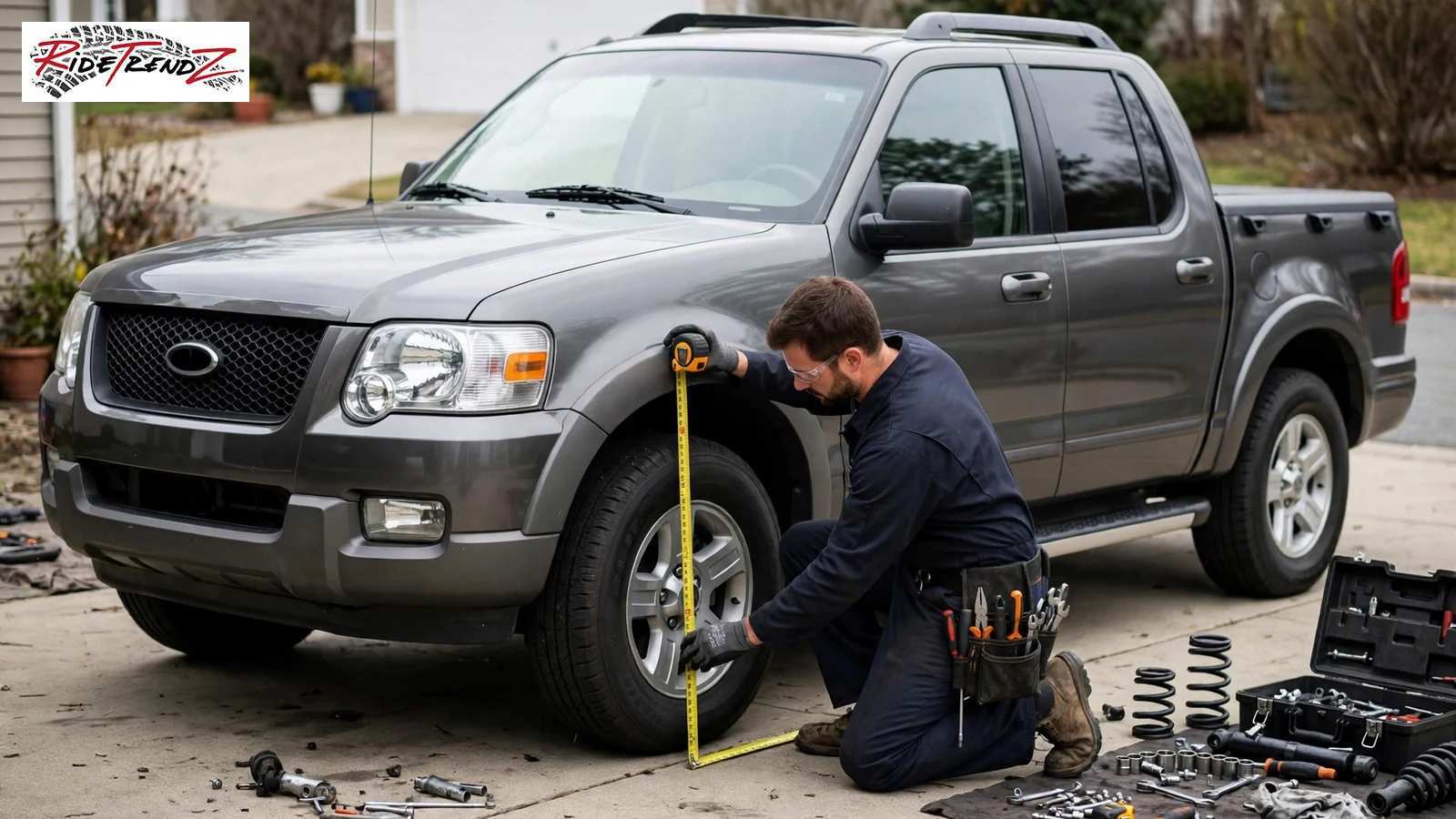
Park on flat concrete, settle the suspension with a roll, and measure from the ground to each arch lip through the wheel centre. A difference of more than about half an inch side to side means sag to correct before judging lift results. Record tire size and pressure too, because both change the reading and both belong in your notes.
Conclusion, the level truck your Explorer was meant to be
The Explorer and Sport Trac reward owners who lift with a plan, keys and shackles matched to tires, an alignment booked early, and heights kept honest for a truck that works daily. Start with the rear adjustable shackle kit if stance is the goal, or the full kit when tires are coming. A Sport Trac lift kit chosen by fitment, not headline height, is the one that feels right a year later.
Frequently asked questions
How much lift can a torsion twist give a Sport Trac
A torsion twist on stock keys gives about 1 to 2 inches of front lift, enough to level the truck and clear 31 inch tires on most builds. The bars keep their factory rate, so the ride firms slightly as height grows. Plan an alignment after, because toe and camber move with ride height.
Do I need an alignment after lifting my Explorer
Yes, every front lift on these trucks changes toe and camber, and the truck will scrub its front tires until a shop resets them. Book the alignment for the same week as the install and ask for a printout of the final numbers. Recheck the readings after the first hundred miles, once everything settles into place.
What is the biggest tire that fits a lifted Sport Trac
Most owners run 31s with a mild lift and no drama, then 33s with about 3 inches of lift and light trimming at the arches. A 35 inch tire needs a tall kit, careful offset choices and usually a gearing change. Match the tire to the driving you actually do, not the largest number that bolts on.
Will a lift from an Explorer wagon fit my Sport Trac
It depends on the years involved, because the 1995 to 2001 wagon and the 2001 to 2005 Sport Trac share the torsion bar and leaf spring layout, while the 2002 and later wagons use independent suspension at both ends. Wagon parts from the wrong generation will not bolt up. Compare spring types first, then check listing fitment notes.
Is a body lift or a suspension lift better for a Sport Trac that tows
A suspension lift suits a towing Sport Trac better, because rear shackles or an add-a-leaf keep the truck supported when the bed and hitch carry weight. A body lift only raises the body and adds no load support at all. Many towing owners pair rear lift with the add-a-leaf route for its extra spring rate.
Does Ridetrendz sell a lift option for the 2wd Sport Trac
Yes, the range includes a rear adjustable shackle kit made for the 2wd Sport Trac, offering 1 to 2 inches of rear lift with simple bolt on fitting. It pairs well with a front torsion adjustment for a level stance. Check the product page fitment notes against your year and drivetrain before ordering.
Can Ridetrendz help me check fitment before I order
Yes, send the team your year, model, drivetrain and a note on any past suspension work, and they will point you at the right kit the first time. That quick check prevents the most common return in this category, a kit ordered for the wrong generation. The advice comes from the bench, where these kits get fitted daily.