

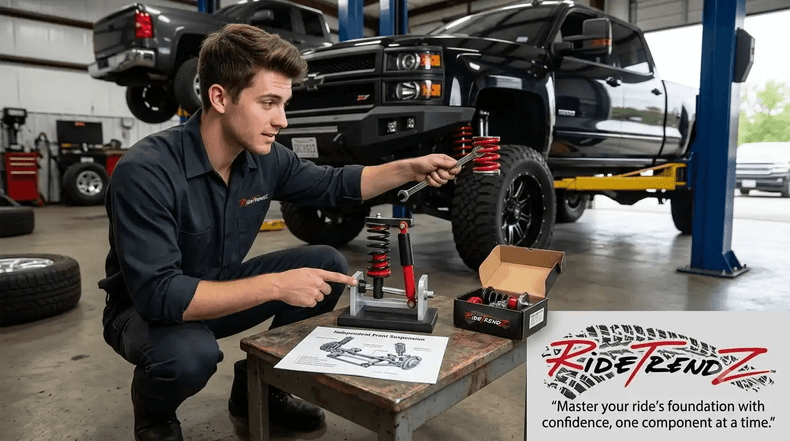
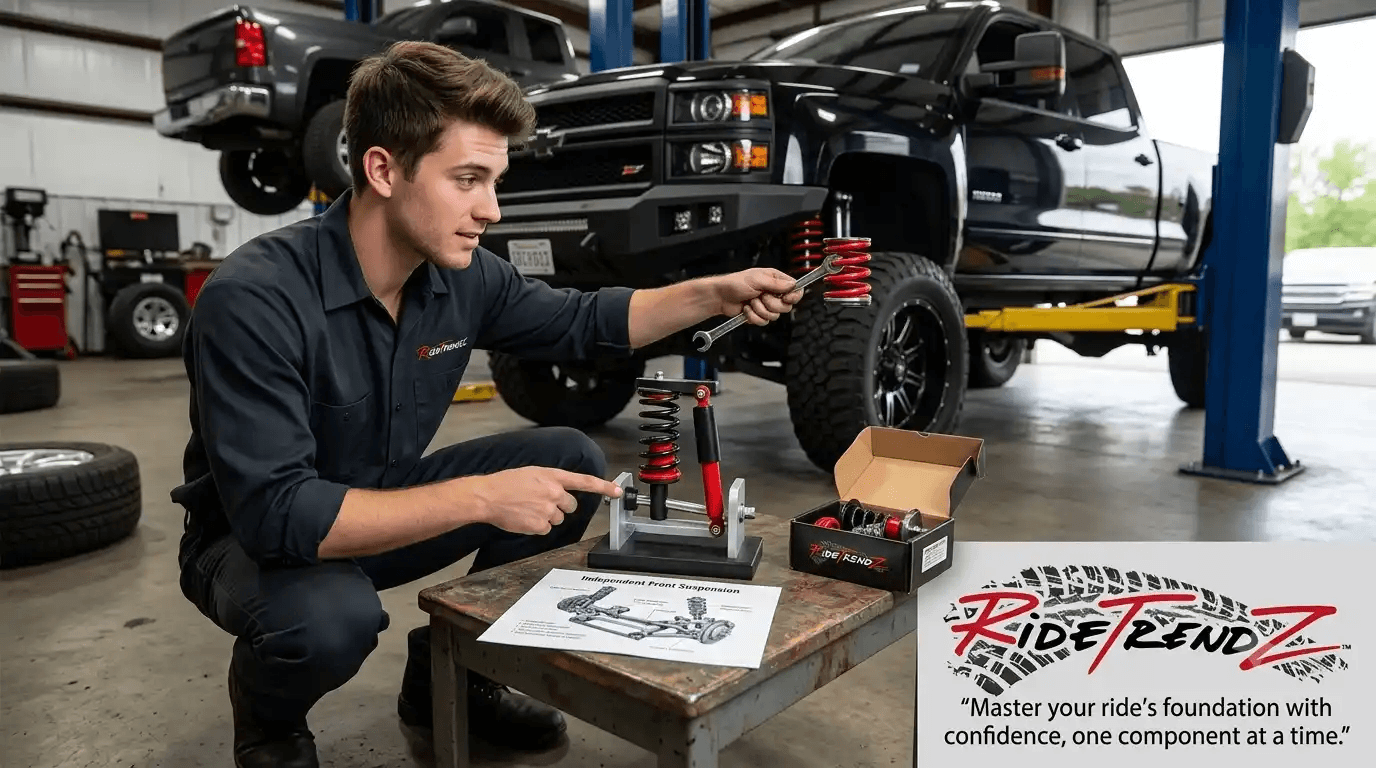
If you have ever wondered why your truck rides rough, leans on corners, or feels unstable on the highway, the answer almost always comes back to suspension. Understanding truck suspension basics for beginners is the first step toward making smarter upgrade choices. Whether you want more ground clearance, a smoother daily ride, or that slammed custom look, suspension is where every transformation starts.
At RideTrendz, we have been helping truck owners like you navigate suspension upgrades for years. Our lineup of precision-engineered lift kits and lowering kits is built around one promise: giving every driver the confidence to modify their truck the right way.
What Is Truck Suspension and Why Does It Matter?
Your truck's suspension system is the network of springs, shocks, linkages, and joints that connects the frame to the wheels. It does three critical jobs:
- Absorbs road impact, potholes, bumps, and rough terrain before they reach the cabin.
- Controls body movement, limits roll, dive, and squat during cornering, braking, and acceleration.
- Keeps the tires in contact with the road for maximum traction and steering control.
Without a properly functioning suspension, even the most powerful truck engine becomes difficult to control. That is why truck suspension explained for beginners always starts with understanding this foundation.
According to the American Trucking Associations, improper vehicle maintenance, including suspension, contributes to an estimated 30% of all vehicle-related road incidents. Understanding how your suspension works is not just about performance; it is about safety.
How Does Truck Suspension Work? A Simple Breakdown?
How does truck suspension work? Think of it as a partnership between three key components: springs, shocks (dampers), and control arms or axles. Here is what each one does:
|
Component |
Function |
Impact on Ride |
|
Coil Springs |
Absorb bumps and support weight |
Ride height and comfort |
|
Leaf Springs |
Support heavy loads (especially rear) |
Load capacity and stability |
|
Shock Absorbers |
Dampen spring oscillation |
Smoothness and control |
|
Control Arms |
Connect wheel hub to frame |
Alignment and handling |
|
Torsion Bars |
Act as rotational springs (4WD trucks) |
Adjustable ride height |
When your truck hits a bump, the spring compresses to absorb the energy. The shock absorber then controls how quickly the spring rebounds so your truck does not bounce endlessly. Control arms keep the wheel aligned throughout this movement. Each part of this system is engineered to work together, and when one part wears out or is upgraded, the others are affected too.
Types of Truck Suspension: Which One Does Your Truck Have?
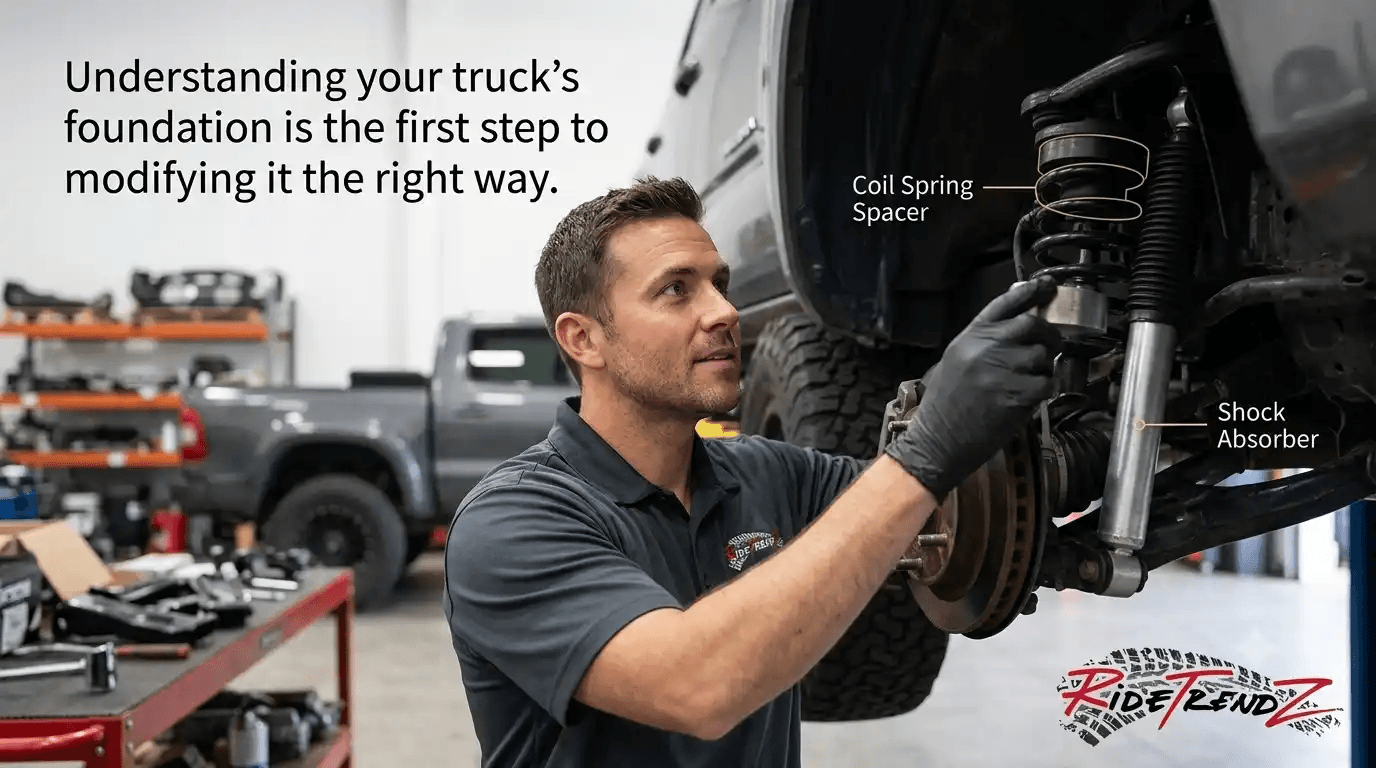
Types of truck suspension vary by truck model, era, and intended use. Here are the most common setups:
1. Solid Axle (Live Axle) Suspension
Common on older trucks and heavy-duty 4WD models. Both wheels on an axle move together. It is rugged and capable for off-road use, but the ride on pavement can be rough. Classic pickups from the 1960s–1980s often use this setup.
2. Independent Front Suspension (IFS)
Each front wheel moves independently. This gives you better on-road handling and a smoother ride. Most modern half-ton trucks, including the Ford F-150, Chevy Silverado, and Dodge Ram, use IFS up front.
3. Torsion Bar Suspension
Used on many GM trucks like the Silverado/Sierra K1500 and K2500. A torsion bar acts as a rotational spring. It allows for ride height adjustment using forged torsion keys, one of the most popular and affordable ways to level or lift a 4WD truck. RideTrendz carries a wide range of forged torsion key lift kits for these applications.
4. Leaf Spring Suspension
Found mostly on rear axles and older trucks. Leaf springs are layered steel strips that flex under load. They are excellent for heavy towing and payload capacity. Many lift block kits and lowering block kits mount directly to the leaf spring perch, making them one of the easiest suspension upgrades to perform.
5. Coil Spring Suspension
Modern trucks use coil springs both front and rear in many configurations. Coil spring spacers and replacement coil springs are two of the most popular products in the RideTrendz catalog because they are straightforward to install and deliver reliable, consistent results.
Truck Suspension Basics: Lift Kits vs. Lowering Kits
Now that you understand how suspension works, let's talk about the two most popular modification categories. This is where truck suspension basics for beginners get practical.
|
Feature |
Lift Kits |
Lowering Kits |
|
Purpose |
Increase ground clearance |
Lower center of gravity |
|
Best For |
Off-road, trail driving, larger tires |
Street performance, custom look |
|
Common Components |
Spacers, torsion keys, lift blocks, new coils |
Drop springs, flip kits, drop spindles |
|
Typical Lift/Drop |
1" to 6" (some up to 8"+) |
2" to 6" drop |
|
Effect on Handling |
Higher CG, different steering feel |
Lower CG, improved cornering |
|
RideTrendz Coverage |
Hundreds of make/model/year combos |
All major truck brands covered |
Not sure which direction is right for you? Our blog on lift kit vs leveling kit differences breaks down exactly how to choose, including the scenarios where each option makes the most sense.
Pros and Cons: Lifting vs. Lowering Your Truck
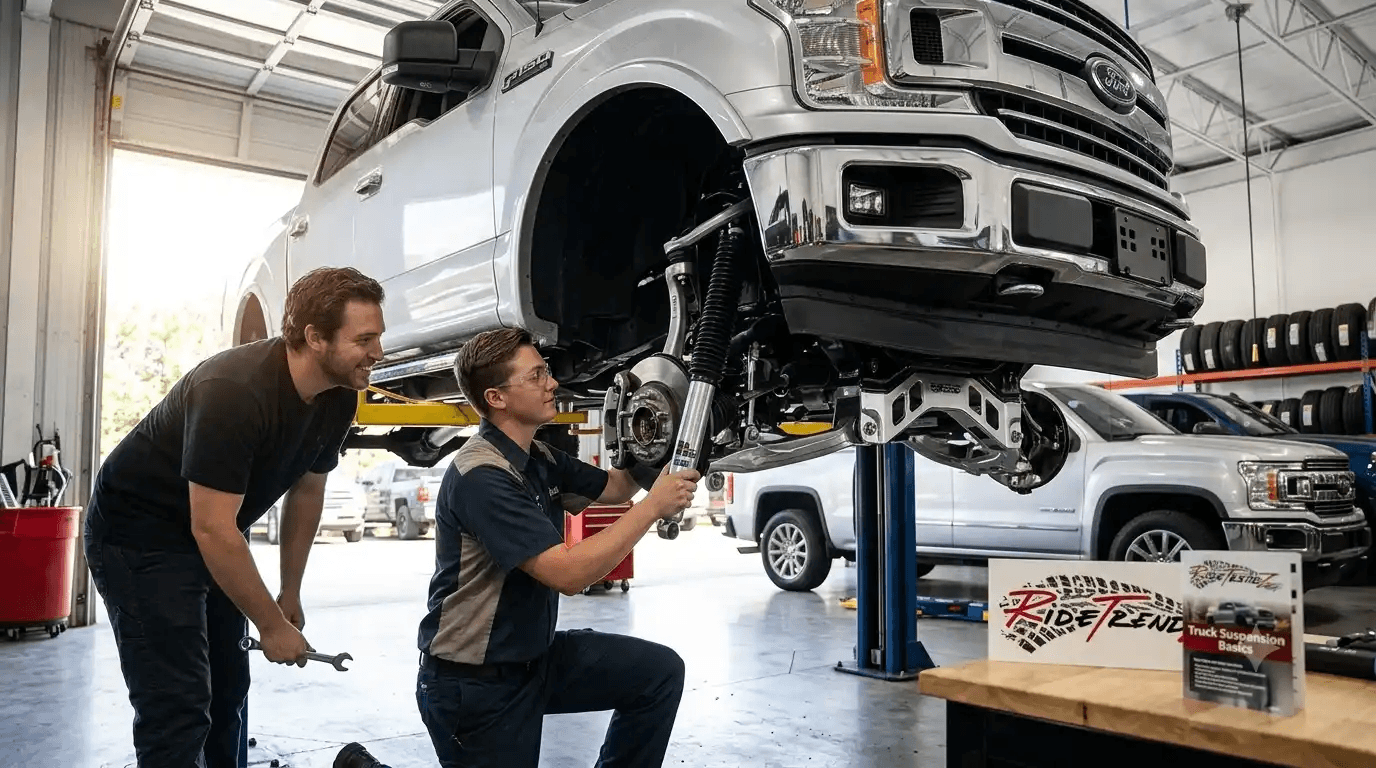
Lifting Your Truck, Pros and Cons
|
Pros |
Cons |
|
More ground clearance for off-road |
Higher center of gravity |
|
Fits larger tires |
Potential change in steering geometry |
|
Better visibility on the road |
May affect fuel economy slightly |
|
Aggressive, commanding look |
Requires proper shock upgrade |
|
Improved approach & departure angles |
Can void some factory warranties |
Lowering Your Truck, Pros and Cons
|
Pros |
Cons |
|
Lower, sportier center of gravity |
Reduced ground clearance |
|
Improved cornering stability |
Speed bumps can be a concern |
|
Sleek, custom appearance |
May need alignment after install |
|
Can improve aerodynamics slightly |
Not suitable for off-road use |
|
Pairs well with custom wheels |
Requires correct shock pairing |
Why Shocks Matter More Than You Think
One of the most overlooked parts of any suspension upgrade is the shock absorber. Many beginners focus entirely on springs or spacers and forget that shocks control how your springs behave. Install a lift kit without the right shocks, and you will have a bouncy, unpredictable ride.
At RideTrendz, we pair our kits with Doestch Tech DT9000 Nitro Gas Charged Shocks and RTZ Primo Nitrogen Gas Charged Shocks, both engineered for either lifted or lowered applications. These are not generic shocks. They are tuned for the specific travel range your suspension will operate in after your kit is installed.
Our blog post on lift shocks vs stock shocks explains in detail why running stock shocks after a lift is one of the most common and costly mistakes truck owners make.
Complete Kits vs. Individual Parts: What Should You Buy?
When it comes to truck suspension basics for beginners, one of the biggest questions is: should I buy a complete kit or individual components? Here is how we look at it at RideTrendz:
- Complete lift kits are ideal if you are doing everything at once. They include all the hardware you need, springs or spacers, blocks or shackles, and shocks, so nothing is left out.
- Individual parts are great for replacing a specific worn component or adding a small tweak. For example, if you already have a lift but need new shocks to match, we offer shocks sold separately tuned to your exact lift height.
- Shock-only upgrades are perfect if your kit is already installed but your ride quality has declined. RideTrendz stocks shocks for dozens of specific lift heights and configurations.
Our guide on lift parts vs complete lift kits walks you through when each approach makes the most financial and mechanical sense.
Suspension by Truck: What Works for Your Make and Model
Here is where truck suspension basics for beginners get vehicle-specific. Different trucks need different approaches. Here is a quick reference based on the most popular trucks we support:
|
Truck |
Suspension Type |
Common Kit |
RideTrendz Option |
|
Chevy Silverado 1500 4WD |
IFS / Torsion Bar |
3" Forged Torsion Keys |
Full Lift Kit |
|
Ford F-150 2WD |
IFS / Coil Spring |
3" Coil Spring Drop |
Lowering Kit |
|
Dodge Ram 1500 2WD |
IFS / Coil Spring |
3F/4R Drop Kit |
Lowering Kit |
|
Ford Ranger 1998-2013 |
IFS / Coil or Torsion |
2.5" Coil Spacers |
Full Lift Kit |
|
GMC Sierra K2500 4WD |
Torsion Bar |
3" Torsion Keys + Blocks |
Full Lift Kit |
|
Dodge Dakota 4WD |
Torsion Bar |
1-3" Torsion Keys |
Full Lift Kit |
|
Toyota Tacoma 2WD |
IFS / Coil Spring |
2.5–3" Coil Springs |
Full Lift Kit |
Every kit in our catalog is vehicle-specific, not a one-size-fits-all solution. We list the exact year, make, model, and drivetrain for each product so you never have to guess whether a kit will fit your truck. Browse our full selection at RideTrendz Lift Kits.
Understanding Suspension Numbers: What Do They Mean?
When you browse our product catalog, you will see specs like "3F / 4R" or "2" drop / 5" flip kit." Here is a quick decoder:
- 3F / 4R: 3 inches of lift at the front, 4 inches at the rear.
- 2.5" coil spacers, aluminum spacers that sit on top of the existing coil spring to add 2.5" of height without replacing the spring.
- 5" flip kit, rear axle flip that drops the rear of the truck by relocating the axle from below the leaf springs to above them, gaining 5" of drop.
- Drop spindles, spindles that lower the wheel hub relative to the control arm, dropping the truck without changing spring height.
- Adjustable shackles, rear shackle replacements that allow 1"–2" of lift or drop by changing the angle of the leaf spring.
RideTrendz product titles tell you exactly what is in the box. No guesswork. No misleading claims. Just clear, accurate specs matched to your specific vehicle.
What Makes RideTrendz Different? The Numbers Speak
There are plenty of suspension part sellers online. Here is why RideTrendz consistently earns the trust of truck owners:
|
What Matters to You |
What RideTrendz Delivers |
|
Vehicle-specific fitment |
500+ SKUs across all major truck brands |
|
Quality shock absorbers |
DT9000 Nitro & RTZ Primo Nitrogen Gas shocks |
|
Material quality |
Aluminum, forged steel, billet components |
|
Complete kits (no missing parts) |
Springs, spacers, blocks, shackles, shocks, all included |
|
Easy DIY installation |
Clear specs and compatible hardware every time |
|
Coverage for older trucks |
Kits available as far back as 1963 C10 pickups |
Whether you drive a 1973 Chevy C10, a 2008 Dodge Ram 1500, or a 2019 Ford Ranger, RideTrendz has a suspension solution engineered to match your truck's exact geometry and drivetrain. This is what sets us apart from generic aftermarket sellers.
Beginner-Friendly Suspension Upgrades to Start With
If you are just getting into truck suspension basics for beginners, here are the easiest entry points:
1. Leveling Kit (Coil Spring Spacers)
A leveling kit uses aluminum or polyurethane spacers to raise the front of the truck to match the rear. It is one of the simplest and most affordable suspension upgrades available, and it makes a big visual difference. RideTrendz carries spacer kits from 1.5" to 3" for most major truck models.
2. Rear Lift Shackles
Shackle replacements are a bolt-on rear lift upgrade that adds 1"–2" of height. They require no cutting, welding, or special tools. Great for beginners.
3. Lift Blocks
Steel lift blocks sit between the axle and leaf springs to add height at the rear. They are solid, reliable, and extremely easy to install, often a 2-hour job for a confident DIYer.
4. Complete Coil Spring Drop Kit (Lowering)
For those who want a lower truck, a coil spring drop kit replaces the factory springs with shorter, stiffer units. Combined with our RTZ Primo Nitrogen Gas shocks, you get a smooth, controlled ride at the new height.
Suspension Statistics Every Truck Owner Should Know
Key industry data that shows why proper suspension matters:
- 30% of truck owners report improved ride quality after a suspension upgrade (Specialty Equipment Market Association, SEMA).
- The aftermarket suspension market was valued at over $4.3 billion in 2023 and is growing at ~6% annually (Grand View Research).
- Incorrectly matched shocks can reduce tire contact by up to 20%, significantly affecting braking distance.
- Trucks with worn suspension components can experience 25–40% longer stopping distances in emergency braking situations (NHTSA data).
- Coil spacers and leveling kits are the #1 most purchased suspension upgrade category among half-ton truck owners.
Common Suspension Mistakes Beginners Make (And How RideTrendz Helps You Avoid Them)
Mistake 1: Not upgrading shocks after a lift.
Factory shocks are designed for stock ride height. After a lift, they operate outside their design range. Always pair your lift with matched shocks. RideTrendz complete kits include them by default.
Mistake 2: Buying generic "universal fit" kits.
Universal kits often do not fit properly. Every kit at RideTrendz is listed with specific make, model, year, and drivetrain compatibility.
Mistake 3: Ignoring alignment after installation.
Any suspension change affects wheel alignment. After installing a lift or lowering kit, always get a professional alignment. Our kits are designed to minimize alignment deviation, but a post-install check is always recommended.
Mistake 4: Over-lifting without considering tire clearance.
Adding a 4"+ lift without checking for tire rub can damage fender wells and CV axles. Our product descriptions note compatible tire sizes to help you plan.
Mistake 5: Buying just the spring and forgetting the shackle or block.
Suspension upgrades often require multiple components to work together. Our complete kits eliminate this problem by including everything you need in a single, clearly labeled package.
How to Shop for Suspension Kits at RideTrendz?
Shopping with us is straightforward. Here is how to find the right kit:
- Step 1: Know your truck's year, make, model, and drivetrain (2WD or 4WD).
- Step 2: Decide whether you want to lift or lower, and by how much.
- Step 3: Browse our full suspension kit catalog or use the specific product URLs matched to your truck.
- Step 4: Check whether you need a complete kit or individual components (shocks, shackles, blocks).
- Step 5: Read the product spec carefully; every kit lists the exact lift/drop amount, included components, and compatible motor/axle configurations.
We do not list vague "fits most trucks" kits. Every product description gives you the exact fitment details so you can buy with confidence.
Popular RideTrendz Products for Beginners
Here are some of our most trusted starting-point suspension kits based on common trucks:
- Chevy Silverado 1500 Full Lift Kit (4WD), Torsion key lift with rear blocks and Doetsch Tech shocks.
- Ford Ranger 1998-2013 Full Lift Kit, 2.5" front coil spacers, rear shackles, complete shock set.
- Dodge Ram 1500 Full Lift Kit (1994-2001), 3" front spacers, 2" rear blocks, Nitro DT9000 shocks.
- GMC Sierra K1500 Lift Kit (4WD), 3" torsion keys, rear lift blocks, premium nitrogen shocks.
- Toyota Tacoma Full Lift Kit (2WD), 2.5" coil springs + 1.75" shackles + DT9000 lift shocks.
Conclusion: Build Your Knowledge, Then Build Your Ride
Mastering the basics of truck suspension for beginners is the foundation of every great build. Once you understand what your suspension does, which type you have, and how lift or lowering kits work, choosing the right product becomes straightforward.
At RideTrendz, we believe that an educated buyer makes the best customer. That is why we invest in detailed product listings, in-depth guides, and a catalog built around precise vehicle fitment. We are not just selling parts; we are helping you understand your truck.
Whether you are brand new to suspension or looking to go deeper, explore our complete suspension kit catalog to find the kit that matches your truck, goals, and budget. The right suspension upgrade is waiting for you at RideTrendz.
Frequently Asked Questions
Q1: What is the easiest suspension upgrade for a beginner?
A coil spring spacer leveling kit is the easiest starting point. It is bolt-on, requires basic tools, and visibly levels and lifts the front of your truck without complex modifications. RideTrendz carries sizes from 1.5" to 3".
Q2: Do I need to upgrade my shocks when I install a lift kit?
Yes. Factory shocks are designed for stock height. After a lift, they operate outside their range, reducing control and comfort. RideTrendz complete kits include matched shocks so you never have to guess.
Q3: What is the difference between a lift kit and a leveling kit?
A leveling kit raises only the front to match the rear (usually 1.5"–3"). A lift kit raises the entire truck, both front and rear, for maximum clearance. Our blog covers this in more detail.
Q4: Will a suspension kit affect my truck's alignment?
Any suspension modification can shift alignment. We recommend a professional wheel alignment check after any lift or lowering kit installation. Our kits are engineered to minimize geometry changes, but post-install alignment verification is always best practice.
Q5: How do I know which suspension kit fits my specific truck?
Every RideTrendz product lists the exact year, make, model, motor, and drivetrain it fits. Browse by truck type or use our catalog filters at ridetrendz.com/lift-kit to find your perfect match.