

Summary
- Stock shocks are designed for factory ride height; they may not work safely after a suspension lift.
- Lifts of 2 inches or less can sometimes reuse stock shocks, but performance will suffer.
- Lifts of 3 inches or more almost always require dedicated lift shocks.
- Lift shocks provide correct travel range, better damping, and longer lifespan at raised height.
- Skipping lift shocks risks a bouncy ride, poor handling, premature shock failure, and uneven tire wear.
If you've recently lifted your truck and something just feels off, with more bounce, wandering steering, or a rougher ride than expected, there's a good chance your stock shocks are the problem. You did the lift, you got the clearance, you love the look. But underneath, your factory shock absorbers are still doing exactly what they were designed to do: handle a stock ride height that no longer exists.
The debate around lift shocks vs stock shocks is one of the most common questions in the truck and off-road community. Do you really need to upgrade? What happens if you keep the stockers? And if you do need new shocks, what should you buy? This guide answers every one of those questions with clear, no-fluff explanations so you can make the right call for your build.
To understand how your entire suspension system works together, check out our complete breakdown: How Does a Truck Suspension Lift Kit Work?
What Are Stock Shocks, and What Do They Actually Do?
Stock shocks, also called OEM shock absorbers, are the dampers that come installed on your vehicle from the factory. Their job is to control how your suspension compresses and rebounds over bumps, dips, and uneven terrain. They determine how much the body moves, how quickly the suspension returns to its neutral position, and how much road feel gets transmitted to the driver.
Shock absorbers work by pushing hydraulic fluid through internal valves. When a wheel hits a bump and the suspension compresses, the shock absorber resists that movement with a calibrated amount of force called damping force. When the suspension extends back down (called "droop" or "rebound"), the shock controls that movement too.
Here's what matters: stock shocks are engineered, calibrated, and sized specifically for the vehicle's factory ride height. Every measurement, the compressed length, the extended length, and the internal valving is dialed in for the stock suspension geometry.
Quick Take: Stock shocks are precision-tuned for stock height. Change the height, and you change how and how well they function.
What Are Lift Shocks, and How Are They Different?
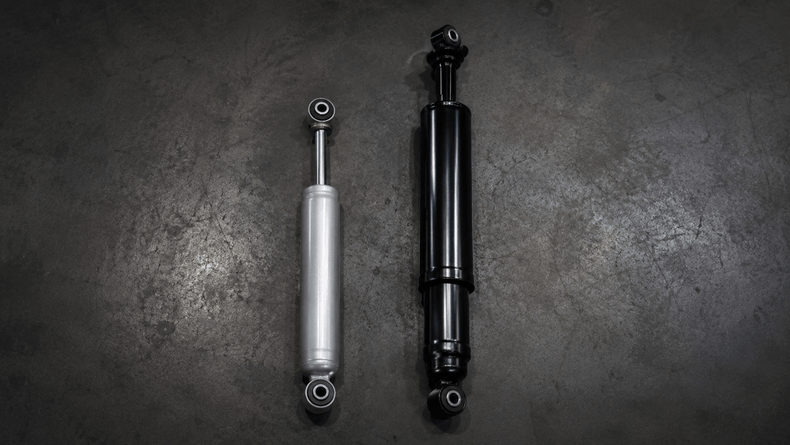
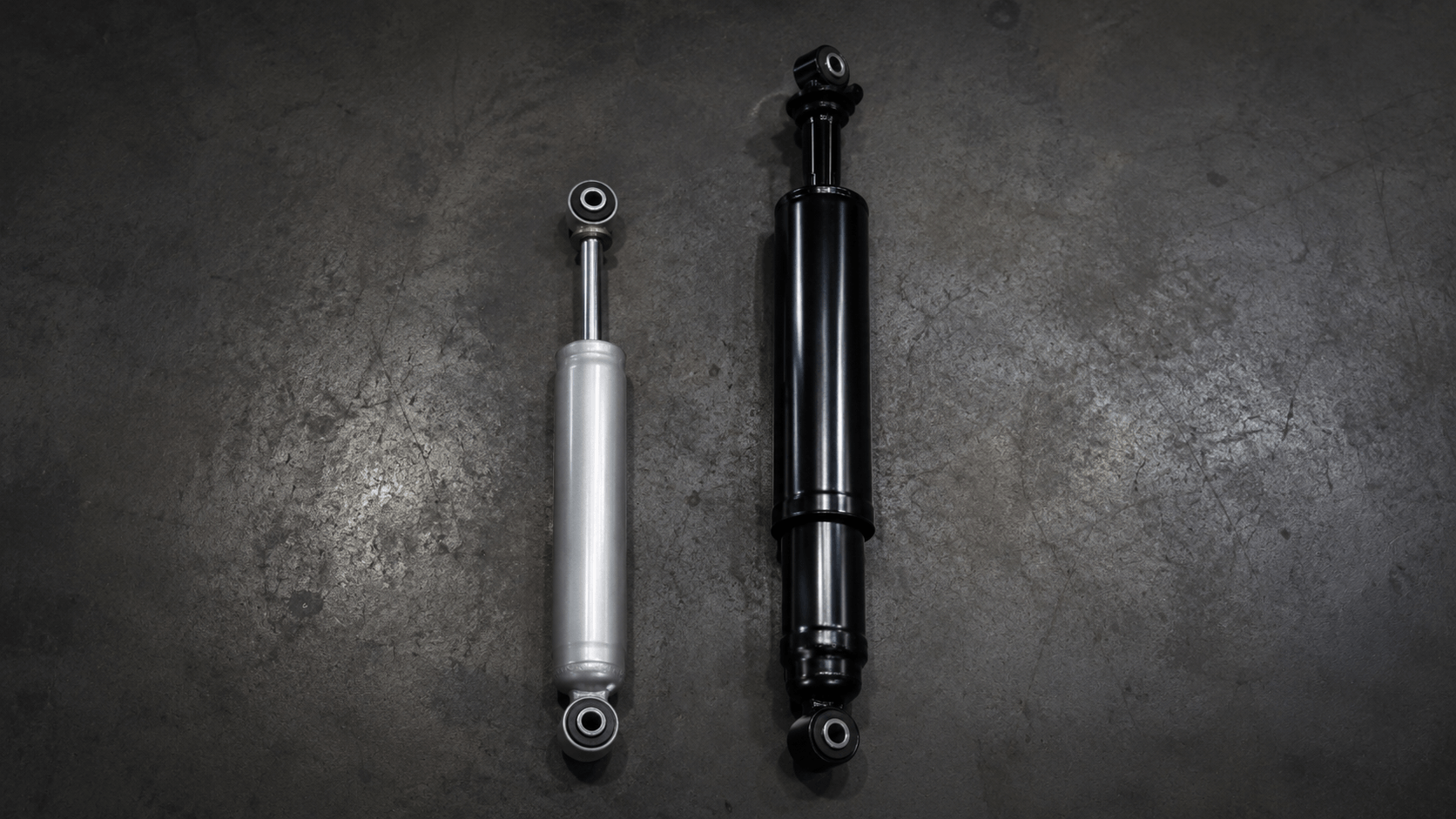
Lift shocks are shock absorbers specifically designed (or revalved and resized) to work correctly at an elevated ride height. The two most important differences are:
- Extended Length Lift shocks are physically longer than stock shocks. When you raise your truck by 3, 4, or 6 inches, the shock needs to span a greater distance in its fully extended (drooping) position. If your stock shock isn't long enough, it will reach its maximum extension before the suspension fully drops, which limits your wheel travel and puts stress on the shock internals.
- Revalved Damping: Many lift shocks use a different internal valve setup to match the new suspension geometry and spring rates that often come with a lift kit. This means they absorb impacts differently, often providing better control over larger bumps and uneven terrain that lifted trucks tend to tackle.
Some lift shocks also feature:
- Nitrogen charge for consistent damping performance and resistance to fade
- Monotube construction for better heat dissipation under hard use
- Remote reservoir designs (on high-end shocks) for maximum fluid volume and off-road capability
- Adjustable damping (like the Rancho RS9000XL) so you can tune the ride for on-road vs off-road use
Quick Take: Lift shocks are longer, often revalved, and built to perform at the new ride height that your stock shocks were never designed for.
What Happens to Your Stock Shocks After a Lift?
This is the core of the lift shocks vs stock shocks debate, and the answer depends heavily on how much you lifted.
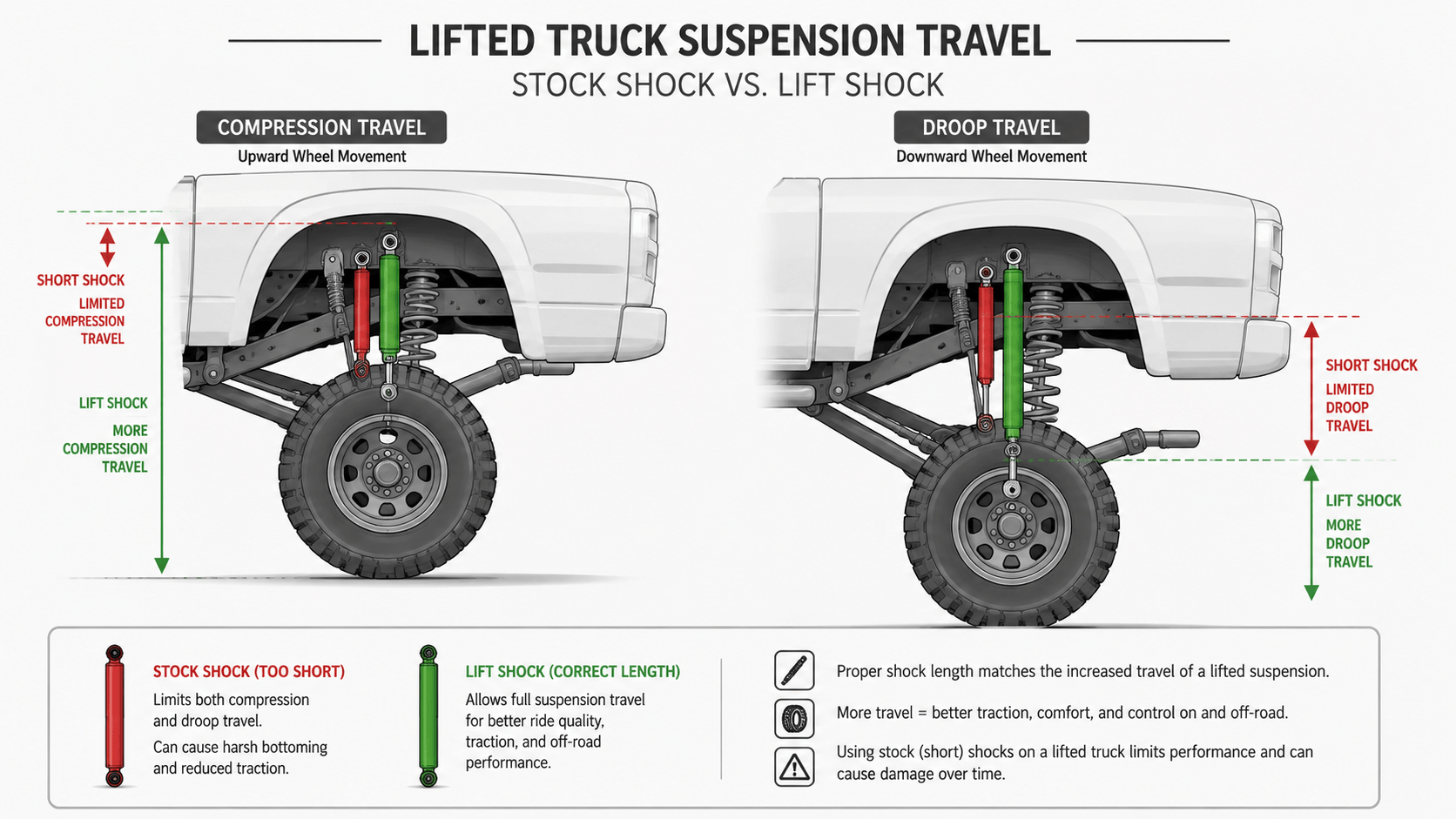
When you install a suspension lift, the distance between the chassis mounting point of the shock and the axle/lower control arm mounting point increases. In a fully compressed state, this might not matter much. But at full droop (when the wheel drops as far as the suspension allows), the shock must span that full extended distance.
If the shock isn't long enough to reach full droop:
- The shock body hits its maximum extension travel and becomes the limiting factor for wheel droop, not the suspension itself.
- This reduces your effective wheel travel, meaning your truck can't articulate as freely.
- Off-road, this causes wheels to lose contact with the ground sooner, reducing traction.
- The shock seals and internal components are placed under tension stress that they were not designed for, accelerating wear.
If the shock is slightly too short but not catastrophically so:
- Ride quality degrades when the shock can't properly control the full range of motion.
- You'll notice excessive bounce over bumps because the damping is no longer calibrated to the new geometry.
- Braking stability may suffer because suspension compliance is reduced.
According to RealTruck's suspension guide, as the suspension rebounds or flexes after a lift, a shock can easily overextend, damaging the shock's internals, blowing out seals, and delivering poor ride quality. Most lift kit experts agree: suspension lifts of three inches or more usually require new shock absorbers to ensure the shock operates within its intended range of motion.
Quick Take: Stock shocks on a lifted truck face stress they weren't built for. Depending on lift height, this ranges from minor performance loss to accelerated shock failure.
Does Lift Height Determine Whether You Need New Shocks?
Yes, lift height is the most important factor. Here's a general guide:
|
Lift Height |
Stock Shocks Okay? |
Recommendation |
|
Body Lift (1"–3") |
Yes |
No shock change needed — geometry unchanged |
|
Leveling Kit (1"–2.5") |
Usually yes |
Reuse stock; may need shocks if using taller coil springs |
|
2" Suspension Lift |
Borderline |
Stock shocks will work but performance declines |
|
3" Suspension Lift |
Generally no |
Upgrade strongly recommended |
|
4"+ Suspension Lift |
No |
Lift-specific shocks required |
|
6"+ Lift |
No |
Extended-travel, long-travel shocks mandatory |
Body lift kits raise the body off the frame using spacers. Because the suspension geometry and chassis height don't change, stock shocks remain fully functional and appropriate.
Leveling kits that use strut spacers can typically retain factory shocks. However, if the leveling kit uses taller coil springs that raise the front more than 2.5 inches, new shocks may be required.
Suspension lifts are the most common type for serious builds; they directly change the suspension geometry. These are where lift shocks go from "nice to have" to "basically required" for any lift over 2.5 to 3 inches.
If you're still deciding between suspension types, our guide on Lift Kit vs Leveling Kit: Which One Does Your Truck Actually Need? breaks down the differences in detail.
Quick Take: Body lifts = keep stock shocks. Leveling kits = usually fine. Suspension lifts of 3"+ = upgrade your shocks. No exceptions.
Signs Your Stock Shocks Are Struggling After a Lift
Not sure if your stockers are hurting your build? Watch for these warning signs:
- Excessive Bounce or Wallowing: If your truck bounces two, three, or more times after hitting a bump rather than settling immediately, your shocks are not controlling rebound properly. Stock shocks calibrated for stock height lose damping effectiveness once they're operating in an extended position outside their designed range.
- Uneven Tire Wear: Poor shock damping leads to inconsistent tire contact with the road surface. If your tires are wearing unevenly, with more wear on one edge, cupping, or feathering, compromised shock performance after a lift is a likely contributor. Proper damping force keeps tires planted and loaded evenly.
- Nose Dive Under Braking: When shocks lose control of weight transfer, the front end dips aggressively during braking. This is both uncomfortable and unsafe, as it reduces front tire contact and can affect stopping distances.
- Body Roll in Corners: Excessive lean when turning indicates the shocks aren't controlling lateral weight transfer effectively. Stock shocks on a raised center of gravity vehicle struggle more with body roll.
- Bottoming Out or Topping Out: If you feel a harsh clunk over large bumps (bottoming out) or a metal-on-metal sound when the suspension extends fully (topping out), your stock shocks have reached their travel limits.
- Reduced Control While Towing or Hauling Stock shocks on a lifted truck struggle even more under load. If you're towing a trailer or carrying heavy payload, the extra weight pushes the suspension down further, putting stock shocks even further outside their operational range.
Quick Take: Bounce, uneven tire wear, nose dive, body roll, and topping out are all signs that stock shocks can't keep up with your lift.
When Do Lift Shocks Make the Biggest Difference?
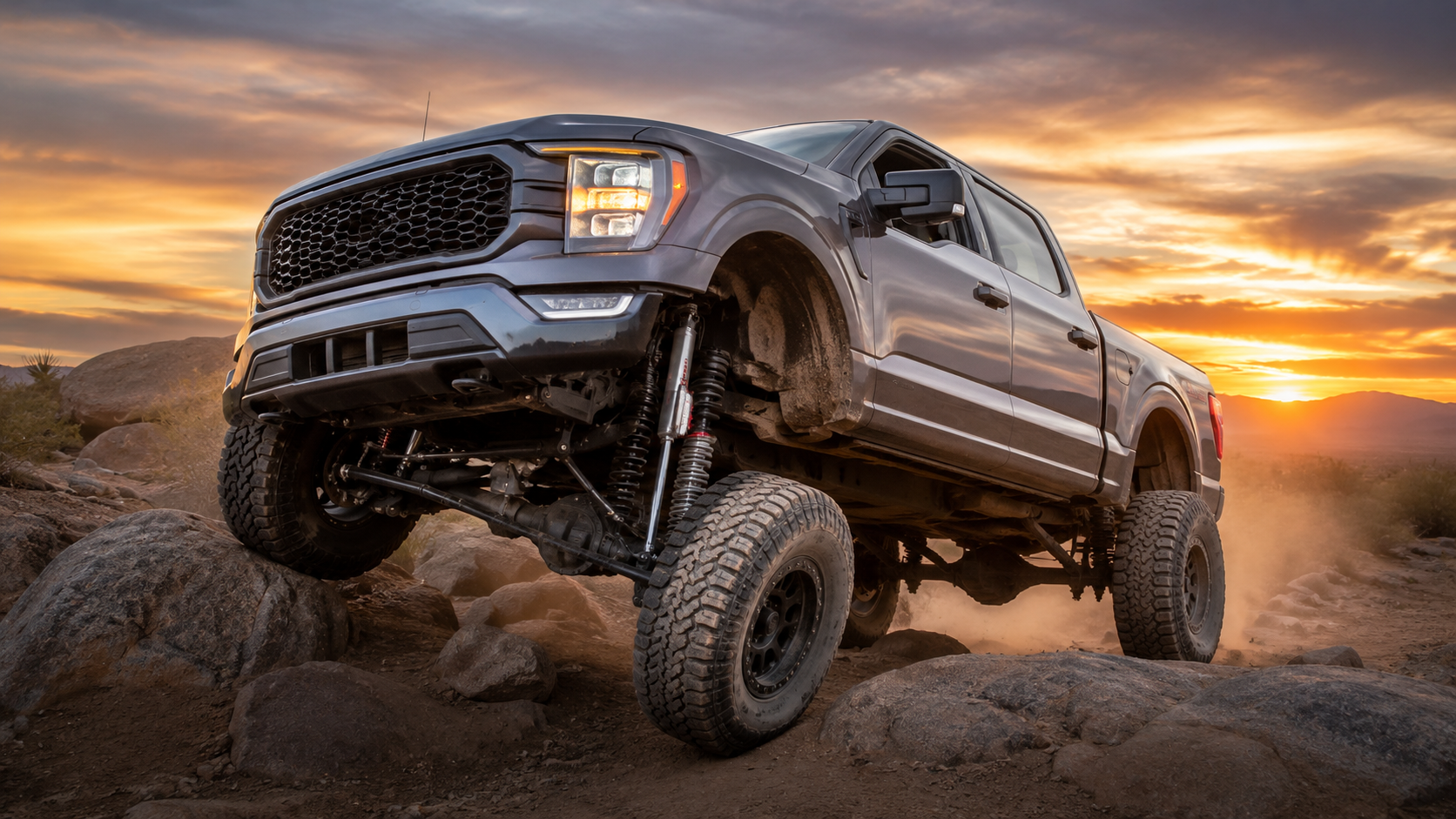
Lift shocks aren't just about safety or avoiding damage; they make a genuine, noticeable difference in these scenarios:
Off-Road Driving and Trail Use
Off-road terrain demands full suspension articulation. Rocks, ruts, and uneven surfaces require each wheel to move independently through the full range of travel. Stock shocks that limit droop travel directly reduce how well your tires can stay in contact with the ground. Lift shocks allow the suspension to work through its full designed range, improving traction and stability dramatically.
High-Speed Desert Running or Gravel Roads
At speed, the suspension is being cycled constantly. Stock shock absorbers that are running near their extended limit generate heat faster and lose damping efficiency through a process called "shock fade." Lift shocks, especially nitrogen-charged monotube designs, manage heat better and maintain consistent performance over long, fast runs.
Daily Driving on Rough Roads
Even if you never hit a trail, a lifted truck with stock shocks will feel noticeably rougher and less controlled on potholes, speed bumps, and highway expansion joints. The ride doesn't feel "lifted and capable"; it feels "lifted and bouncy." Properly matched lift shocks restore the controlled, damped feel that makes daily driving comfortable.
Towing and Payload Applications
Lifted trucks that tow trailers or carry heavy loads need shocks that can handle the additional weight pushing the suspension down. Extended-travel lift shocks give the suspension room to compress under load while still maintaining control of rebound.
Which Lift Shocks Should You Buy?
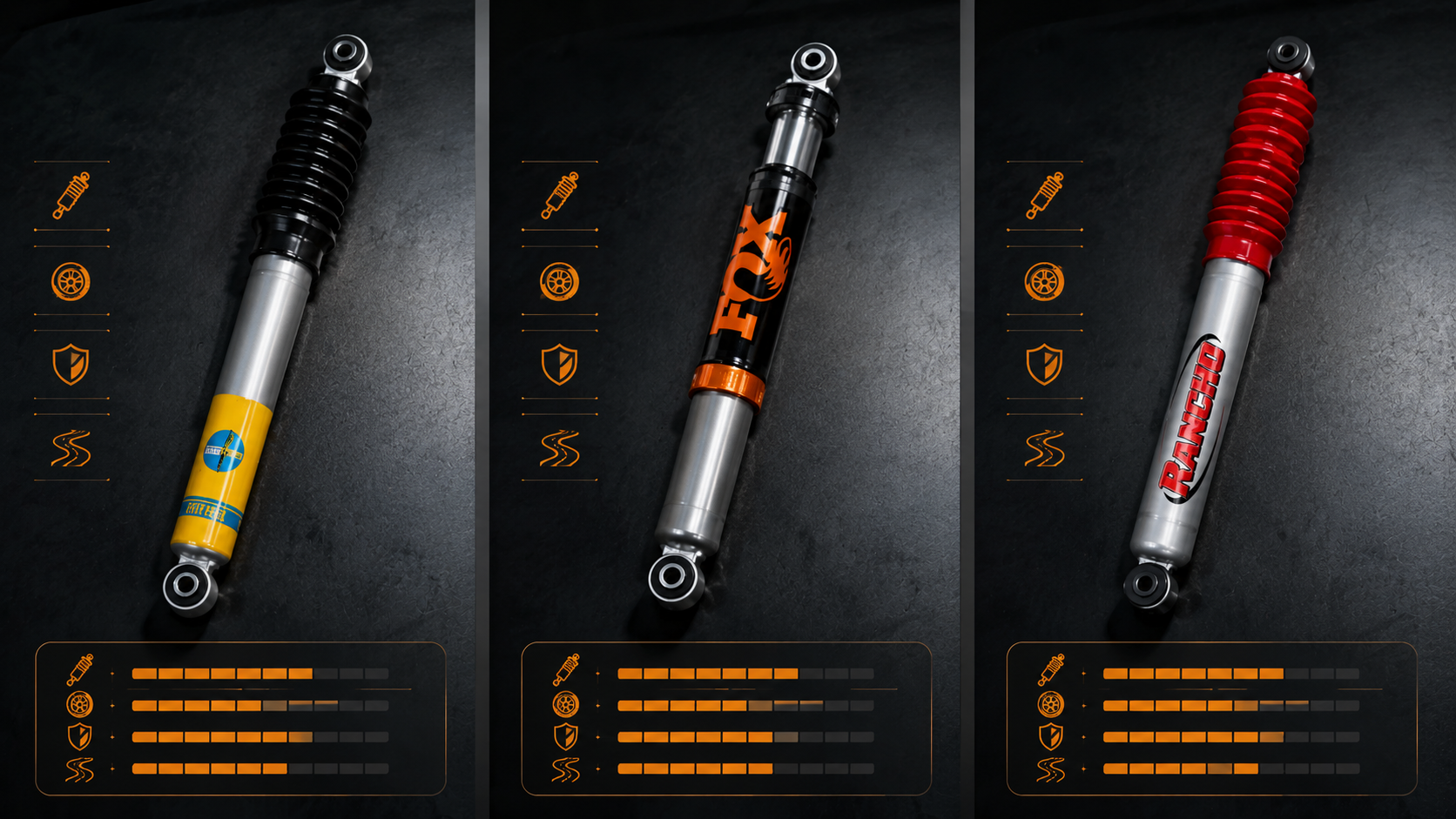
The right lift shock depends on your lift height, your use case, and your budget. Here's what the top options look like across different categories:
|
Brand / Model |
Best For |
Lift Range |
Type |
|
Bilstein 5100 |
Daily driving, moderate off-road |
0"–2.5" (adjustable) |
Monotube, gas-charged |
|
Bilstein 5160 |
Heavy off-road, towing |
4"–6" |
Remote reservoir monotube |
|
Fox 2.0 Performance |
Trail use, daily hybrid |
2"–4" |
IFP monotube, nitrogen |
|
Fox 2.5 Factory Race |
Serious off-road |
4"–8" |
Remote reservoir |
|
Rancho RS9000XL |
Adjustable for mixed use |
2"–6" |
9-way adjustable |
|
King Shocks OEM |
Extreme off-road |
4"+ |
Remote reservoir, race-grade |
For a 2"–3" lift: The Bilstein 5100 or Fox 2.0 Performance is an excellent choice. They offer meaningful upgrades over stock while being priced accessibly.
For a 4"–6" lift, you need a shock with the correct extended length for your specific lift. Bilstein 5160, Fox 2.5, or Rancho RS9000XL are proven performers at this height.
For 6"+ or competition builds: Remote reservoir shocks like King or Fox 2.5 Factory Race are the standard. These aren't budget options, but for serious off-road use, the performance difference is significant.
Pro tip: Many quality lift kits from brands like Rough Country, ReadyLIFT, and Fabtech include matched shocks as part of the kit. If your lift kit came with shocks, use them; they've been calibrated for that specific lift height.
For a deeper look at top lift setups for specific trucks, see our guide on Best Lift Kits for 1999–2006 Chevy Silverado 1500.
Quick Take: Match your shock to your lift height. For 2–3" lifts, Bilstein 5100 or Fox 2.0 works great. For 4"+ lifts, go with longer, reservoir-equipped options like Bilstein 5160 or Fox 2.5.
Lift Shocks vs Stock Shocks: Head-to-Head Comparison
|
Feature |
Stock Shocks |
Lift Shocks |
|
Designed for stock height |
✅ Yes |
❌ No (designed for lifted height) |
|
Extended length for lift |
❌ Too short |
✅ Correct length |
|
Revalved damping |
❌ No (OEM tune) |
✅ Yes (lift-optimized) |
|
Off-road performance |
❌ Limited |
✅ Significantly better |
|
Towing/payload stability |
❌ Poor on lifted truck |
✅ Maintains control |
|
Longevity after lift |
❌ Accelerated wear |
✅ Normal lifespan |
|
Cost |
$ (keep existing) |
$$ – $$$ (new purchase) |
|
Recommended with 3"+ lift |
❌ No |
✅ Yes |
Can You Run Stock Shocks After a Lift - Even Temporarily?
This is a fair question, especially if budget is a concern when building your truck. The honest answer: it depends on the lift and your driving style.
For a 2" suspension lift, stock shocks will keep your truck drivable and even reasonably comfortable on normal roads. You'll notice increased bounce and less precise handling, but you're unlikely to damage the shocks quickly, especially if you're not doing aggressive off-road work. Many builders run stock shocks temporarily on 2" lifts before upgrading.
For a 3" lift, the situation becomes more serious. You're at the threshold where shock travel starts to become genuinely limited. You can drive it, but you'll be accelerating wear on the shock seals and internals every time the suspension hits full droop. Budget for a shock upgrade as soon as possible.
For a 4" or taller lift, running stock shocks is inadvisable from a safety standpoint. At this height, the shock can "top out," reaching maximum extension during normal driving over dips or uneven pavement. This creates a harsh, jarring feel and risks damage to the shock rod, seals, and mounting hardware.
A helpful perspective from Shock Warehouse's suspension guide: stock shocks are generally designed for stock ride height, and they may not be long enough to handle the extra suspension travel after a lift, leading to reduced ride quality, excessive bouncing, or even suspension damage over time.
Quick Take: You can run stock shocks temporarily on small lifts (under 2.5"), but for 3" and above, plan to upgrade shocks as part of or shortly after your lift installation.
How to Measure Whether You Need New Shocks
If you're not sure whether your current shocks are a problem, here's a practical test:
Step 1: Park on level ground and measure the shock length in its natural resting state.
Step 2: Have someone push down on the bumper to compress the suspension fully. Measure the compressed shock length.
Step 3: Jack up the vehicle so the wheel drops to full droop (remove the wheel if needed). Measure the fully extended shock length.
Step 4: Compare to the shock manufacturer's spec. Your shock should reach full droop naturally before hitting its maximum extension. If the shock tops out before the suspension does, you need longer shocks.
Step 5: Check the shock body for evidence of leaking fluid, rust near the shaft seal, or visible corrosion. A shock already leaking fluid needs replacement regardless of your lift situation.
If you've already installed your lift and notice any of the performance symptoms mentioned earlier — bounce, dive, uneven wear — that's your practical indicator that it's time to upgrade.
The Cost of Running Stock Shocks Too Long
Here's the real financial argument for upgrading shocks at the same time as your lift: it's cheaper in the long run.
Stock shocks that are being overextended on a lifted truck wear out significantly faster than they would at stock height. The seal stress, the thermal stress from running at the edge of travel, and the additional load all compound to shorten their lifespan. You'll likely replace them sooner than you would have otherwise — and you'll do it after suffering through months of degraded performance.
At the same time, the installation cost of changing shocks is essentially the same whether you do it with the lift or six months later. Labor, alignment, and the time the truck is in the shop — you're paying for all of that twice if you defer the shock upgrade.
The smarter move, especially for 3"+ lifts: budget the shocks into your lift kit purchase from the start. Treat lift shocks as part of the lift — not an optional add-on.
Frequently Asked Questions
Do I need new shocks after a 2-inch lift?
Not always, but it depends on the type of lift. A 2-inch body lift doesn't require new shocks. A 2-inch suspension lift can usually retain stock shocks temporarily, but performance will be reduced — especially off-road. For the best ride and longest shock life, plan to upgrade shocks even on 2-inch suspension lifts.
Will stock shocks work with a 3-inch lift?
Stock shocks are not recommended for a 3-inch suspension lift. At this height, the shock's extended length may be insufficient to allow full suspension droop, which limits wheel travel, reduces traction, and stresses the shock internally. Most suspension lift kit manufacturers list 3 inches as the threshold where new shocks become necessary.
What are the best shocks for a lifted truck?
The best shocks for a lifted truck depend on your lift height and use. The Bilstein 5100 is excellent for 0–2.5-inch lifts and daily driving. For 3–4-inch lifts with off-road use, the Fox 2.0 Performance or Rancho RS9000XL is a proven performer. For 4-inch-plus lifts, the Bilstein 5160 or Fox 2.5 Factory Race are top-tier choices.
Can stock shocks damage my lift kit?
Yes, indirectly. If stock shocks top out — reaching maximum extension during normal suspension travel — the resulting jolt can stress other suspension components, including ball joints, tie rod ends, and CV axles. Over time, this shock-induced stress can contribute to premature wear across your entire front end.
How do I know if my shocks need replacing after a lift?
Watch for these signs: excessive bounce after bumps, nose dive under braking, body roll in corners, uneven tire wear, and topping-out clunks. These are all indicators that your current shocks aren't handling the suspension travel range at your lifted ride height.
Are longer shocks always better for lifted trucks?
Longer shocks are necessary for lifted trucks, but "longer is always better" isn't accurate. Shocks need to be the correct length for your specific lift height — too long, and they can bind or prevent proper suspension compression. Always choose shocks rated for your exact lift measurement.
Do leveling kits require new shocks?
Leveling kits that use strut spacers can usually retain factory shocks. However, if the leveling kit uses taller coil springs that raise the front more than 2.5 inches, new shocks are recommended to maintain proper shock travel and ride quality.
What happens if shocks top out on a lifted truck?
When a shock tops out, it reaches full extension and becomes a rigid link in the suspension — transferring impact force directly to the chassis rather than absorbing it. This causes a harsh clunk or bang, damages shock internals over time, and puts stress on surrounding suspension components.
Final Takeaway
The lift shocks vs stock shocks question comes down to one thing: Does your shock absorber have the correct physical length and internal calibration to work properly at your new ride height?
For body lifts and most leveling kits, the answer is yes: keep your stock shocks. For suspension lifts of 3 inches and above, the answer is no, and continuing with stock shocks means degraded performance, accelerated wear, and potentially unsafe handling.
Lift shocks aren't an upsell or an optional luxury. At meaningful lift heights, they are a core functional component of a properly built truck. The good news is that matched shock absorbers for popular lift heights are widely available, reasonably priced, and straightforward to install as part of your lift setup.
The bottom line: lift your truck right the first time. Match your shocks to your lift, and your truck will handle better, ride better, and last longer.
Explore our range of suspension lift components at RideTrendz.com to find shocks, lift kits, and complete suspension packages matched to your vehicle.
Or, if you're still deciding whether a lift is right for your truck, start with: Lift Kit vs Leveling Kit: Which One Does Your Truck Actually Need?