

Chevy Colorado and GMC Canyon Lift Shackles Guide (2004–2019)
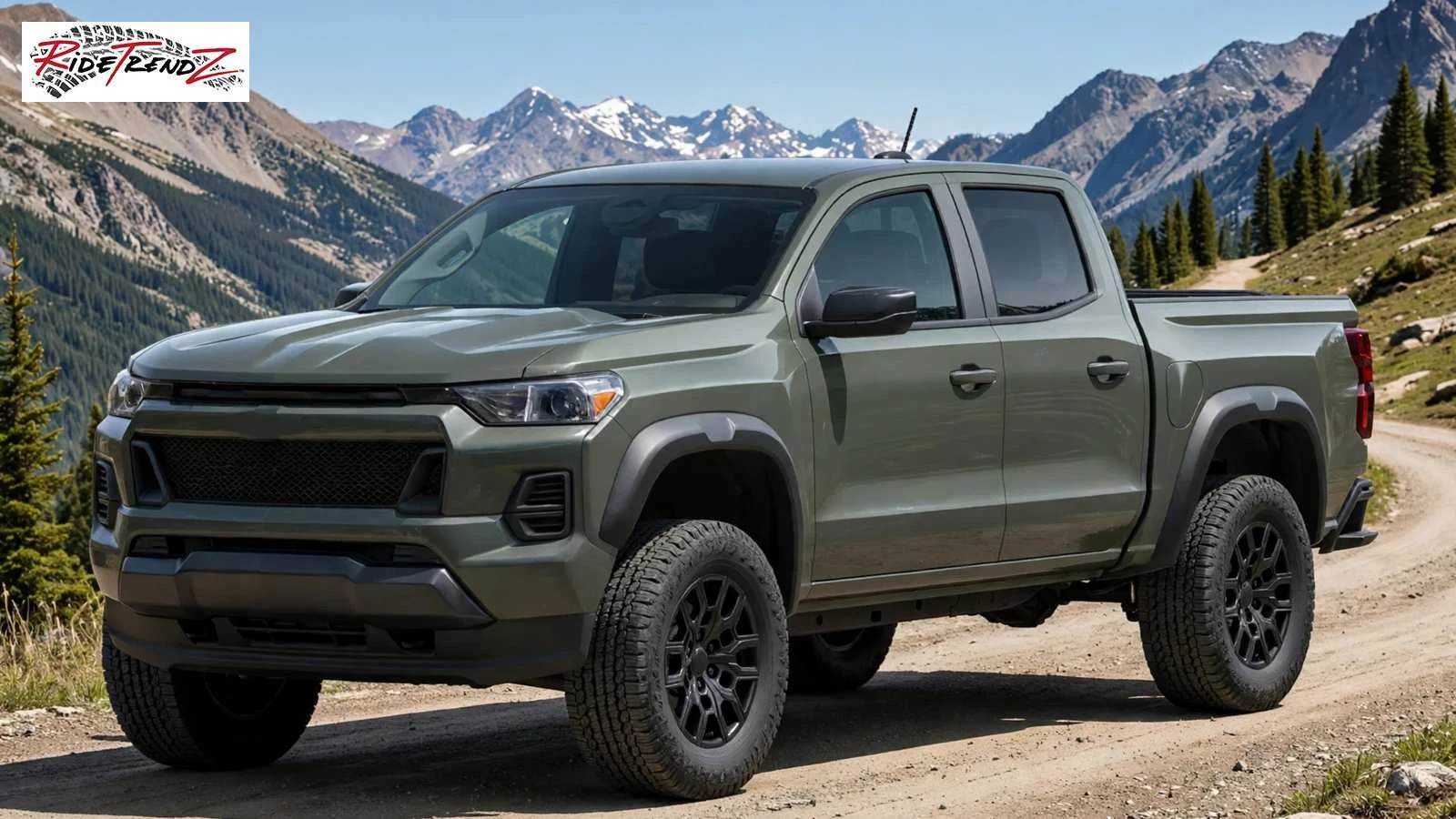
Chevy colorado lift shackles are the simplest honest way to raise the back of a 2004 to 2019 Colorado or Canyon, and this guide covers fit, height, parts and install in plain order. A longer rear shackle drops the leaf spring eye, adds clearance and levels the stance without a full suspension rebuild. Start with the rear 2 inch lift shackle kit for 2004 to 2019 trucks if your truck sits at stock height today, then level the front with keys or spacers, and lean on our truck suspension basics guide whenever a term below is new to you.
Quick Summary
- Chevy colorado lift shackles raise the rear of the truck by lengthening the link at the back of each leaf spring.
- The rear 2 inch shackle kit is the standard first step for 2004 to 2019 Colorado and Canyon trucks in 2WD and 4WD.
- First generation trucks lift the front with torsion keys, while second generation and 2WD trucks use coil or strut spacers.
- A shackle swap is a bolt-on job with hand tools, a jack and stands, finished with torque checks and an alignment check.
- Measure your stock stance first, match the kit to your year and drivetrain, and the result is a level, useful truck.
What Chevy Colorado Lift Shackles Do on Colorado and GMC Canyon Trucks?
Chevy colorado lift shackles replace the short factory links at the back of each rear leaf spring with longer steel links. As the shackle grows, the spring eye swings lower and the rear of the truck rises with it. The change is small, honest and easy to reverse, which is why shackles suit owners who tow, haul and daily drive.
How a Longer Shackle Raises the Rear of the Truck?
A leaf spring fixes to the frame at the front eye and swings on the shackle at the rear eye, so the spring can flatten as it works. A longer shackle lowers that rear eye and rotates the spring, raising the bed and bumper. Most chevy colorado lift shackles add lift this steady way, and our simple explanation of how a suspension lift kit works shows the same geometry.
Shackles Against Lift Blocks and Add a Leaf Kits
Three rear lift routes fight for the same job on a leaf sprung truck. Shackles lengthen the spring link and keep the factory ride almost untouched. Blocks space the axle away from the spring and can encourage axle wrap under power. An add a leaf raises spring rate and load capacity but firms the ride for good.
Fit by Year, From the 2004 First Generation to the 2019 Trucks
Fit is the whole game with these trucks, because the Colorado and GMC Canyon ran two different generations inside the 2004 to 2019 window. The first generation ran from 2004 to 2012 on the GMT355 platform, and the second returned for 2015 to 2019 with new frames and front suspension. Check your year and drivetrain against the table below before you shop.
|
Generation |
Years |
Front suspension |
Rear suspension |
Shackle fit note |
|
First generation |
2004 to 2012 |
Torsion bars on 4WD, coils on 2WD |
Leaf springs |
Rear shackle kits listed for 2WD and 4WD |
|
Second generation |
2015 to 2019 |
Coil over struts |
Leaf springs |
Rear shackle kits listed for 2WD and 4WD |
|
Gap years |
2013 to 2014 |
No US Colorado or Canyon sold |
No US Colorado or Canyon sold |
Check the global truck fitment with care |
First Generation Fit, 2004 to 2012
The 2004 to 2012 trucks replaced the old S-10 and Sonoma, and they share one layout that matters here, leaf springs at the rear on every cab and bed combination. Four wheel drive models carry torsion bar front suspension, while two wheel drive models run coil springs up front. The rear shackle design stayed consistent across the whole run.
Second Generation Fit, 2015 to 2019
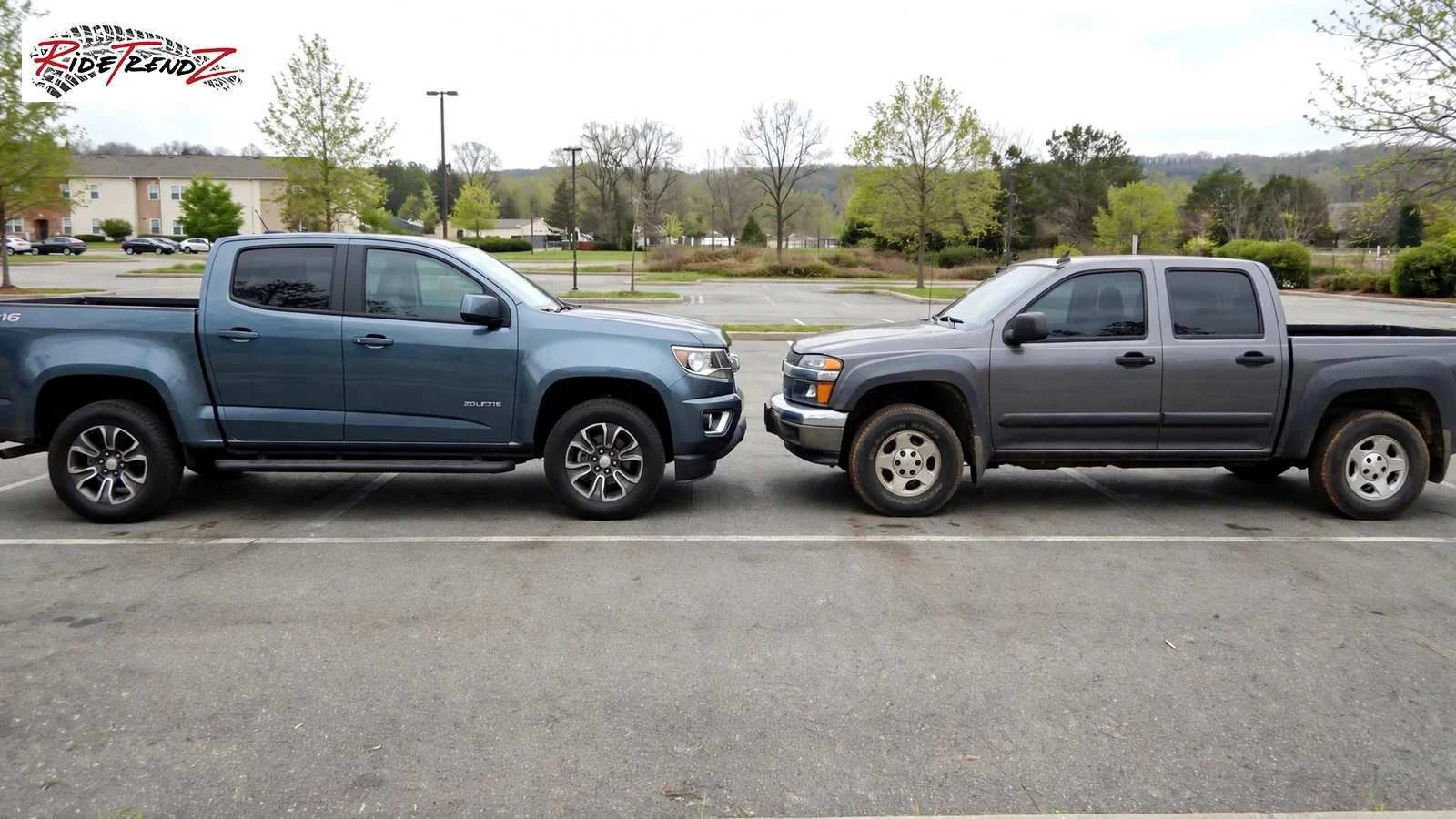
The Colorado and Canyon came back to the US market for 2015 with a stiffer frame, coil over front struts and a modern cabin, but the rear stayed with proven leaf springs. The same shackle idea still applies, with hardware sized for the newer Canyon truck. Engine choice grew to a 2.5 litre four, a 3.6 litre V6 and a Duramax diesel.
2WD and 4WD Fit Differences on Both Generations
At the rear axle, 2WD and 4WD versions of these trucks are close cousins, leaf springs, shackles and shocks in the same places, so rear shackle kits are listed for both drivetrains. The real split lives at the front, where 4WD uses torsion bars and 2WD uses coils. Our 2WD against 4WD lift guide for the Tahoe family explains the same split.
Choosing the Right Lift Kit Height for Your Colorado
Height is a fitment decision before it is a styling one, and the right number depends on tire plans, load and how the front will match. A rear only lift levels a truck that already sits close, while taller shackles ask for front work and fresh shocks. Read our lift kit against leveling kit guide if the terms still blur together for you.
The Rear 2 Inch Lift Shackle Kit Most Owners Start With
The rear 2 inch lift leveling shackle kit is the sensible first step for most owners of these versatile midsize pickups. Two inches at the rear clears a taller tire and restores a level stance with a canopy or tools on board. Chevy colorado lift shackles at this height also keep shock lengths inside their comfort zone.
Adjustable 2 to 3 and 3 to 4 Inch Lift Shackles
Owners who want room to grow pick an adjustable shackle with more than one bolt hole setting. The adjustable 2 to 3 inch lift leveling shackle kit lets you start mild and step up later, while the adjustable 3 to 4 inch lift shackle suits taller builds. Each step up adds pinion angle and shock questions.
When a Full Suspension Lift Kit Beats Shackles Alone?
A full suspension lift kit raises the front as well, lifting the whole truck with matched geometry instead of one end at a time. Benchmark full kits from brands such as BDS and Rough Country show the top of this market, and Ridetrendz does not sell those brands. Past roughly a 3 inch suspension lift plan with much taller tires, the matched full kit is the honest call.
Front Lift Options, Torsion Keys and Strut Spacers
A rear lift on its own can leave a Colorado looking ready for a load that never comes, so most owners level the front to match. The correct front method follows the generation and drivetrain split from the fit section above. First generation 4x4 trucks wind up torsion keys, first generation 2WD trucks take coil spacers, and second generation trucks use strut spacers.
Torsion Keys on 2004 to 2012 4x4 Trucks
On a first generation 4x4, the front springs are torsion bars, and a forged key with a reindexed hex adds preload that raises the front. The Colorado full lift kit with 1 to 3 inch forged adjustable torsion keys and rear 2 inch lift shackles pairs both ends in one box. Our Dakota torsion keys guide covers the same choice.
Coil Spacers and Strut Spacers on Later and 2WD Trucks
Two wheel drive first generation trucks and every second generation truck hold the front up with coil springs around a strut, so a spacer above the strut adds the lift instead. Spacers keep the factory ride because the spring itself never changes. Our lift struts against lift shocks explainer clears up the strut terms before you order.
Every Suspension Component in the Box and What Each Part Does
Knowing what each component does turns a box of steel into a plan, and it stops the common mistake of fitting half a system. A rear shackle kit is short on parts by design, while a full kit adds keys, spacers, shocks and hardware. Our lift parts against complete lift kit guide helps you choose the route.
|
Component |
What it does |
Replace or keep |
|
Lift shackle pair |
Lengthens the rear spring link and raises the rear |
Replace as a matched pair |
|
Shackle bushings |
Let the shackle swing without squeak or play |
Replace when cracked or oval |
|
Torsion keys |
Add front preload on 2004 to 2012 4WD trucks |
Replace with forged keys in full kits |
|
Strut spacers |
Space the front strut down for front lift |
Add on 2WD and second generation trucks |
|
Rear shocks |
Control the spring at the new ride height |
Check length, replace if topping out |
Shackle Plates, Bushings and Bolts Explained
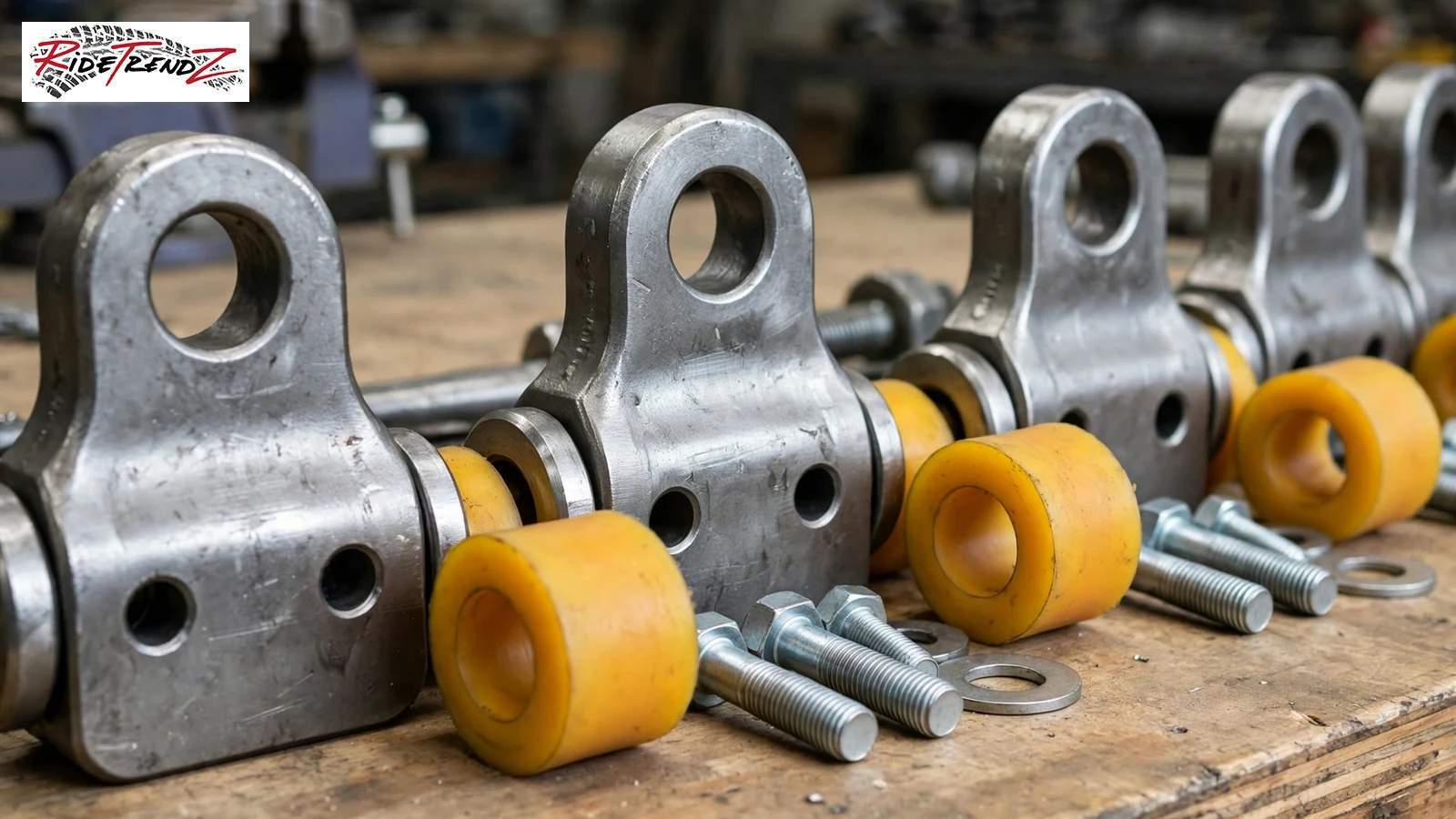
A lift shackle is two steel side plates joined by sleeves, swinging on rubber or polyurethane bushings at the spring eye and the frame bracket. Worn bushings are the hidden half of most shackle complaints, because oval holes let the spring wander and clunk. Fresh hardware matters too, since the shackle bolts carry real load.
Rear Shocks and When Stock Shocks Run Short
Rear shocks do not set ride height, but they do limit travel, and a stock shock near the end of its stroke will top out over sharp bumps after a lift. A 2 inch shackle lift usually keeps stock length shocks working. Our lift shocks against stock shocks guide gives the measuring method owners copy at home.
What a Full Lift Kit Set Adds Over Shackles
A full lift kit set answers the front and rear together, keys or spacers up front, shackles at the back, plus hardware and instructions to fit them as one system. The GMC Canyon full lift kit with torsion keys and rear 2 inch lift shackles shows the pattern for 4WD trucks. Buying the set once usually beats collecting parts one mistake at a time.
Install Steps for Chevy Colorado Lift Shackles
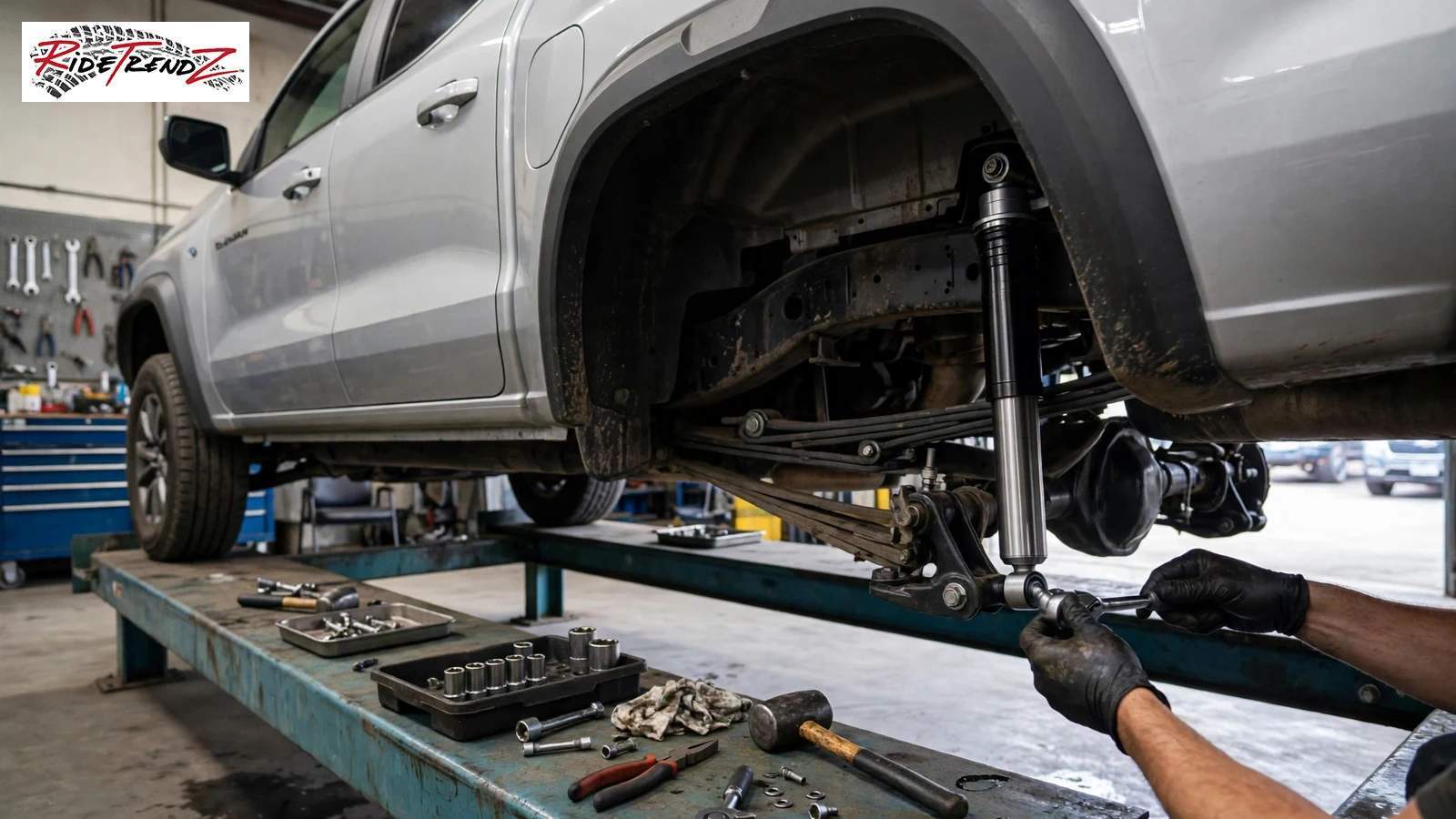
Fitting Colorado lift shackles is a genuine driveway job for a careful owner, with no welding, no spring compressor and no special puller on the list. The work runs one side at a time, with the frame supported and the axle free to droop. Read our guide to how long lift kits last for the checks that keep the result quiet.
Tools and Prep Before the Swap
Gather sockets, a torque wrench, penetrating oil, a floor jack and rated stands before the first bolt turns, because rusty shackle bolts are the one delay every owner reports. Soak the hardware the night before on an older truck. Work on flat ground, chock the front wheels, and support the frame so the rear axle can hang free.
The Bolt-On Swap in Simple Steps
The swap itself is a bolt-on job that follows the same order on both sides of the truck, and it asks for patience more than strength. Support the frame properly, keep hands clear of a loaded spring, and let the axle droop in a slow, controlled way as the old hardware comes off. The steps below keep the spring under control from the first bolt to the last.
Steps
- Support the frame on stands and let the rear axle droop until the shackle hangs unloaded.
- Unbolt the old shackle from the spring eye and the frame bracket, one side at a time.
- Offer up the new longer shackle and start every bolt by hand before any of them are tightened.
- Settle the truck at ride height, then torque the shackle bolts to the figure in the kit instructions.
- Repeat on the second side, then recheck every bolt after the first short drive.
Torque Checks and the First Miles After Install
Shackle bolts set the swing of the spring, so torque them with the truck sitting at ride height rather than hanging in the air, which keeps the bushings neutral. Drive gently for the first miles, listen for clunks, then recheck the hardware once the truck settles. Even arch heights and a straight steering wheel confirm the installation landed correctly.
Tire Fit, Frame Clearance and Driveline Angles After the Lift
A rear lift changes three things owners notice at once, the room inside the rear wheel arches, the space under the frame on rough ground, and the working angles of the driveline. None of these demand drama at shackle lift heights, but each deserves a calm check. Our answer to whether lifting a truck affects gas mileage covers the running cost side of taller tires.
Body and Frame Clearance Checks Underneath
Crawl under the truck once the lift settles and look at the gaps that changed, brake lines, wiring looms, body mounts, the exhaust run and the spare tire winch cable. A sound body and frame on these trucks give generous room, but a stretched brake line is a failure nobody wants on a hill. Leave factory slack where the maker left it, and correct any rub mark early.
Diff Angle and Pinion Checks on Lifted Trucks
Raising the rear rotates the axle a small amount, which changes the pinion angle where the driveshaft meets the diff. At shackle lift heights the change stays small and most trucks run quietly, but a new vibration under load is the truck reporting an angle it dislikes. Check the universal joints for play too, because a worn joint often hides until the new diff angle exposes it.
Ride Quality, Rear Shocks, Alignment and Troubleshooting Tips
Owners expect a lifted truck to ride worse, and a shackle lift is the pleasant exception, because the factory springs and their rate stay in place. What changes is geometry, and geometry is managed with an alignment check and a short list of sounds to understand. The troubleshooting tips below cover the faults owners report most, and nearly all trace back to bushings, torque or shock length.
Alignment Checks After Any Suspension Lift
Any change at the front, keys, spacers or even fresh bushings, earns the truck a proper wheel alignment, and a rear only lift deserves a thrust angle check at the same visit. The cost is small against a set of tires wearing on one edge. Our Silverado 1500 lift kit buying guide makes the same point for bigger GM trucks.
Troubleshooting Tips for Shackle Squeaks and Side Lean
Start squeak hunting with the bushings, because a dry or torn bushing is the cause in most cases, and fresh bushings ride along in many shackle kits for this reason. A clunk over sharp bumps usually means a shackle bolt with play. A truck leaning to one side usually has bolts torqued while the axle hung unevenly, so loosen, settle, torque again, and the lean normally leaves.
Pros and Cons of rear lift shackles
these shackles earn their place by being the smallest change that solves a real problem, rear height and clearance, without touching the spring rate the factory tuned. They are not the right tool for every build, and the honest balance below matters more than any sales line. Weigh both lists against your tire plans, your loads and the front lift you will pair with them.
Pros of the Shackle Route
The pros cluster around simplicity, because the shackles change one link per side and leave the tuned factory spring alone. Cost stays low, the job reverses in an hour, and the truck keeps its manners for towing and commuting. Owners from a classic truck lift kit background will recognise the same logic that kept shackles popular on older iron.
Pros
- Bolt-on fitting with hand tools and no welding or cutting
- Factory spring rate and ride quality stay almost untouched
- Low cost against blocks, leaves or a full suspension lift
- Fully reversible if the truck goes back to stock height
- Adjustable versions let the lift grow in stages later
Cons to Weigh Before You Buy
The cons are real and worth naming plainly, because a shackle only lifts the rear and only within a modest range. Tall settings stretch shock length and pinion angle, and worn bushings in an old spring pack will still be worn after the swap. None of these cancel the idea, they simply set the order of work, bushings and shocks checked first, height chosen second.
Cons
- Rear only lift, the front needs its own plan to match
- Modest height range against a full suspension lift kit
- Tall settings can top out stock length rear shocks
- Old bushings and sagging springs carry their faults over
- Pinion angle change can expose a worn universal joint
Chevrolet Colorado and GMC Canyon as Versatile Midsize Pickups
The Chevrolet Colorado and its GMC Canyon twin earned their following by being versatile midsize pickups that fit a garage, a job site and a trailhead in the same week. Owners of chevy colorado and gmc canyon trucks span every budget, from a 2.5 litre base Canyon truck to a diesel ZR2 style build. They are cheap used, simple to fix and strong enough for real loads.
Engine Choices Across the Years
First generation buyers picked from a 2.8 litre four cylinder, 3.5 and later 3.7 litre five cylinders, and a 5.3 litre V8 that arrived late in the run. Second generation trucks run a 2.5 litre four, a 3.6 litre V6 or the torquey 2.8 litre Duramax diesel. Every engine drives through the same leaf sprung rear, so shackle fit never follows the motor.
Daily Driving and Work Use After a Small Lift
A small rear lift suits a truck that works all week, because Colorado lift shackles keep the factory springs that were tuned for load and comfort. The bed sits higher for loading, the rear clears site ruts and steep driveways, and the steering and turning circle stay stock. Owners who carry tools daily often add the lift simply to stop the rear dragging on site entrances.
Buying Checks Before You Shop for a Lift
Most wrong orders in this corner of the market come from two skipped checks, the year split and the stock stance. Ten minutes with a tape measure and the truck registration saves the return shipping and the lost weekend. Work through the checks below in order, then shop with the numbers in hand, and the kit that arrives will be the kit the truck actually needs.
Measure the Stock Stance Before Ordering
Measure the stock truck on flat ground, ground to arch lip at all four corners, and write the numbers down before touching the shop listings. The gap between front and rear tells you whether a 2 inch rear lift levels the truck or overshoots it. Photograph the shackles and bushings while you are down there, because torn rubber found early changes the order.
Listings on eBay and Facebook Against a Specialist Shop
Used listings on eBay and Facebook groups tempt with low prices, and a shackle set listed for sale second hand can be fair when the plates are straight. The risk is fitment detail lost in a short eBay advert or a Facebook post, the wrong generation, missing sleeves, no one to ask. A specialist shop states years and drivetrain up front, which the general Colorado shopper needs.
The Ridetrendz Range for Colorado and GMC Canyon Trucks
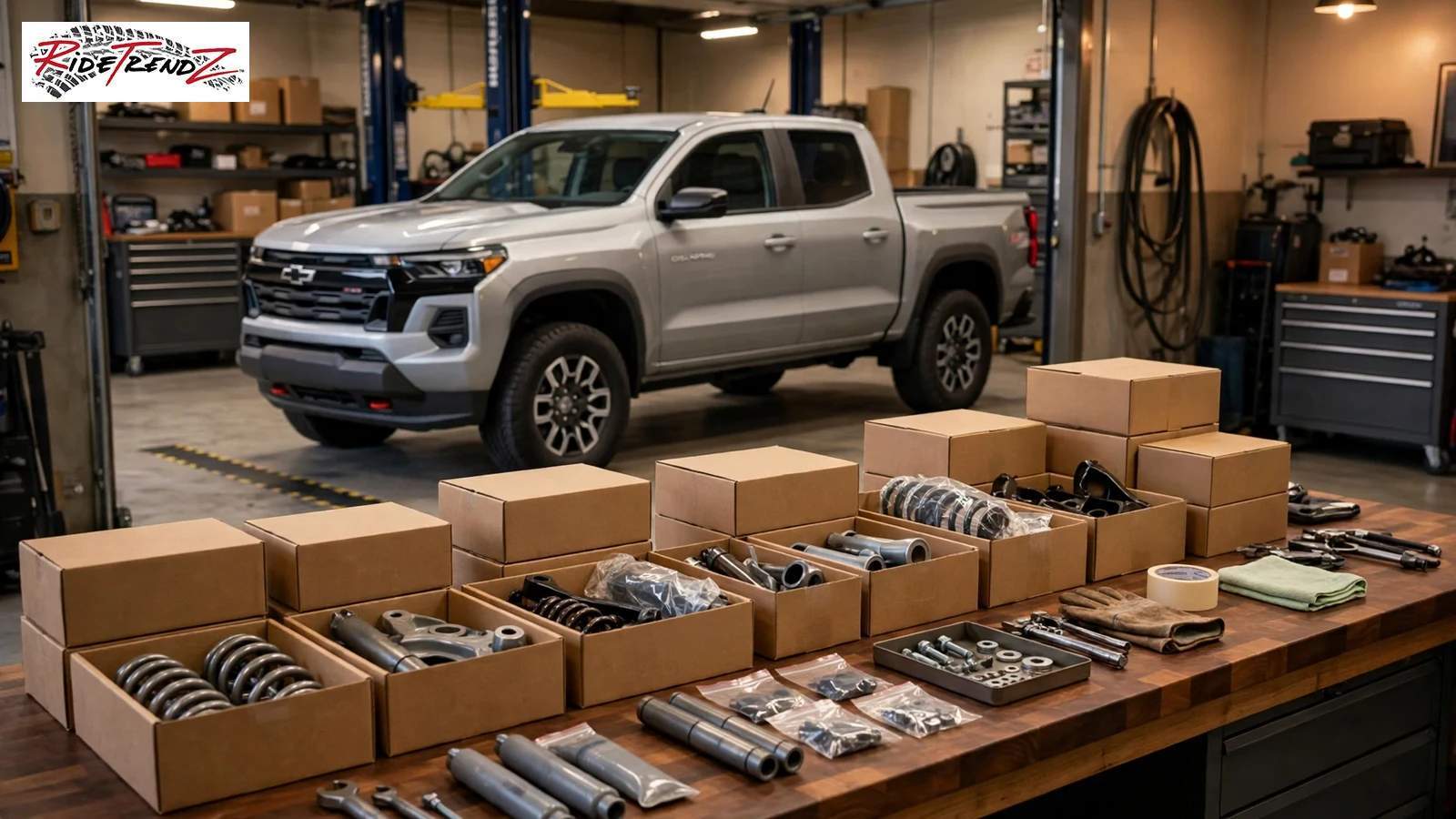
The Ridetrendz shelf for this truck family runs from the rear 2 inch lift shackle kit in black through adjustable versions to full kits like the Chevrolet Colorado full lift kit. rear lift shackles are listed by year range and drivetrain on every product page, so check fitment of each part before ordering. Fixed and adjustable these shackles keep the first step small.
Conclusion and Final Takeaways for Colorado Owners
A Colorado or Canyon on the shackles is a truck that grew where it needed to grow, at the rear, by a measured amount, with its factory manners intact. Match the shackle height to your measured stance, pair the front with keys or spacers when the plan calls for it, and check shocks and bushings while the tools are out. Start from the main Colorado and Canyon shackle kit page and confirm your year and drivetrain before ordering.
Frequently asked questions
Do lift shackles fit both 2WD and 4WD Colorado and Canyon trucks?
Yes, the rear suspension layout is shared across both drivetrains on these trucks, so Colorado lift shackles are listed for 2WD and 4WD versions in both generations. The drivetrain split matters at the front of the truck, where 4WD first generation models use torsion bars and 2WD models use coil springs. Always confirm your exact year and drivetrain on the product page before ordering.
How much lift does a longer rear shackle actually add?
The lift a longer shackle adds follows the extra length of the shackle and the angle it swings at, so makers sell these kits by their finished lift figure rather than by plate length. The popular kits for this platform are listed at 2 inches, with adjustable versions stepping to 3 and 4 inches. Measure your stance first and pick the figure that levels your truck.
Do I need longer rear shocks with a 2 inch shackle lift?
Usually not at the 2 inch setting, because the shock still works inside its normal travel range on a stock truck. Taller adjustable settings deserve a length check, since a shock that tops out over sharp bumps will clunk and wear early. Measure the shock at ride height, compare it with its full extension, and replace the pair if the working range looks tight.
Will my truck ride rough after lift shackles, honest answers only?
No, and this is the honest reason shackles stay popular, the factory leaf springs and their spring rate stay exactly as the maker tuned them. The ride height changes, the spring itself does not, so comfort over broken roads feels familiar. If the truck rides worse after a swap, the cause is almost always worn bushings, over tightened bolts or a shock topping out, not the shackles.
Can I fit Colorado lift shackles in my driveway with basic tools?
Yes, rear lift shackles are a bolt-on driveway job with sockets, a jack, rated stands and a torque wrench, and most owners finish in a half day. The one delay to plan for is rust, older trucks reward a night of penetrating oil on the shackle bolts. Support the frame, work one side at a time, and torque the bolts at ride height.
Does Ridetrendz list rear lift shackles for the 2015 to 2019 GMC Canyon?
Yes, the Ridetrendz Colorado and Canyon shackle range is listed across the 2004 to 2019 span, which covers the second generation Canyon from 2015 onward in 2WD and 4WD. Fixed 2 inch kits and adjustable 2 to 3 and 3 to 4 inch versions sit on the shelf for the platform. Open the product page for your year and read the fitment line before ordering.
What should I check in the first weeks after fitting lift shackles?
Recheck the shackle bolt torque after the first short drives, because fresh bushings settle and hardware can relax a fraction. Listen for new clunks or squeaks over bumps, look at the arch heights side to side for lean, and confirm the brake lines still carry their factory slack. A quick alignment and thrust angle check closes the job and protects the tires.
Source: Wikipedia, Chevrolet Colorado