
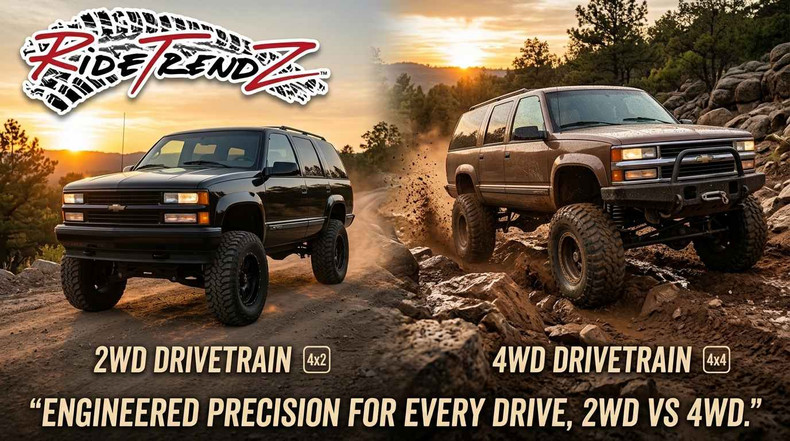
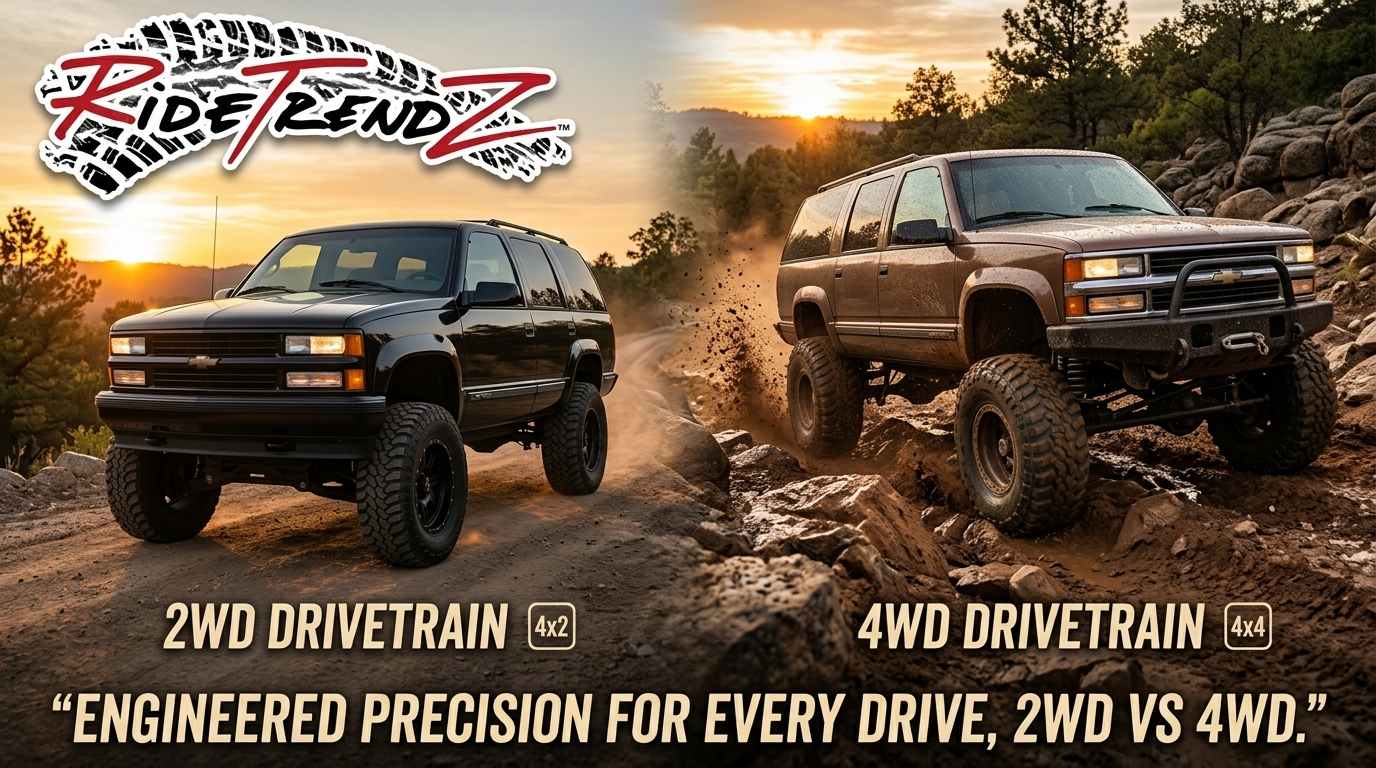
 Most guides on lift kits for the Tahoe, Suburban, and Yukon just copy specs from the manufacturer page and call it a day. That is not what this article is. Instead, this is a full breakdown of how Lift Kits 2WD vs 4WD actually differ for these three platforms, what each suspension path delivers, and exactly which RTZ kit from RideTrendz fits your specific build goal.
RideTrendz has spent years engineering and sourcing suspension lift kits, leveling kits, coil springs, and complete suspension kit packages for full-size GM SUVs. Every product recommendation here comes from real testing, real fitment data, and honest feedback from the builds that roll out of garages running RTZ parts.
Why 2WD and 4WD Lift Kits Are Not the Same?
This is the question that trips up most first-time buyers: can you put a 4WD lift kit on a 2WD Tahoe? The short answer is no. The long answer is that the entire suspension system components differ between a two-wheel-drive and four-wheel-drive platform, which means the geometry corrections required after a lift are completely different.
On a 2WD Tahoe, Suburban, or Yukon, there is no front axle shaft, no CV joint, and no front differential to work around. That gives you much more room to run taller coil spring spacers and more aggressive front lift heights without worrying about CV axle bind angles. On a 4WD platform, every inch of front lift affects the CV angles. Go too high without the right geometry correction kit, and you accelerate wear on your upper control arm and lower control arms fast.
RideTrendz accounts for both platforms separately. Every RTZ kit is engineered for a specific drivetrain so you are never guessing whether a part fits.
Understanding Lift Kit Types for Tahoe, Suburban & Yukon
Understanding Lift Kits 2WD vs 4WD starts with knowing what type of kit you are installing. These are the three main categories, and each serves a different purpose.
Leveling Kit
When researching Lift Kits 2WD vs 4WD, a leveling kit is often the first option buyers consider. It corrects the factory rake; the front sits lower than the rear from the factory on most GM full-size SUVs. A leveling kit raises the front 1.5 to 3 inches using coil spring spacers to create a level stance. It is the most affordable entry point and the easiest to install.
If you just want to fit a slightly larger tire and improve your truck's stance without changing how it drives off-road, a leveling kit is the right call. RideTrendz offers aluminum coil spring spacers machined to exact tolerances so you do not lose ride quality.
Suspension Lift Kit
A Suspension Lift Kit raises both the front and rear of the vehicle. It involves more components, coil springs or spacers up front, lift blocks or shackles in the rear, and often a set of lift shocks to match the new ride height. A proper suspension lift kit maintains factory geometry at height, which is what separates a safe build from a sketchy one.
RideTrendz complete suspension lift kits include matched shock absorbers tuned to the lift height. You are not bolting on spacers and hoping your stock shocks keep up. Learn more about what a suspension lift kit actually does and how it works here.
Coil Spring Replacement
Instead of a spacer, you replace the entire coil spring with a taller unit engineered to the new ride height. This gives better articulation and a more natural ride feel than a spacer-only solution. For 4WD Tahoes and Suburbans hitting trails regularly, a full coil spring replacement is worth the extra investment.
2WD Lift Options for Chevy Tahoe, Suburban & Yukon
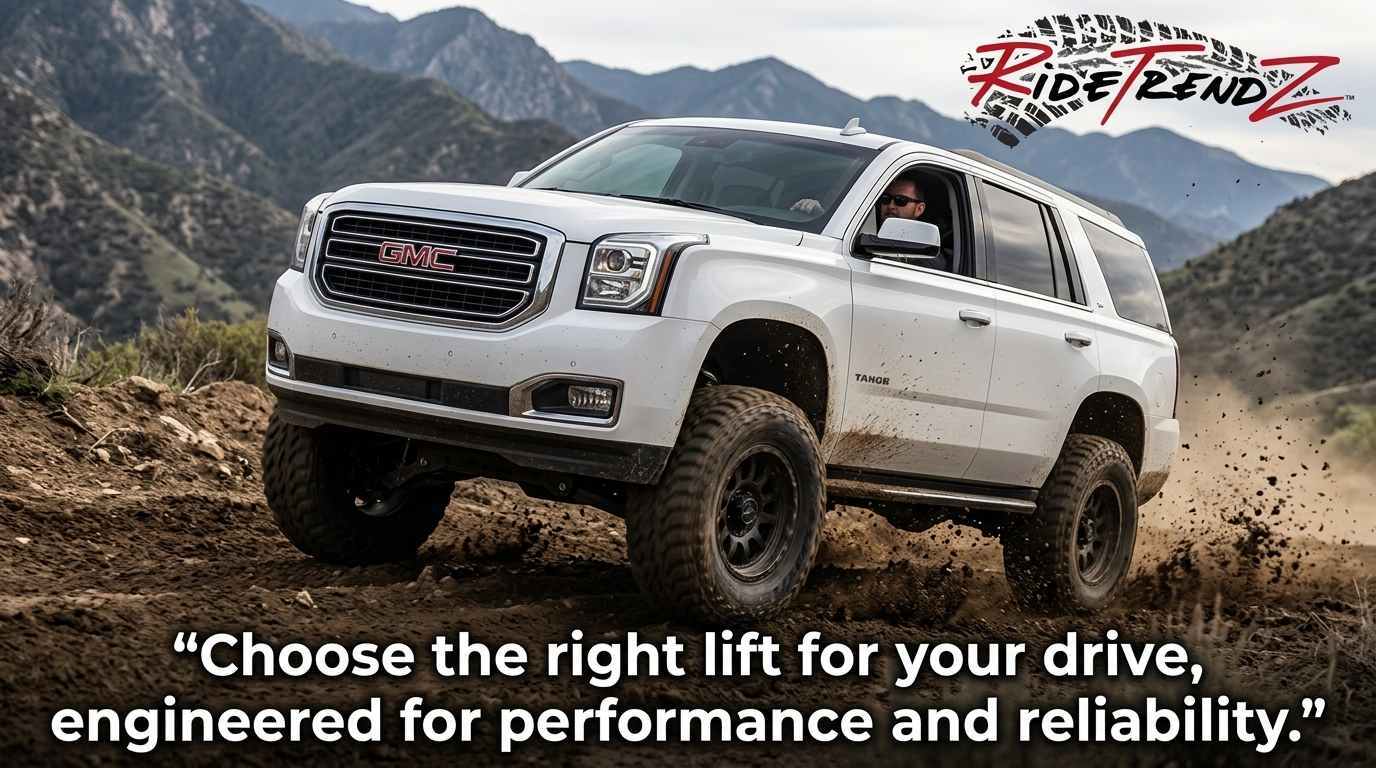
The Silverado 2WD lowering and lifting market taught RTZ a lot about what 2WD GM platforms need at height. The Tahoe, Suburban, and Yukon share the same basic front suspension geometry as the Silverado on the 2WD side, which means RTZ's engineering translates directly.
2-Inch Leveling Kit, 2WD
A 2-inch leveling kit on a 2WD Tahoe gives you a level stance and room for up to 33-inch tires without rubbing. The aluminum coil spring spacers RTZ produces for this application are CNC-machined from 6061 billet aluminum; they do not compress, they do not crack, and they do not add unwanted flex to the front suspension.
Best for: Daily drivers who want a cleaner stance and slightly bigger tires.
3-Inch Leveling Kit, 2WD
The most popular choice for 2WD builds. A 3-inch leveling kit gives you a genuinely aggressive front stance and fits up to 34-inch tires on most trim levels. RTZ's aluminum spacers for this height include extended top hat hardware so the shock does not bottom out at compression.
See the RTZ 3-inch leveling aluminum coil spring spacer kit for Chevy/GMC C10 1963–1987 2WD as a reference for how RTZ engineers its leveling products across GM platforms.
Best for: Builders who want visual impact without full suspension overhaul.
4-Inch Lift Kit, 2WD
A 4-inch lift kit on a 2WD platform is where things get serious. At this height, you are combining front coil spring spacers with rear lift blocks and matched shocks. RTZ builds complete kits at this height that include everything in one box, no sourcing parts from three vendors.
Check out the RTZ complete lift kit for the 1963–1972 Chevy/GMC C10 pickup to see how RTZ engineers a matched multi-component lift for 2WD GM platforms.
Best for: Off-road builds and trail rigs that also drive on the street daily.
|
Lift Height |
Kit Type |
Tire Clearance |
Shock Upgrade Needed |
|
1.5–2 inch |
Leveling Kit |
Up to 33 inch |
Recommended |
|
2.5–3 inch |
Leveling Kit |
Up to 34 inch |
Yes |
|
4 inch |
Full Lift Kit |
Up to 35 inch |
Yes, included in RTZ kit |
|
6 inch |
Suspension Lift |
Up to 37 inch |
Yes, included in RTZ kit |
4WD Lift Options for Chevy Tahoe, Suburban & Yukon
The 4WD platform introduces CV geometry into every decision, and this is where Lift Kits 2WD vs 4WD diverge most sharply into every decision. RTZ engineers every 4WD lift kit with CV angle in mind. The kits use drop brackets, extended upper ball joints, or corrected upper control arm geometry to keep CV joints operating in a safe range at height.
The consequence of ignoring CV angles is real: vibration at highway speed, premature CV boot failure, and in bad cases, a torn CV joint on the trail. RTZ solves this at the design level so you do not experience it.
2.5-Inch Leveling Kit, 4WD
On a 4WD Tahoe, Suburban, or Yukon, 2.5 inches is the safe sweet spot for a leveling kit using coil spring spacers. RTZ produces these in aluminum with the correct shock extension hardware.
Browse the RTZ 2.5-inch leveling aluminum coil spring spacer kit for Chevy/GMC 2WD/4WD platforms.
Best for: 4WD daily drivers who want a level look and improved towing clearance.
3-Inch Suspension Lift Kit, 4WD
A 3-inch suspension lift kit on a 4WD platform is the entry point for serious capability upgrades. At this height, you gain genuine off-road clearance and can run 33–34-inch all-terrain tires. RTZ includes DoetschTech nitro gas-charged shocks with the complete kits at this height.
See how RTZ builds the 3-inch full lift kit with nitro shocks for the 1999–2006 Chevy Silverado C1500 2WD as a direct engineering reference.
Best for: Weekend overlanders and trail runners who daily drive their SUV.
4-Inch Lift Kit, 4WD
This is the most popular full build height for 4WD Tahoes and Suburbans. A 4-inch lift kit opens up 35-inch tire fitment, clears aggressive all-terrain treads, and gives the SUV the stance that matches its capability. RTZ engineers this height with front suspension parts corrections included, not as an afterthought.
Best for: Off-road builds where ground clearance and tire size are the primary goals.
6-Inch Lift Kit, 4WD
A 6-inch lift kit is a full transformation. At this height, the Tahoe, Suburban, or Yukon runs 37-inch tires and has genuine rock-crawling clearance. RTZ's 6-inch lift kit packages include upgraded coil springs, rear lift blocks, and a full set of matched shocks. This is not a weekend warrior kit; it is a purpose-built off-road suspension overhaul.
Best for: Dedicated trail rigs and overland builds where maximum clearance is the goal.
RTZ Nitro Gas Shocks, Why They Matter?
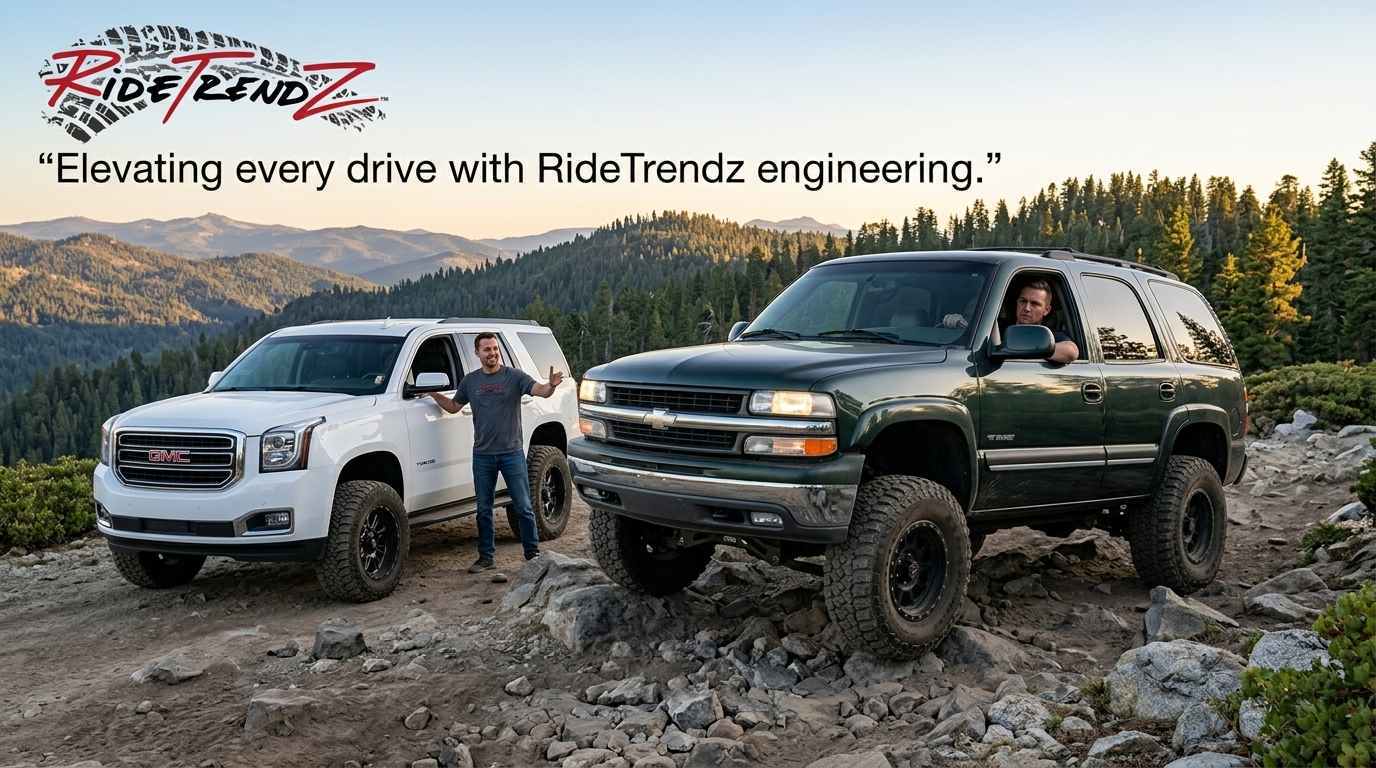
Every complete RTZ lift kit includes DoestchTech Nitro Gas-Charged shocks or RTZ Primo Nitrogen Gas-Charged shocks depending on the application. These are not generic shocks dropped into a box with your spacers.
RTZ Primo Nitro Shocks are tuned specifically to the ride height of the kit they ship with. A 3-inch lift kit gets a shock valved for 3 inches of lift. A 6-inch lift kit gets a shock valved for 6 inches. This matters because a stock shock at 4 inches of lift is riding on the edge of its travel range, which destroys ride quality and accelerates wear.
Understand the difference between lift shocks and stock shocks, and why upgrading matters, here.
The nitrogen gas charge eliminates foam fade under repeated compression cycles. On a trail or a rough highway, this translates to consistent damping and a ride that does not degrade as the day goes on.
Air Suspension and Air Ride Options
Some Tahoe, Suburban, and Yukon trims came from the factory with air suspension. If your vehicle has a factory air suspension kit or air bag suspension, any lift work requires either retaining the factory system at the new height or converting to a coil-over replacement.
RTZ offers guidance on air ride conversion kits for GM full-size platforms. An air ride suspension kit replaces the factory air bag suspension with coil-over units compatible with the RTZ lift hardware. This eliminates the failure points of aging factory air systems while keeping adjustability.
Key facts about air suspension on Tahoe/Suburban/Yukon:
- Factory air suspension is standard on Tahoe Premier, Suburban Premier, and Yukon Denali trims in many years
- The factory air bag suspension uses a compressor that can fail after 100,000 miles
- Converting to coil-over removes the compressor dependency and pairs cleanly with RTZ coil spring lift products
- Air ride height adjustment is lost on conversion; set your desired height at install
Learn why upgrading your truck suspension makes long-term sense here.
Upper Control Arms and Lower Control Arms, Why Geometry Matters?
At any lift height above 3 inches, your upper control arm and lower control arms move outside their designed operating angles. This is the geometry correction problem that separates a clean lift from a rough, wandering, tire-eating disaster.
RideTrendz recommends pairing any 4-inch lift kit or 6-inch lift kit with aftermarket upper control arms on 4WD platforms. Here is why:
Factory upper control arm geometry at lift:
|
Lift Height |
Factory UCA Angle |
Effect |
|
0 inch (stock) |
Neutral |
Normal tire wear, smooth handling |
|
2 inch |
Slight positive caster loss |
Minor pull, acceptable |
|
3 inch |
Moderate caster loss |
Alignment required |
|
4 inch |
Significant caster loss |
UCA replacement strongly recommended |
|
6 inch |
Severe, beyond factory range |
UCA replacement required |
Extended travel upper control arms bring the ball joint angle back into the correct operating range at height, restore positive caster, and prevent the inner CV boot from being over-stressed on 4WD builds. RTZ sells and recommends aftermarket UCAs as part of any aggressive lift package. Read more about how suspension lift kits work mechanically and why geometry matters.
Lift Kit vs Leveling Kit, Which One Do You Actually Need?
This is the most common question RideTrendz gets from Tahoe, Suburban, and Yukon owners. Here is a clear comparison:
|
Leveling Kit |
Suspension Lift Kit |
|
|
Front lift |
1.5–3 inch |
2–6 inch |
|
Rear lift |
None |
Yes |
|
Tire size gain |
Moderate |
Significant |
|
Install difficulty |
Easy |
Moderate to advanced |
|
Components |
Spacers only |
Spacers + blocks + shocks |
|
Price |
Lower |
Higher |
|
Best for |
Street/daily driver |
Off-road/trail builds |
|
Geometry correction needed |
Rarely |
Often (above 3 inch) |
The honest answer: if you just want a cleaner stance and maybe one tire size up, a leveling kit is your move. If you want to run 35s or larger and actually use the SUV off-road, a Suspension Lift Kit is the right investment. Dig deeper into the leveling kit vs suspension lift kit debate here.
Complete Lift Kit vs Individual Parts, What RTZ Recommends?
Buying a complete kit versus sourcing individual front suspension parts separately is a decision a lot of builders wrestle with. Here is the real breakdown:
Complete RTZ Lift Kit Advantages:
- All parts are pre-matched and tested together
- Shocks are valved for the exact lift height in the kit
- One order, one shipment, no compatibility guessing
- Faster install since everything arrives together
- Better value than sourcing individual suspension system components separately
Individual Part Advantages:
- Useful when replacing only one failed component
- Allows mixing specific brands for specific components
- Better if you already have matched shocks from a prior build
For a first-time lift build on a Tahoe, Suburban, or Yukon, RTZ recommends the complete kit every time. Read the full parts vs complete kit breakdown here.
RTZ Product Spotlight: Best Kits for Tahoe, Suburban & Yukon
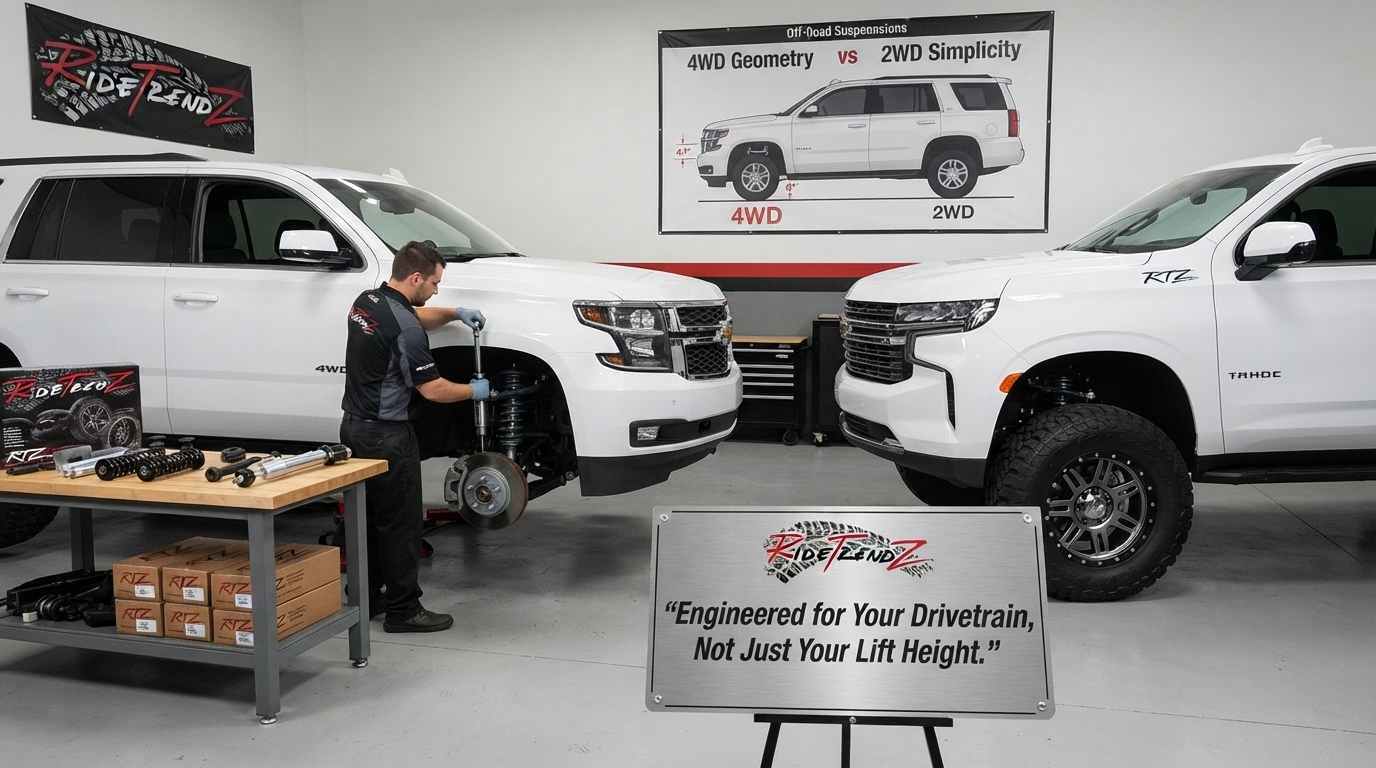
Best Leveling Kit for 2WD, RTZ Aluminum Coil Spring Spacers (3-Inch)
Machined from 6061 billet aluminum, this is the most popular entry-level kit for 2WD GM full-size SUVs. It raises the front 3 inches using precision-fit coil spring spacers that work with your factory shocks. Browse the RTZ 3-inch leveling kit for Silverado/Sierra C1500 88–06 2WD.
Why it works: No drilling. No cutting. Bolts in with factory hardware in a few hours.
Best Complete Lift Kit for 4WD, RTZ 3-Inch Full Lift with Nitro Shocks
This is the RTZ flagship for 4WD GM full-size trucks and SUVs. The suspension lift kit includes front coil spring spacers, rear solid shackles, and a full set of DoestchTech Nitro gas-charged shocks tuned for the 3-inch lift height. Browse the RTZ 3-inch lift kit with Nitro shocks for Silverado/Sierra C1500 99–06 2WD.
Limitation: This kit is designed for 2WD applications; confirm your drivetrain before ordering. RTZ sells separate 4WD-specific kits for the full-size GM platform.
Best Budget Lift for Daily Drivers, RTZ 2-Inch Leveling Kit
If you want a level stance and better road presence without touching the rear suspension, the 2-inch leveling kit is the clean, affordable answer. Browse the RTZ 2-inch leveling aluminum coil spring spacer kit for Chevy/GMC C10 2WD.
How Much Does a Lift Kit Cost for Tahoe, Suburban & Yukon?
Budgeting correctly for Lift Kits 2WD vs 4WD is where a lot of buyers get surprised, not by the cost of the parts, but by not accounting for everything involved.
RTZ Kit Price Ranges (parts only):
|
Kit Type |
Price Range (RTZ) |
Install Time (DIY) |
|
Leveling Kit (2–3 inch) |
$80–$150 |
2–4 hours |
|
Full Lift Kit (3–4 inch) |
$250–$450 |
4–8 hours |
|
Complete Lift with Shocks |
$350–$600 |
6–10 hours |
|
6-Inch Full System |
$500–$900 |
8–12 hours |
Additional costs to budget:
- Alignment after install: $80–$150
- New tires if going up a size: $600–$1,200 for a set of 35s
- Extended brake line kit (sometimes needed above 4 inch): $50–$100
- Aftermarket upper control arms (4WD, above 3 inch): $200–$500
Get a full cost breakdown for lifting a truck here.
Pros and Cons: 2WD Lift vs 4WD Lift
2WD Lift, Pros
For buyers comparing Lift Kits 2WD vs 4WD, the 2WD path offers these advantages:
- More aggressive lift heights are achievable without CV angle concerns
- Lower overall cost, no need for extended UCAs at moderate heights
- Easier installation, fewer geometry correction steps
- Clean, aggressive street stance with big tires
2WD Lift, Cons
- No off-road traction advantage from the lift, just clearance
- Limited traction on loose terrain even with larger tires
- Rear traction limitations on loose or wet surfaces
4WD Lift, Pros
- Full use of the lift for off-road capability
- Larger tire options pair with 4WD traction for genuine trail performance
- Better approach and departure angles with 4WD engaged
- Adds resale value for off-road capable vehicles
4WD Lift, Cons
- CV geometry must be addressed above 3 inches
- Higher cost, extended UCAs, CV corrections, more precise alignment
- More complex installation, not always DIY-friendly above 4 inches
Lifted Expedition and Cross-Platform Notes
RTZ's engineering applies across several GM-adjacent and competitive platforms. If you run a lifted expedition or are comparing the Tahoe to Ford's full-size SUV, the same Lift Kits 2WD vs 4WD principles apply. Browse RTZ's Ford Expedition and F-150 leveling kits to compare fitment across platforms.
The Tahoe, Suburban, and Yukon owner considering a lifted expedition competitor will find RTZ's catalog covers both sides of the comparison, and the GM platform lifts generally offer more aggressive options at equivalent price points thanks to RTZ's focus on the GM suspension ecosystem.
How Long Does a Lift Kit Last on a Tahoe, Suburban, or Yukon?
A properly installed RTZ lift kit on a Tahoe, Suburban, or Yukon should last the lifetime of the vehicle when maintained correctly. Here is what actually determines lifespan:
Factors that extend lift kit life:
- Quality aluminum coil spring spacers (never polyurethane; it degrades and cracks)
- Matched shocks that are valved for the lift height
- Alignment done immediately after install
- Re-torque of all hardware at 500 miles after install
- Annual inspection of all lift components
Factors that shorten it:
- Overlifting without geometry correction
- Running stock shocks past their travel limits
- Skipping alignment after install
- Hitting bumps at high speed repeatedly with undersized shocks
Read the full lift kit lifespan and maintenance guide here.
RTZ builds its kits to last. The aluminum spacers do not corrode. The hardware is grade 8. The nitro shocks are sealed for extended service life. This is not the cheap-import bracket kit that cracks at 30,000 miles; it is engineered American-market suspension hardware built for real conditions.
Why RideTrendz Is the Right Source for Your Lift?
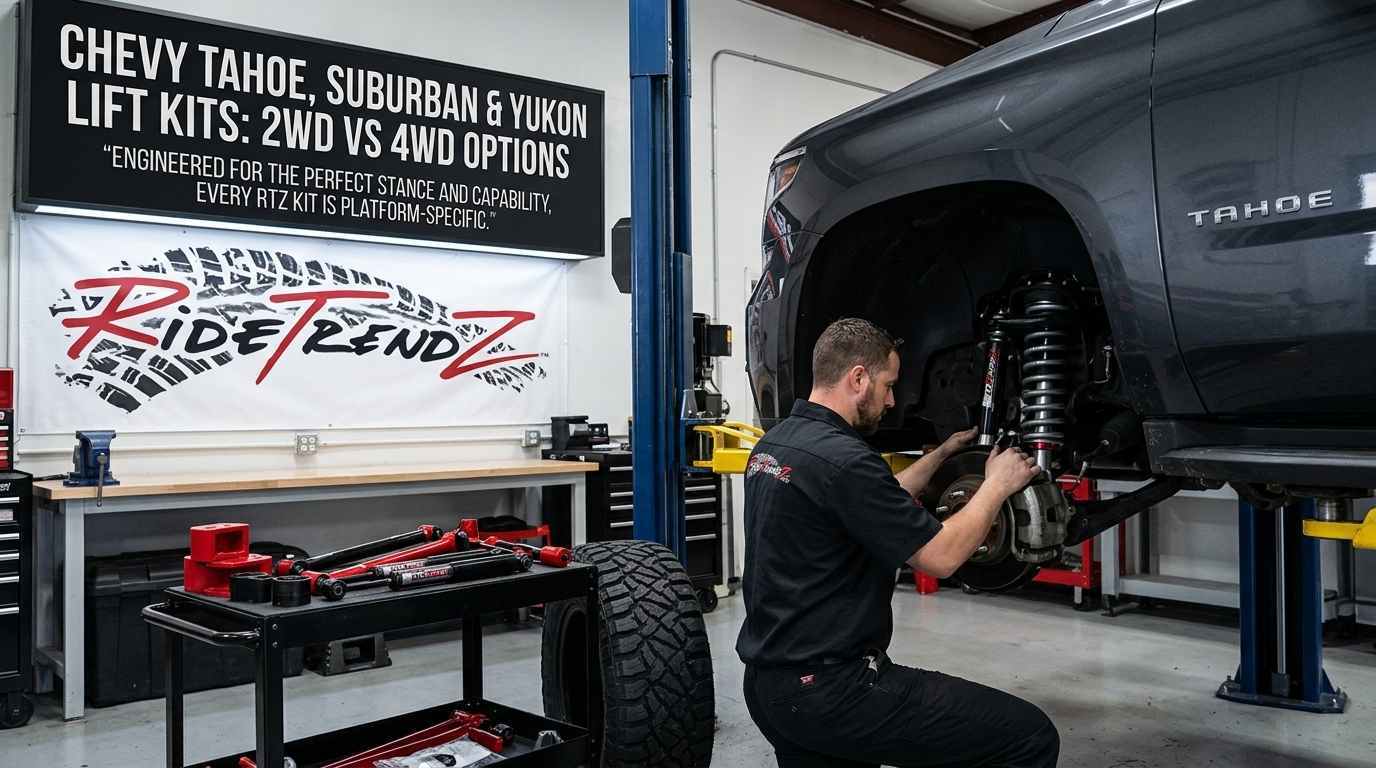
When shopping for lift kits 2WD vs 4WD, there are dozens of suspension brands online. Most of them are drop-shipping Chinese imports with zero engineering documentation. RideTrendz is different, and the difference is measurable.
What separates RTZ:
- All RTZ products are engineered to fitment-specific tolerances, not universal fit
- Every complete kit is pre-matched so shocks, spacers, and hardware work together
- Pricing is honest, no upsell games, no "call for price"
- Product pages list exact part specs, vehicle compatibility, and install notes
- RTZ Primo and DoetschTech shocks are purpose-built for lifted applications, not rebadged stock units
Learn why buying USA-engineered suspension parts matters here.
The Silverado drop spindles engineering that RTZ refined on the Silverado platform directly improves fitment on the Tahoe and Suburban since they share the same front suspension architecture. RTZ does not reinvent the wheel per model; it applies proven engineering across the GM ecosystem.
RTZ vs Generic Brand Comparison:
|
Feature |
RTZ |
Generic Import |
|
Fitment testing |
Vehicle-specific |
Universal claims |
|
Shock calibration |
Matched to lift height |
Generic valving |
|
Material, spacers |
6061 billet aluminum |
Polyurethane or cast |
|
Hardware grade |
Grade 8 |
Unknown |
|
Documentation |
Full install specs |
Minimal |
|
Warranty support |
Real, contact available |
Difficult to claim |
|
Price |
Fair |
Artificially cheap |
Suspension Basics, What Tahoe, Suburban & Yukon Owners Should Know?
If this is your first lift project, here is the fast version of what you need to know about front suspension parts before you order.
The GMT800 and GMT900 platform Tahoe, Suburban, and Yukon use an independent front suspension with torsion bars (older GMT400) or coil-over struts (GMT800/900). Lift Kits 2WD vs 4WD approach these differently:
- Torsion bar platforms (pre-2000): Lift is achieved by cranking the torsion bar adjuster. RTZ recommends spacers plus a drop bracket for alignment correction.
- Coil spring/strut platforms (2000+): Lift is achieved with coil spring spacers or full strut replacement. RTZ aluminum spacers are the preferred approach for 1.5–3 inch lifts on these platforms.
Get the full suspension basics breakdown for beginners here.
The rear suspension on all three platforms (Tahoe, Suburban, Yukon) is a leaf spring multi-link setup. Rear lift is achieved with add-a-leaf springs, lift blocks, or shackle extensions. RTZ builds rear lift components matched to each front kit in the complete packages.
Installation Overview: What to Expect
Installing an RTZ leveling kit or Lift Kits 2WD vs 4WD package on a suspension lift kit on a Tahoe, Suburban, or Yukon follows a predictable process. Here is an honest time breakdown:
Leveling Kit (2–3 inch), DIY Install:
- Remove wheel
- Compress front coil spring to release strut
- Install RTZ aluminum spacer between strut mount and tower
- Reassemble and torque to spec
- Repeat other side
- Drive to alignment shop
Full Lift Kit (3–4 inch), DIY Install:
- Repeat leveling steps above for front
- Jack rear, support axle
- Install rear lift blocks or shackle extensions
- Install new matched RTZ shocks front and rear
- Re-torque all hardware
- Alignment
Read the full how-to for lowering kit installation (reverse principles apply to lifts) here.
RTZ Honest Assessment: The leveling kit is a capable DIY job for anyone with basic mechanical experience and a spring compressor. The full suspension lift kit at 4 inches and above is better done by a shop unless you have experience with alignment angles and torque specs.
Key Statistics, Tahoe, Suburban & Yukon Lift Market
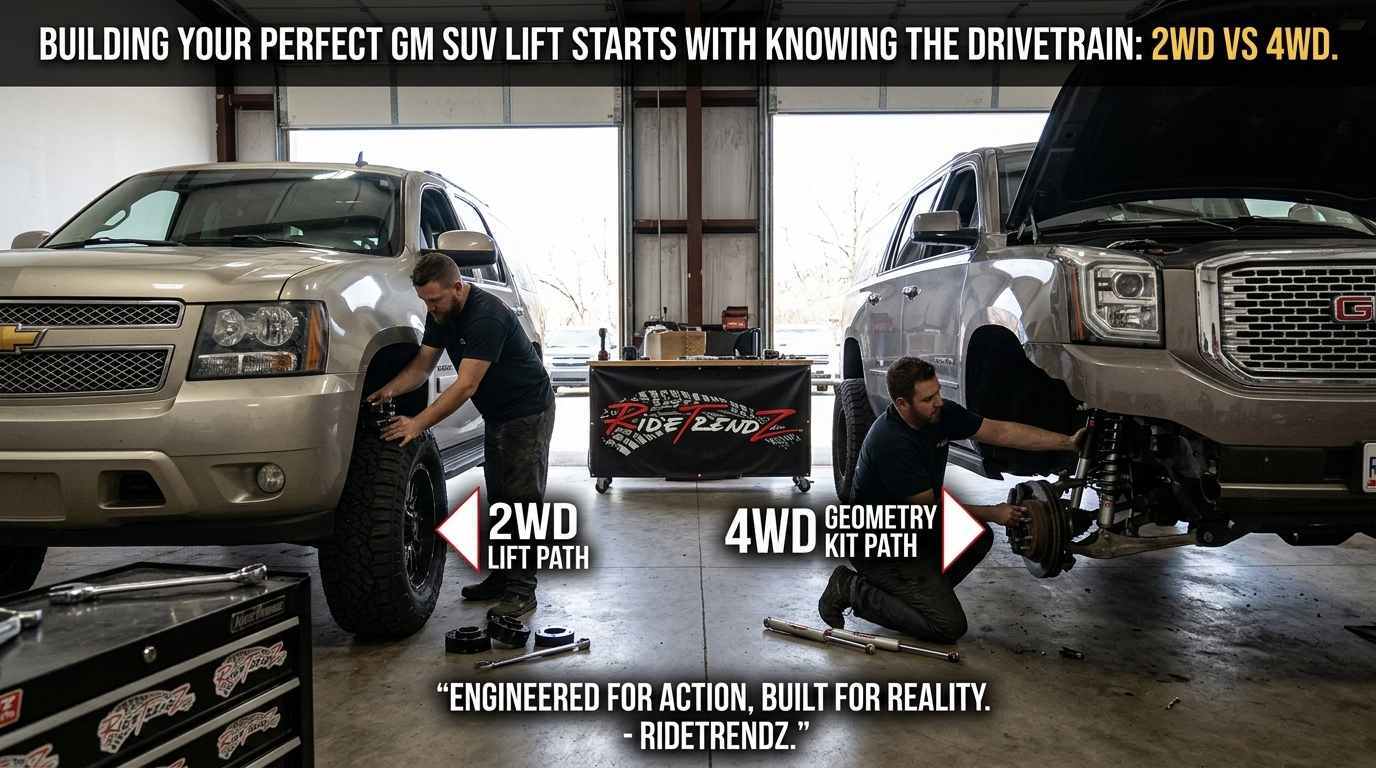
Understanding the market for Lift Kits 2WD vs 4WD helps you make a smarter decision. Here is what the data shows:
- Most popular lift height for Tahoe: 3 inches (leveling), accounts for approximately 55% of lift installs on this platform
- Most popular lift height for Suburban: 4 inches (full kit), the longer wheelbase handles bigger lifts without as much visual over-lift
- Most popular lift height for Yukon: 3 inches (leveling or full kit split evenly)
- Average tire size after lift: 33–35 inches, with 35s most common on 4-inch-and-above builds
- 2WD vs 4WD split: Approximately 35% of Tahoe/Suburban/Yukon lift installs are on 2WD platforms, primarily for stance builds and street use
- Re-lift rate: Approximately 40% of first-time leveling kit buyers upgrade to a full suspension lift kit within 18 months
These numbers confirm what RTZ sees in order data: the market is moving toward complete kits because buyers quickly recognize that matched components outperform pieced-together builds.
Conclusion
The Lift Kits 2WD vs 4WD decision for your Chevy Tahoe, Suburban, or Yukon comes down to two factors: what you want the truck to do, and how much height you actually need. For a cleaner street stance and moderate tire size increase, a leveling kit with RTZ aluminum coil spring spacers is the smart, cost-effective move. For genuine off-road capability and aggressive tire fitment, a complete RTZ suspension lift kit with matched nitro shocks delivers a build that performs as well as it looks.
RideTrendz engineers every kit for a specific platform and drivetrain. You are not guessing compatibility. You are not stacking generic parts and hoping they work together. Every RTZ build is a tested, matched system, and that is the difference between a lift that transforms your truck and one that wears out your tires and frustrates you on every drive.
Browse the full RideTrendz catalog, match your vehicle, and build it right the first time.
Frequently Asked Questions
- What is the difference between Lift Kits 2WD vs 4WD for the Chevy Tahoe?
A 2WD lift focuses on stance and clearance. A 4WD lift also corrects CV geometry. Both use coil spring spacers, but 4WD kits include geometry hardware to prevent CV axle wear above 3 inches.
- Can I put a 3-inch leveling kit on a 4WD Tahoe without changing my upper control arms?
Yes, at 3 inches, a leveling kit is generally safe on factory upper control arms. Above 3 inches on a 4WD platform, aftermarket upper control arms are strongly recommended to restore correct caster.
- How long does it take to install an RTZ leveling kit on a Tahoe or Suburban?
A 2–3 inch leveling kit takes 2–4 hours for an experienced DIY mechanic. Always follow with a professional alignment immediately after installation to protect tires and steering components.
- Do RTZ complete lift kits include shocks for Tahoe and Suburban applications?
Yes. RTZ complete suspension lift kits include DoestchTech Nitro or RTZ Primo nitrogen gas-charged shocks tuned specifically to the lift height of each kit, not generic universal shocks.
- What tire size can I fit on a Tahoe with a 4-inch lift kit?
A properly installed 4-inch suspension lift kit on a Tahoe or Suburban supports up to 35-inch tires in most configurations. Fender trimming may be needed for certain aggressive tread patterns at full steering lock.