

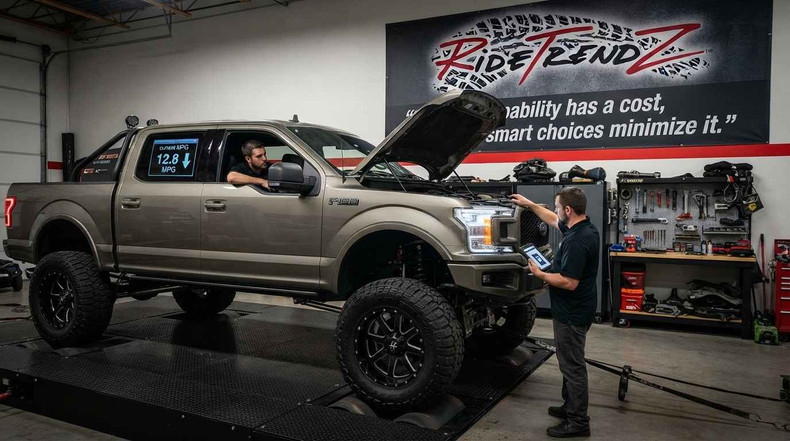
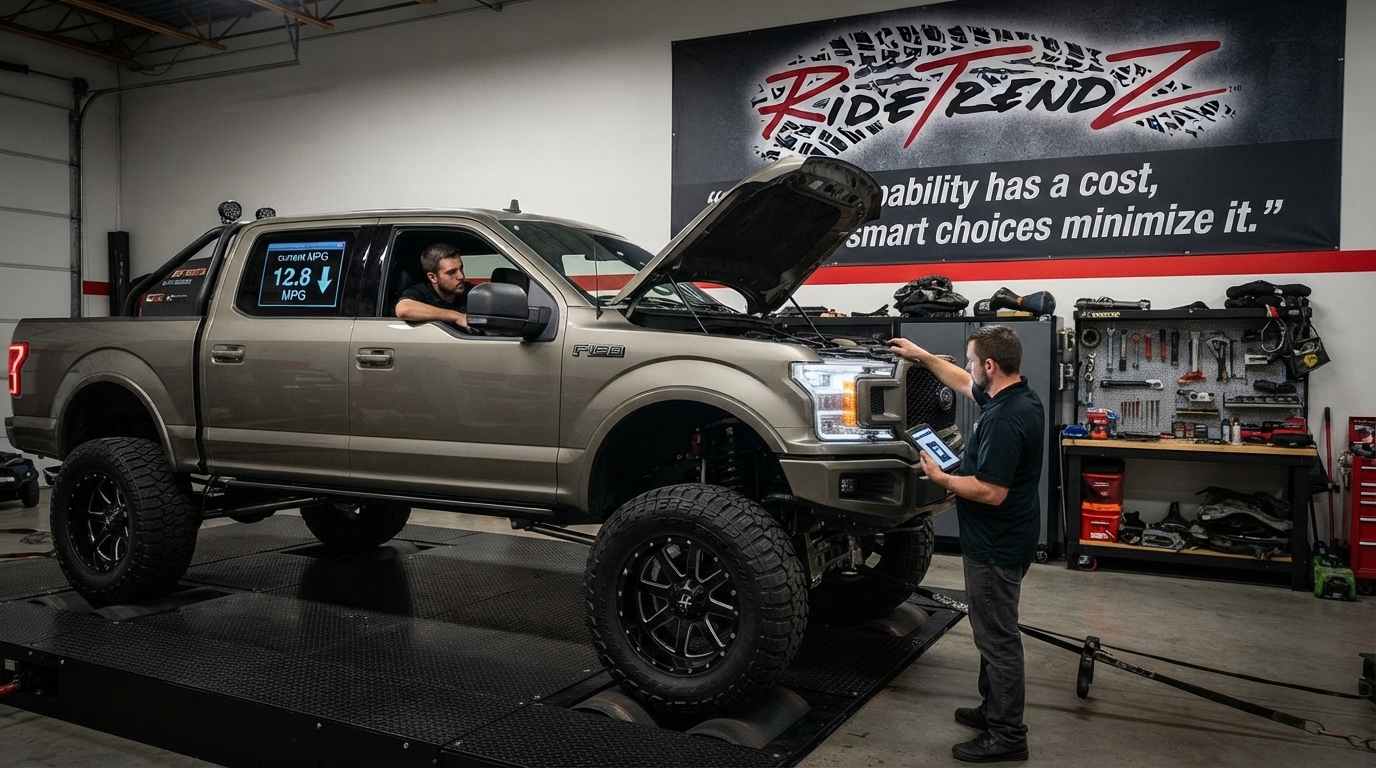
Most articles on this topic give you vague answers or just scare you away from lifting your truck entirely. That's not what you'll get here. I've dug into the real data, the engineering behind it, and what thousands of truck owners actually experience, so you can make a smart, informed decision about your build.
If you're searching for " does lifting a truck affect gas mileage, the short answer is yes, but by how much, and whether it matters, depends entirely on how you lift, what tires you run, and how you drive. Let's break that down completely.
Does Lifting a Truck Affect Gas Mileage? The Core Answer
Yes, does lifting a truck affect gas mileage is one of the most Googled questions among truck enthusiasts, and for good reason. Lifting your truck changes three fundamental things that directly affect truck gas mileage: aerodynamics, weight, and drivetrain geometry.
Here's how each factor plays out:
|
Factor |
Effect on MPG |
Severity |
|
Increased ride height |
Higher aerodynamic drag |
Moderate |
|
Larger tires (common with lifts) |
More rotational mass |
High |
|
Heavier suspension components |
Additional weight |
Low–Moderate |
|
Altered drivetrain angles |
Increased friction losses |
Low |
|
Changed gear ratios (if re-geared) |
Can offset losses |
Positive |
Understanding lifted truck mpg losses starts with understanding these inputs. They're not all created equal.
How Does a Lift Kit Affect MPG?
When people ask how a lift kit affects mpg, they usually assume the lift itself is the main culprit. It's actually the combination of lift + tires that does the heavy lifting (pun intended) on fuel economy in trucks.
Aerodynamic Drag Goes Up
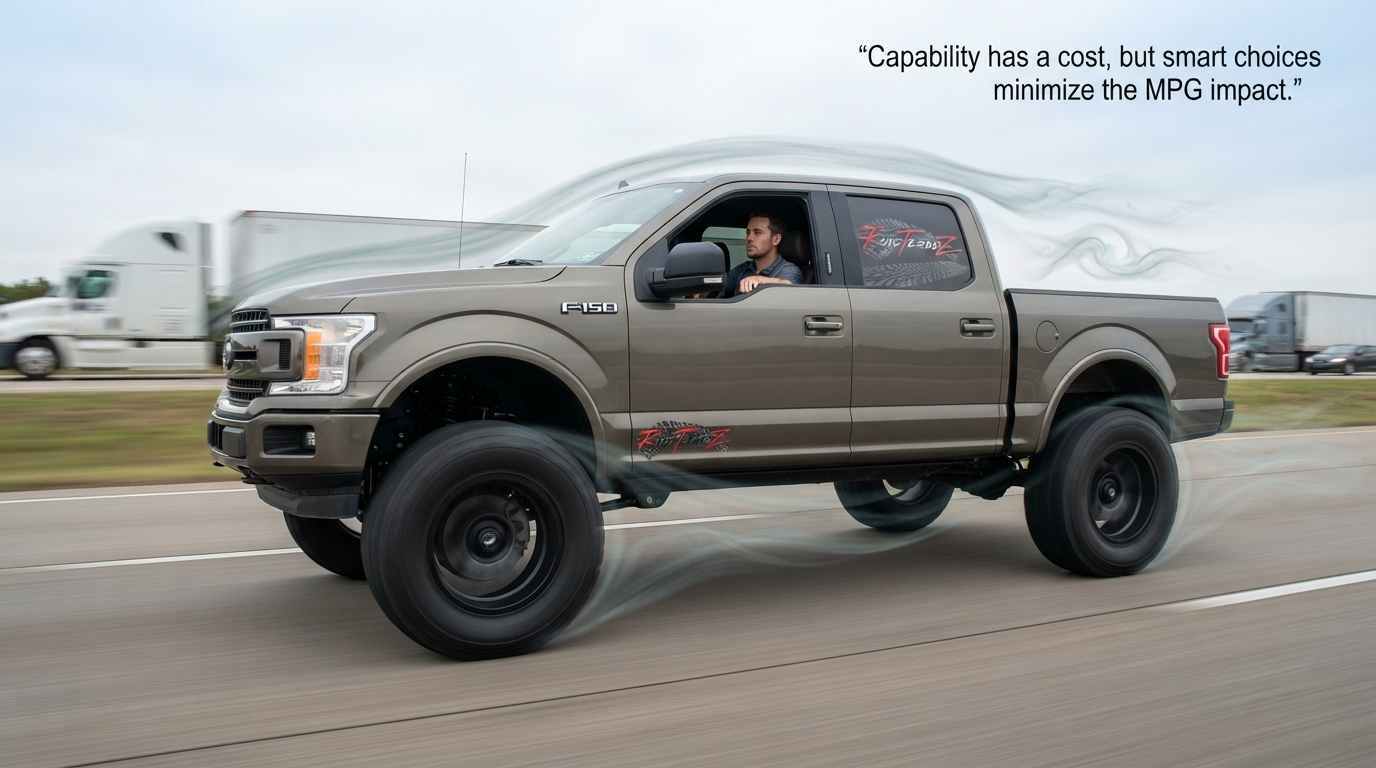
A standard pickup truck is already not a slippery shape. But raise the ride height by 4–6 inches and you dramatically increase the frontal area exposed to air resistance. At highway speeds, aerodynamic drag is the #1 enemy of fuel efficiency mpg. A 6-inch body lift alone can reduce highway truck mpg by 1–3 MPG depending on speed.
Bigger Tires Are the Real MPG Killer
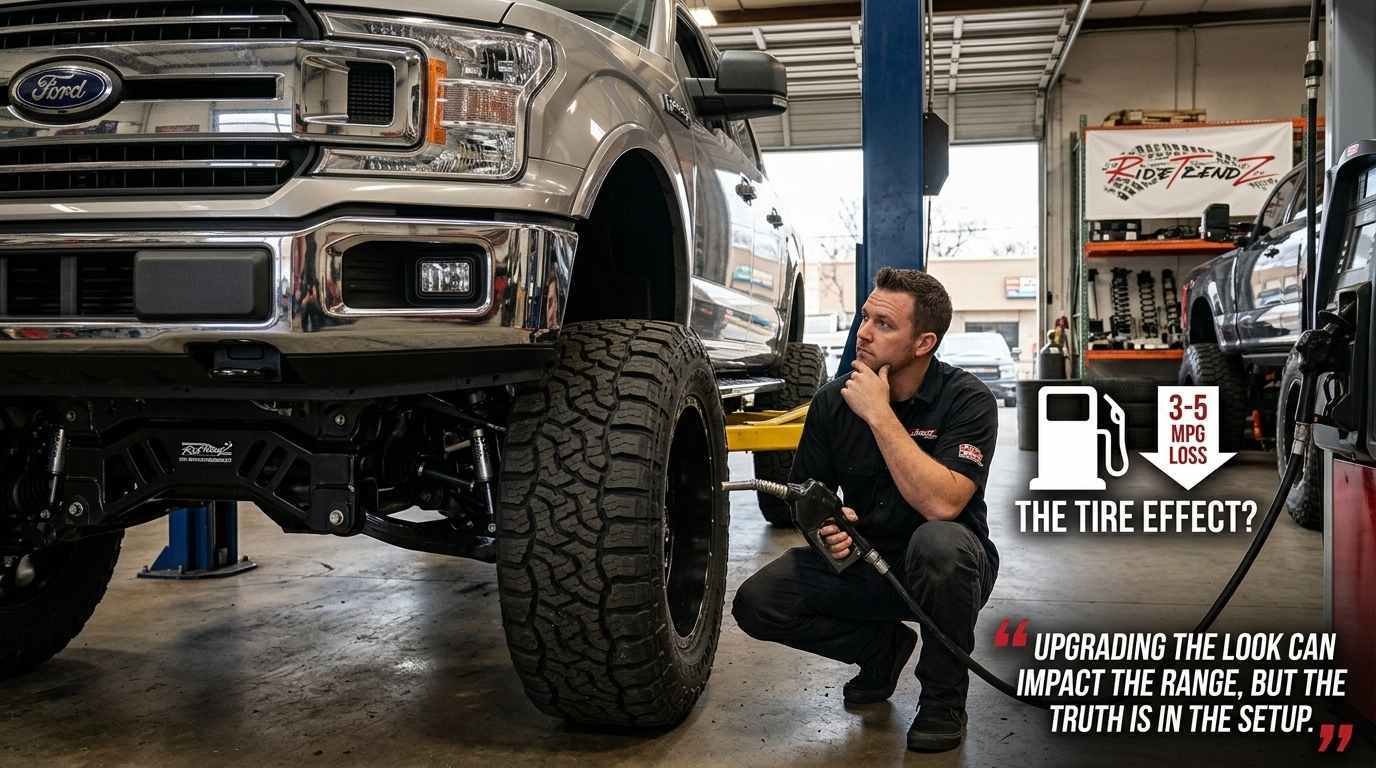
Tires are where lift truck mpg numbers really suffer. Going from a 265/70R17 to a 35x12.50R17 adds significant rotational mass. Your engine has to work harder to spin heavier tires, especially from a stop. The rolling resistance increases too. Most owners who go with oversized tires without re-gearing see lifted truck mpg drops of 3–5 MPG in real-world driving.
Weight Adds Up
A quality lift kit adds anywhere from 50 to 200+ lbs depending on the design. That's not catastrophic on its own, but combined with larger tires (each weighing 5–15 lbs more than stock), the total unsprung weight increases meaningfully.
Drivetrain Angle Changes
Suspension lift kit installs can alter the CV joint angles and driveshaft angles. When these exceed their designed operating range, friction increases, another silent drain on fuel economy in trucks.
What Is the Average MPG of a Truck, Stock vs. Lifted?
Let's anchor this with real numbers. What is the average mpg of a truck from the factory?
|
Truck Model |
Stock MPG (City/Hwy) |
Estimated Lifted MPG (4" + 35s) |
|
Ford F-150 (3.5L EcoBoost) |
17/24 |
14–20 |
|
Chevy Silverado 1500 (5.3L V8) |
15/20 |
12–17 |
|
Ram 1500 (5.7L Hemi) |
15/22 |
12–18 |
|
Toyota Tacoma (3.5L V6) |
19/24 |
15–20 |
|
GMC Sierra 1500 (6.2L V8) |
15/20 |
12–16 |
These are real-world estimates from community tracking databases and owner-reported data. The pattern is consistent: a 4–6 inch lift with larger tires costs you roughly 2–5 MPG in combined driving. Average truck mpg drops more dramatically the larger the tire upgrade.
What is the most fuel-efficient truck from the factory? In the full-size segment, the Ford F-150 Hybrid leads at up to 25 MPG combined, followed by the Ram 1500 EcoDiesel at around 22–33 MPG. For mid-size, the Ford Maverick Hybrid is a standout as the most fuel-efficient pickup truck at 42 city MPG.
But here's the important nuance: if you're buying a truck specifically to lift it and use it off-road, you're not buying it for fuel economy. You're buying capability. The question isn't "will I lose MPG?", it's "how much, and is that tradeoff worth it for what I want to do?"
Average Truck Fuel Economy: Lifted vs. Stock Breakdown
Understanding average truck fuel economy requires looking at the whole picture, not just the lift itself.
Average MPG for Trucks: Key Variables
Average mpg for trucks after a lift depends on:
- Lift height: 2" leveling kits cause minimal MPG loss (often under 1 MPG). 4" suspension lifts cause moderate loss. 6"+ lifts with large tires cause significant loss.
- Tire size upgrade: This is the single biggest variable. Many owners lift without upsizing tires and see almost no fuel economy change.
- Driving style: Highway driving amplifies aerodynamic losses. City driving amplifies rotational mass losses.
- Re-gearing: Changing axle gear ratios to compensate for larger tires can restore most of the lost MPG.
Average truck mpg data from owner surveys tells a consistent story:
Trucks with a 2-inch level kit and stock tires: 0–1 MPG loss
Trucks with a 4-inch lift and 33" tires: 1–3 MPG loss
Trucks with a 6-inch lift and 35" tires: 3–5 MPG loss
Trucks with a 6"+ lift and 37"+ tires without re-gearing: 4–7 MPG loss
That last scenario is where truck mileage average complaints come from. And it's entirely avoidable with the right approach.
Fuel Efficient Pickup Trucks: Are Any Lift-Friendly?
Here's a question most people don't think to ask: which trucks with good gas mileage are also the most resilient to MPG loss after a lift?
The answer involves fuel-saving trucks with strong low-end torque; diesel and hybrid powertrains tend to recover better from the added load of larger tires and higher aerodynamic drag.
Most Fuel-Efficient Trucks That Handle Lifts Well
Most fuel-efficient pickup truck options that respond reasonably well to modest lifts:
Ford F-150 PowerBoost Hybrid: The hybrid system's instant torque makes it one of the most fuel-efficient full-size pickup trucks that still has enough grunt to manage added tire weight without cratering efficiency. A 2-3" level with 33" tires keeps it respectable.
Ram 1500 EcoDiesel: Diesel torque curves are naturally suited to managing added rotational mass. The truck fuel economy drop from a modest lift is smaller than with gas engines at highway speeds.
Toyota Tacoma (4-cyl): The smaller engine means less to compensate, but the Tacoma's gearing is conservative enough that a leveling kit with mild tire upsizing doesn't hit the computer too hard.
Chevy Silverado with 3.0L Duramax: Another diesel option with excellent fuel economy in trucks that holds up better under mild lifting than the V8 alternatives.
Does Lifting a Truck Affect MPG, Pros vs. Cons at a Glance
Here's the honest picture:
|
Pros of Lifting |
Cons re: Fuel Economy |
|
Ground clearance for off-road |
Aerodynamic drag increases |
|
Larger tire capability |
Rotational mass increases |
|
Better towing approach angles |
Possible drivetrain friction |
|
Aggressive, commanding stance |
Potential 2–5 MPG reduction |
|
Better visibility on-road |
Higher fuel costs over time |
|
Access to 33"–40" tires |
Re-gearing adds cost |
The key takeaway: does lifting a truck affect mpg significantly only when you combine a tall lift with oversized tires and don't re-gear? A strategic lift done right minimizes the tradeoff.
Highest MPG Trucks After a Lift, Real Owner Data
Looking at highest mpg trucks post-modification, owners who minimize their MPG loss consistently share the same strategies:
Highest fuel economy pickup truck survivors after lifting typically:
- Stayed at or under 3 inches of lift
- Did not upsize tires beyond 1 size over stock
- Re-geared the axles if going to 35s or larger
- Added a tuner/programmer to adjust shift points
- Maintained proper tire inflation (every 1 PSI low costs ~0.2% fuel economy)
High mpg trucks post-lift are achievable. The difference between someone who loses 1 MPG and someone who loses 5 MPG from the same lift height is almost always the tire choice.
Truck with Highest MPG, What Actually Matters for Fuel Saving Trucks?
If you want the truck with the highest MPG even after lifting, here are the fuel-efficient pickup truck principles that apply regardless of brand:
Highest MPG Pickup Truck Strategies for Lifted Builds
- Choose the right lift type first.
A leveling kit raises only the front 1–2 inches to match the rear. The aerodynamic and weight impact is minimal. A full suspension lift kit is more dramatic in both capability and MPG impact. Understand the difference between lift kits and leveling kits before deciding which direction to go. - Don't go bigger on tires than your lift requires.
Truck owners chasing trucks with great gas mileage after a lift should resist the urge to max out tire size. Go one size up, not three. - Re-gear your axles if you upsize significantly.
Stock gear ratios are tuned for stock tire circumferences. Going from a 31" tire to a 35" without re-gearing is like permanently driving in the wrong gear. Your engine revs higher than necessary, burning extra fuel constantly. - Consider tonneau covers and other aerodynamic aids.
Research suggests tonneau covers can improve highway MPG by 1–2% by reducing turbulence in the truck bed, a meaningful recovery when you've already lost a few MPG to the lift. - Invest in quality shocks designed for your new ride height.
Cheap shocks that bottom out or cavitate create resistance in the suspension. Quality nitrogen-charged shocks, like those in RideTrendz's complete lift kits, move freely through their travel, reducing parasitic drivetrain losses.
Good Gas Mileage Truck With 4x4 After Lifting
One of the most searched questions in this space: good gas mileage trucks 4x4, is it possible after a lift?
Yes, but 4x4 trucks have a baseline disadvantage. Four-wheel-drive systems add weight (transfer case, front differential, front CV axles) and even in 2WD mode add slight parasitic drag compared to 2WD-only trucks.
If you want good gas mileage for a truck with 4x4 capability and a lift, here's what matters:
- Use 2WD mode on dry pavement;4WD burns more fuel on hard surfaces
- Lock hubs when possible on older systems
- Keep the lift conservative (2–3 inches) if fuel economy is a priority
- Run the most aerodynamic tire profile that fits your wheel size
Good trucks with good gas mileage in the 4x4 lifted category exist; the Ram 1500 EcoDiesel 4x4 and Ford F-150 PowerBoost 4x4 both manage respectable truck mpg numbers even with a modest level kit.
How to Improve Gas Mileage on a Truck After Lifting
Once you've committed to a lift, here's how to improve gas mileage on a truck to recover as much fuel economy as possible:
How to Increase Fuel Economy on a Lifted Truck
Re-gear the axles. This is the most impactful change. Matching your gear ratio to your new tire size restores the engine's RPM range to its efficient zone at highway speed. Cost: $800–$2,500 depending on the truck.
Add a tune or programmer. Adjusting shift points, throttle response, and idle timing can recover 0.5–1.5 MPG on some platforms.
Tire selection matters. Low-rolling-resistance all-terrain tires (like some BF Goodrich KO2 configurations) lose less fuel efficiency in MPG than aggressive mud-terrain tires. You don't need mud tires if you're 90% on pavement.
Proper wheel alignment: A lift that's not properly aligned creates drag from tire scrub. Get a 4-wheel alignment after any suspension work.
Regular maintenance, fresh engine oil (use the manufacturer-spec viscosity), a clean air filter, and proper spark plugs all affect how efficiently your engine burns fuel. These become more important when your engine is working harder due to increased rolling resistance from a lift.
How to figure out gas mileage after your lift: Fill up completely, drive a full tank, fill up again, and divide miles driven by gallons used. Do this over 3–4 tanks to get an accurate baseline. Then track changes after each modification.
Understanding how a lift works at a mechanical level helps you make smarter decisions about every component. If you want a deeper dive, our guide on how a truck suspension lift kit works is the best place to start.
What Is Good Gas Mileage for a Truck? Setting Expectations
What is good gas mileage for a truck after a lift?
Here's a realistic benchmark:
|
Lift Setup |
Good Post-Lift MPG (Combined) |
|
1–2" leveling kit, stock tires |
16–22 MPG (full-size) |
|
3–4" lift, 33" tires, re-geared |
14–19 MPG (full-size) |
|
4–6" lift, 35" tires, re-geared |
12–17 MPG (full-size) |
|
6"+ lift, 37"+ tires, re-geared |
10–15 MPG (full-size) |
|
Mid-size truck, 2–3" lift, 33" |
17–22 MPG |
What is a good MPG for a lifted truck isn't the same as for a stock truck. Set realistic expectations. If you're hitting the middle of that range for your lift configuration, you're doing well.
What is the most gas-efficient truck in lifted form? Among full-size options, the Ram EcoDiesel with a level kit consistently delivers the best MPG figures. Among mid-size lifted trucks, the Tacoma TRD Pro (essentially factory-lifted) manages the tradeoffs well right out of the box.
How Much Does It Cost to Lift a Truck? Know Before You Mod
Before committing to any lift, understanding the full cost picture matters, because how much does it cost to lift a truck includes more than just the kit price.
How much does a lift kit cost at the parts level:
|
Lift Type |
Parts Cost Range |
|
Leveling kit (1–2") |
$50–$300 |
|
Spacer lift (2–3") |
$150–$600 |
|
Suspension lift (4") |
$400–$1,500 |
|
Full suspension lift (6"+) |
$1,000–$4,000+ |
Installation labor typically adds $200–$1,000 depending on lift complexity. Re-gearing (if needed) adds $800–$2,500. New tires add $600–$2,000 depending on size and brand.
How much does a leveling kit cost specifically? Budget-friendly leveling kits start around $50–$100, while premium complete kits with shocks run $200–$600.
That's why choosing a complete kit from a brand that engineers every component to work together, like RideTrendz, saves money and headaches compared to mixing parts from different manufacturers.
Why RideTrendz Is the Smart Choice for Your Lift Kit?
Here's where we have to be direct: the quality of your lift kit matters enormously for both performance and fuel efficiency mpg.
RideTrendz (RTZ) engineers complete suspension systems where every component is designed to work together. That's not just marketing; it's engineering. When your lift kit components (spacers, blocks, shocks, shackles) are matched from the factory, your suspension operates within its designed geometry. That means less friction, correct alignment angles, and shocks that move freely, all of which reduce the parasitic losses that rob your truck's mpg.
RideTrendz offers nitrogen-charged DTech shocks specifically calibrated for lifted ride heights. Cheap shocks on a lift create resistance through improper valving and heat buildup. RTZ shocks are engineered to match the increased travel range of lifted suspension, reducing energy waste and protecting your truck's drivetrain.
Additionally, RideTrendz's complete kits include everything you need in one box: spacers, blocks, shackles, and shocks matched and rated for each other. You're not guessing whether components are compatible. That compatibility translates directly to better on-road performance, longer component life, and a more predictable fuel economy outcome.
For trucks with good gas mileage post-lift, the foundation is a properly engineered lift, not a stack of mismatched parts from different manufacturers.
You can browse RideTrendz's full lineup of complete lift kits to find the right fit for your truck.
How to Lower a Truck If You're Worried About MPG?
It's worth acknowledging: if you love the look of a custom stance but want to protect truck gas mileage, lowering kits move in the opposite direction, reducing aerodynamic drag and slightly improving fuel economy.
Lowering your truck can recover 1–2 MPG on trucks where the stock ride height is already higher than aerodynamically ideal. RideTrendz offers both lift and lowering solutions, giving you full control over your truck's stance and capability.
If you decide to go the lowering route, understanding how to install a lowering kit on your truck is essential reading before you start wrenching.
Real Talk, Does a Lifted Truck Always Lose MPG?
Let me be direct with you: does lifting a truck affect gas mileage in every case? Mostly yes, but the loss can be so small it's practically irrelevant.
A 1.5-inch leveling kit with no tire change on a modern truck? You might lose 0.5 MPG. That's statistically within measurement error. You'd need to track it over many fill-ups to even confirm it.
A 2-inch front spacer kit on a half-ton with 32" tires? Maybe 1 MPG. Still well within the range of variation from driving style, weather, and gas quality.
The scenarios where lifting a truck affects mpg become a real-world concern:
- Lifts of 4"+ with 35" or larger tires
- Trucks that were already marginal on fuel economy (V8 trucks vs. smaller-engine options)
- Owners who drive primarily at highway speeds (aerodynamic drag is speed-squared, so 75 MPH costs much more than 55 MPH)
- Trucks that are NOT re-geared after tire upsizing
If you're lifting for off-road capability, you've already accepted that capability has costs. The goal is minimizing those costs through smart choices, and that's exactly what a high-quality engineered lift system from RideTrendz helps you do.
For a deeper understanding of whether a suspension lift kit is the right choice for your goals, our guide on what a suspension lift kit is and its types and benefits covers everything you need to know.
Older Trucks with Good MPG After Lifting
Older trucks with good mpg after lifting are a special case. Older trucks (pre-OBDII, carburetor era, or early fuel injection) often have more mechanical flexibility; you can re-jet a carburetor or swap a gear without a dealer reflash.
However, older trucks generally start from lower baseline truck mpg numbers. A lifted 1987 Chevy C10 was never getting 20 MPG anyway. The loss from lifting is proportionally less significant.
For older trucks, what matters most is:
- Proper suspension geometry maintenance (worn bushings cause misalignment drag)
- Matching lift height to available tire clearance
- Running quality shocks that don't create additional suspension resistance
RideTrendz has extensive offerings for classic trucks like the 1973–1987 Chevy C10, Ford F-150 (1965–1996), Dodge D-series, and more, with purpose-built kits that fit these vehicles' unique suspension geometry.
Conclusion
Does lifting a truck affect gas mileage?
Yes, but how much depends entirely on your choices. A modest leveling kit with stock tires? Negligible impact. A 6" lift with 37" tires and no re-gearing? You're looking at a real fuel economy hit.
The smart approach is:
- Match lift height to your actual off-road needs
- Consider tire size carefully before committing
- Re-gear if you go over 33" tires
- Choose a complete, engineered lift kit from a trusted brand
- Maintain your truck properly after the lift
RideTrendz builds complete suspension systems engineered to work together, reducing the parasitic losses that come with mismatched components, and giving your truck the best possible outcome whether you're lifting for the trail or the street. Browse the full lineup at ridetrendz.com to find the right kit for your build.
Frequently Asked Questions
Does lifting a truck affect gas mileage significantly?
Yes, but the impact ranges from minimal (under 1 MPG for a leveling kit) to significant (3–5 MPG for tall lifts with oversized tires). Tire choice matters most.
What does MPG mean and why does it matter for lifted trucks?
MPG means miles per gallon, how far your truck travels on one gallon of fuel. Lifting increases weight and drag, reducing this number.
What is a good MPG for a truck after a 4-inch lift with 35-inch tires?
A good outcome is 13–17 MPG combined for a full-size truck. Re-gearing your axles can recover 1–2 MPG in this configuration.
How does a lift kit affect MPG, and can I reduce the loss?
A lift kit raises aerodynamic drag and often leads to bigger tires, increasing rolling mass. You can minimize loss by re-gearing, choosing lower-rolling-resistance tires, and adding a tune.
What is the average MPG of a truck with a lift kit installed?
Average lifted truck MPG varies from 12–20 MPG depending on engine, lift height, tire size, and whether the axles are re-geared to match the new tire diameter.