
Chevy S10 Lift Kit Guide (1982–2004)
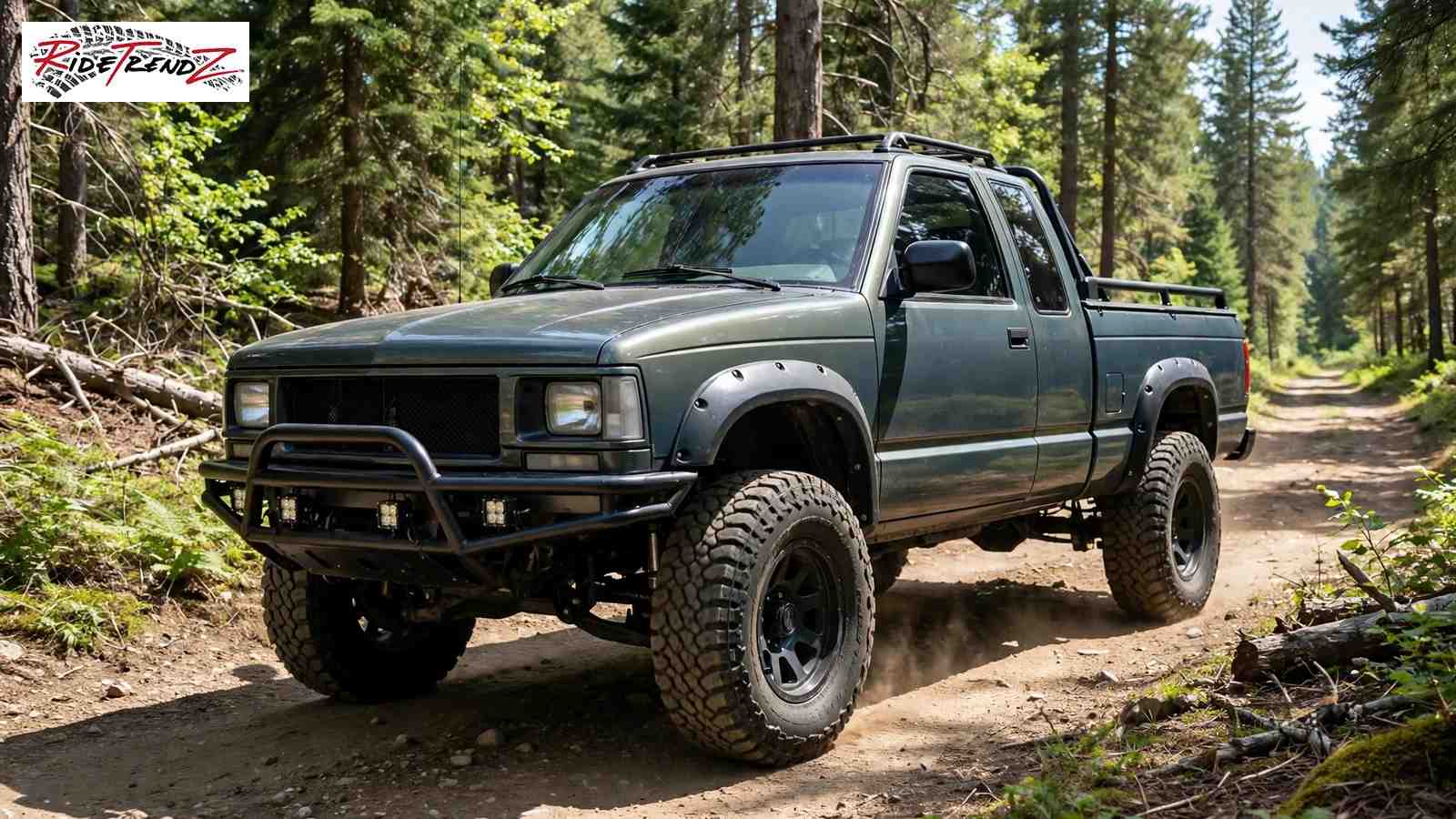
The S10 is the budget off road platform that refuses to retire, and the right chevy s10 lift kit turns a cheap 1982-2004 pickup or Chevy S10 Blazer into a trail ready rig. This guide walks through every lift kit for 1982-2004 Chevy S10 trucks, from coil spacers to the 4wd lift kits and a full solid axle swap, with fitment checks by year and drivetrain. Benchmark ranges such as Rough Country lift kits and Pro Comp kits appear as reference points only, and Ridetrendz sells its own S10 suspension parts.
Quick Summary
- A chevy s10 lift kit raises a 1982-2004 S10 or Chevy S10 Blazer for bigger tires, more clearance and a level stance.
- 2WD trucks lift at the front with coil spring spacers, lift spindles or taller coils, while 4WD trucks use their torsion bars.
- Rear lift comes from lift shackles, add a leaf springs or a matched adjustable rear lift kit, never from stacking shortcuts.
- A 2 to 3 inch lift is the sweet spot for most builds, with extra room for 31 inch tires and an alignment afterwards.
- Ridetrendz stocks its own S10 spacers, coils, shackle kits and full kits, the in house answer to Rough Country suspension lift kits, with fitment help for every year and drivetrain.
What a chevy s10 lift kit does on the road and the trail?
A lift raises the body and frame away from the axles, and that single change improves approach angles, breakover clearance and the room inside the fender arches. On a small truck like the S10 the gains feel big, because the stock ride height leaves little margin under the front crossmember and the rear differential on rutted tracks.
Ground clearance gains that matter under a small truck
Ground clearance is the distance between the lowest hard part of the truck and the ground, and on an S10 that low point is usually the front crossmember or the rear axle housing. Even a modest lift kit for 1982-2004 Chevy S10 models moves those parts up enough to cross washouts, stumps and ledges that would hang a stock truck up mid trail.
Room for larger tires is the real prize
Most owners lift for tire clearance first and looks second, because larger tires add their own clearance under the axles and float better on sand, mud and snow. A lift opens extra room in the arches for a 31 inch tire, and the tire itself then raises the differential, which no suspension change alone can do on a solid rear axle truck. The raised bumper line helps on banks too.
Suspension lift versus body lift on the S10
The two families split cleanly. A suspension lift kit changes the springs, spacers or brackets that hold the axles, while a body lift raises only the cab and bed on taller mounts. Suspension work adds real clearance under the frame, and a chevy s10 lift kit built around the suspension also corrects the stance, while a body lift only makes room in the arches.
How a suspension lift works on this platform?
The S10 front suspension is a short and long arm design with coil springs on 2WD trucks and torsion bars on 4WD trucks, and the rear rides on leaf springs. A kit raises each end by swapping suspension components, spring height, spring position or bracket geometry, and the guide to how a truck suspension lift kit works explains the shared principles behind every method.
How a body lift works and where it falls short?
A body lift slides tall pucks between the body and the frame, lifting the cab and bed without touching the suspension. The frame, axles and skid plates stay at stock height, the bumper gaps grow, and the steering shaft and linkages need extensions. It is cheap extra room for tires, and the overview of what a suspension lift kit includes shows what the suspension route adds beyond it.
|
Method |
What it raises |
Clearance gain |
Best use |
|
Suspension lift |
Springs, spacers and brackets |
Frame and axles both gain room |
Trail use and tire clearance |
|
Body lift |
Cab and bed on taller mounts |
Arches only, frame stays low |
Cheap room for tires |
|
Leveling kits |
Front end only |
Small front gain |
Stance correction |
Lifting the 2WD S10 with coils, spacers and spindles
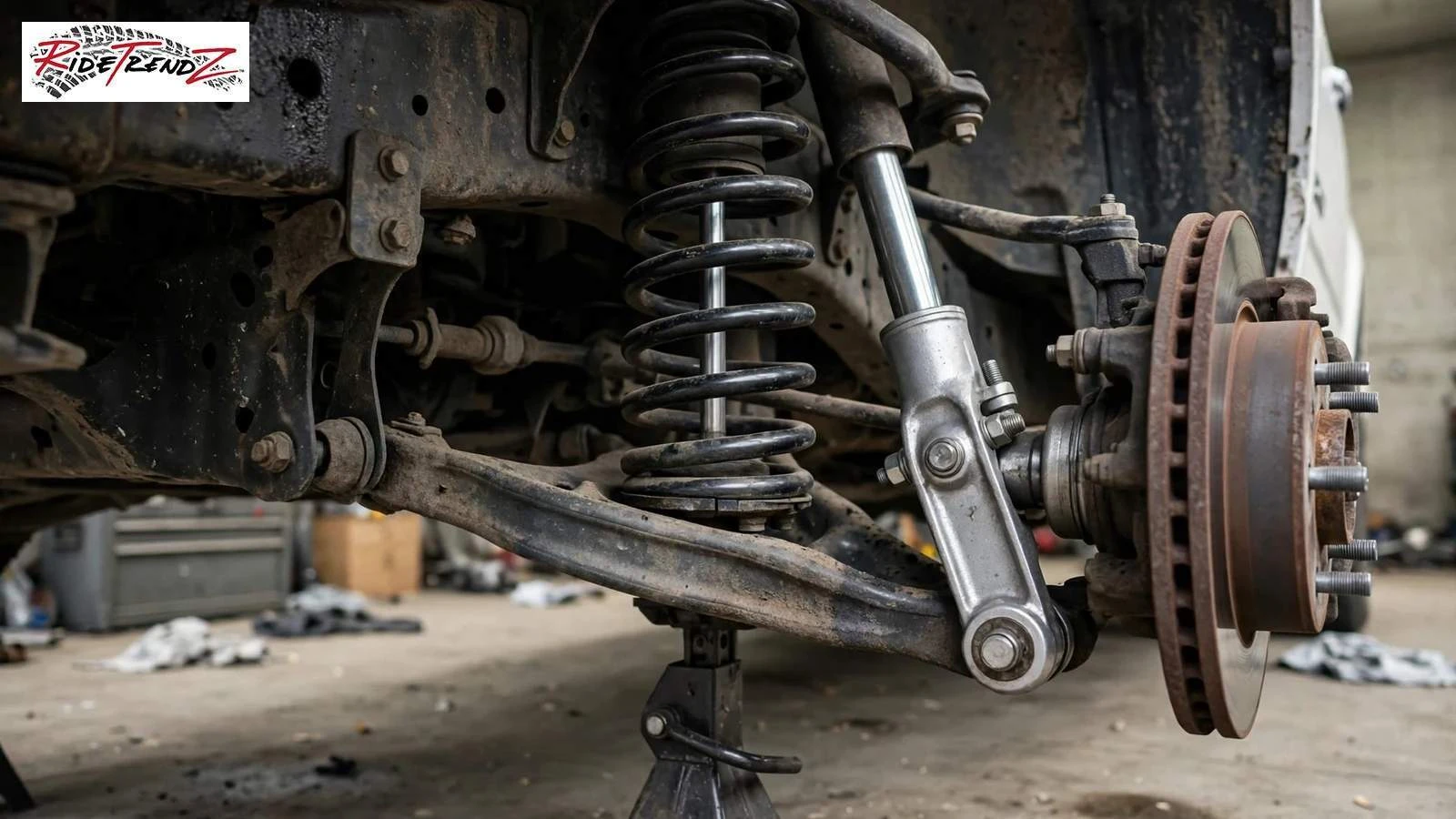
The 2WD S10 and its GMC S15 twin carry coil springs up front, so the front lift routes are simple and affordable. Owners can stack height with spacers above the coils, swap in lift spindles that move the wheel down, or fit taller lift coils. A chevy s10 lift kit built from the S10 front coil spring spacer kits at Ridetrendz covers the spacer route in several heights.
Coil spring spacers, the budget front lift
A coil spring spacer sits above the front coil and pushes the lower control arm down, which raises the nose. Aluminum spacers are light, they do not change the spring rate, and they keep the ride feel. For a first chevy s10 lift kit on a 2WD truck, the front 1.5 inch aluminum coil spring spacers are the entry point, so check fitment and the lifetime warranty terms first.
Lift spindles and taller coils for bigger front lifts
A lift spindle relocates the wheel hub lower on the steering knuckle, adding height without preloading the spring, stressing the control arm bushings or hurting ride quality. Taller coils suit trucks whose original springs have sagged with age. The front 2.5 inch lift coil springs for the V6 suit owners who want fresh springs and lift in one part, and the two routes combine on taller builds.
Lifting the 4WD S10 with torsion bars and drop brackets
The 4WD S10, the Blazer 4x4 and the S15 Jimmy hold their front end on torsion bars, so their 4wd lift path differs from the 2WD coil trucks. Small gains come from adjusting the torsion bars, while honest suspension lift kits add drop brackets, a differential drop and new upper control arms. A S10 lift kit for a 4x4 has to protect CV angles, not just chase height.
Torsion bar cranking and torsion keys, the honest limits
Cranking the torsion bar adjuster bolts preloads the bars and raises the front, and aftermarket torsion keys reindex the bars for more range. The free crank costs ride quality, ball joint angle and steering geometry once it passes about 1.5 inches, so it works as a leveling trick rather than a lift. The Dakota torsion keys versus coil spacers guide explains the same trade off on a rival platform.
Drop brackets, differential drop and upper control arms
A real 4WD suspension lift drops the front differential and the lower control arm mounts with steel drop brackets, keeping the CV axles and ball joints near their factory angles at the new height. Longer upper control arms restore the alignment range the brackets consume. Rough Country suspension lift kits made this bracket layout famous on the S10, and the design remains the benchmark pattern for 4wd lift kits.
Rear lift options for the S10 pickup and Blazer
The rear of every S10, Chevy Blazer and Jimmy rides on leaf springs, so the rear lift menu is shared. Longer shackles are the budget favourite, an extra leaf adds height and load support, and a matched rear lift kit keeps the stance level with the front. A balanced this lift kit plans the rear with the front, and a Blazer lift kit follows the same pattern.
Lift shackles, the simple rear lift
The shackle is the link at the back of the leaf spring, and a longer shackle lowers the spring eye, which raises the rear end. Shackle lifts are cheap, reversible and kind to ride quality. Rear 2 inch lift shackle kit is the rear lift kit staple for both drivetrains, and the rear 3 to 4 inch adjustable lift shackle kit lets owners dial the height in steps.
Add a leaf springs and full rear lift kits
An add a leaf inserts one more leaf into the rear pack, raising the truck and stiffening the spring rate, which helps trucks that tow or haul. Rear kits pair springs or shackles with the hardware a taller Blazer lift kit needs. Lift shackle designs in those kits fine tune the stance. Owners comparing routes can read lift parts versus a complete lift kit before mixing parts across shelves.
Choosing your lift height, from mild level to wild build
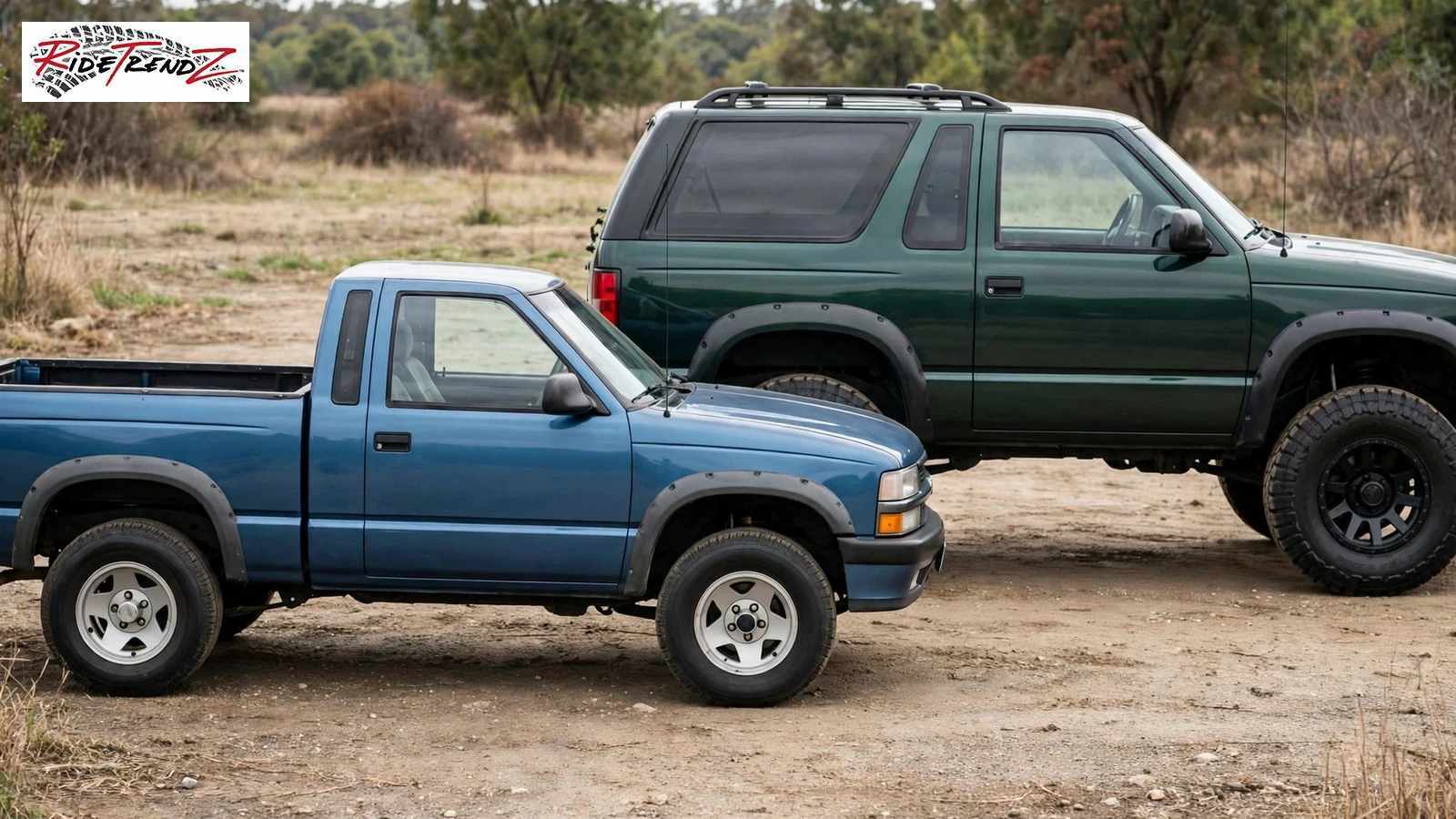
Height is a ladder of trade offs rather than a single number. Leveling kits erase the factory rake, a 2 or 2.5 inch lift clears bigger rubber for dirt roads, and a 3 inch lift starts asking for longer shocks and careful alignment before axle conversion talk even starts. Match the kit for 1982-2004 Chevy S10 trucks to the tire and the terrain first, and the parts list writes itself.
|
Lift height |
Typical tire |
Parts the height needs |
Trail level |
|
Level, about 1.5 inch front |
Stock to 30 inch |
Front spacers or torsion adjustment |
Gravel roads |
|
2 to 2.5 inch lift |
30 to 31 inch |
Spacers or coils, rear shackles, longer shocks advised |
Moderate trails |
|
3 inch lift |
31 inch, trimming varies |
Full kit, differential drop, shocks, alignment |
Rutted and rocky tracks |
|
Solid axle swap, SAS |
33 inch and up |
Dana 44 axle, fabricated mounts, steering work |
Hardcore crawling |
The 2 inch and 2.5 inch routes for mixed driving
Most S10 owners land at 2 or 2.5 inches, because that height clears a 30 or 31 inch tire, keeps the steering geometry friendly and leaves the truck easy to live with daily. The full lift kit with 2.5 inch front coils and rear 2 inch shackles pairs both ends for the V6 2WD trucks, and spacer based full kits with adjustable rear shackles cover the same ground for less.
The 3 inch route and what it demands
At 3 inches, supporting parts matter as much as lift parts. Shock travel, brake line slack, sway bar links and alignment range run out near this height, so better kits bundle the corrections. The full lift kit with front 3 inch spacers and rear 2 inch shackles is the spacer version of this step, and the guide to what lifting a truck costs shows where the extra budget goes.
The solid axle swap, the ceiling for serious builds
When independent suspension becomes the limit, builders cut it out and hang a solid front axle on leaf springs, a modification called an SAS or axle conversion. A Dana 44 axle is the classic choice, and the swap brings strength and articulation. It is fabrication work far beyond a bolt on an S10 lift, so most owners treat the SAS as a long term goal.
Shocks and ride quality after the lift
A shock absorber controls how fast the spring compresses and rebounds, and lifting changes the travel the shock has to manage. Stock length shocks on a lifted truck top out early, which makes the ride harsh and can tear mounts on rough ground. Any the lift kit plan should budget for shock length that matches the new ride height from the start.
Why stock shocks run out of travel?
At stock height the shock sits near the middle of its stroke, with room to extend over dips and compress over bumps. Raise the truck on the same shocks and the resting point moves toward full extension, so droop travel disappears. The result is a topping out knock and a nervous rear end, and lift shocks versus stock shocks explains the difference in plain terms.
Choosing shock length and keeping the ride civilised
Measure from mount to mount at the new ride height, then pick a shock whose extended and compressed lengths straddle that figure with travel to spare both ways. Gas charged shocks resist fade on long washboard roads, and matching suspension components at all four corners keeps the ride quality balanced. Owners who tow should keep some rake or add rear support, because a level truck squats under a loaded hitch.
Tire fitment, wheels and fender clearance
Tire choice decides how much lift a build really needs, because the tire has to clear the fender at full steering lock and full suspension compression, not just sitting still in the driveway. Wheel offset moves the tire in or out of the arch, and backspacing mistakes cause most rubbing complaints. Plan the tire, the wheel and the S10 lift kit as one package.
Tire sizes by lift height on the S10 and Blazer
A 2004 Chevy S10 wears modest rubber stock, and each lift step unlocks the next tire size with sensible wheel offset. A level truck takes a 30 inch tire on most years, the 2 to 2.5 inch lifts clear 31 inch tires, and 33 inch tires ask for the tallest kits plus trimming. The 4 door Chevy Blazer shares the same arches and limits as the pickup.
Wheel offset, backspacing and fender trimming?
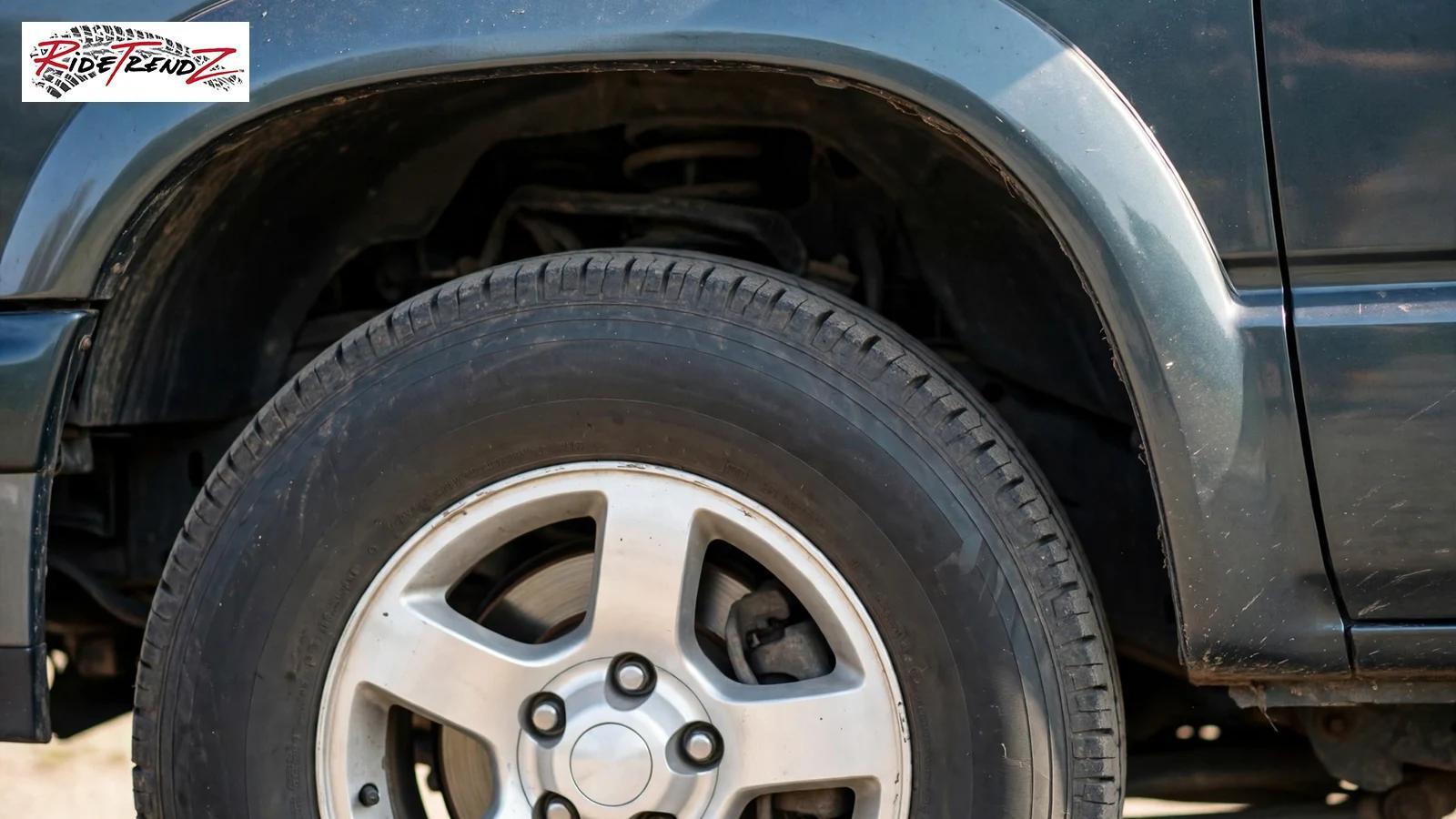
A wheel with less backspacing pushes the tire outward, which can move the tread away from the frame and sway bar but closer to the fender lip when you steer to full lock. Minor plastic trimming inside the arch is normal on 31 inch setups, and metal trimming belongs to the big tire builds. The beginner guide to truck suspension basics covers the clearance terms in plain language.
Installation steps for a driveway build
Most S10 lifts are honest driveway work with hand tools, a floor jack, sturdy stands and a free weekend. The front end takes the longest, spring compressors demand respect, and rusty shackle bolts on an 82-04 truck can eat an afternoon by themselves. Work one end at a time so the truck always sits on finished suspension, and book the alignment before you start.
Tools and preparation before the first bolt
Gather the tools before the installation starts and the truck goes up, because a half lifted truck blocks the driveway and the parts store run. Penetrating oil on every shackle and shock bolt a day early is the cheapest time saver on trucks of this age, and new hardware replaces anything that fights back.
Tools and prep list
- Floor jack, rated jack stands and wheel chocks
- Coil spring compressor for 2WD front work
- Breaker bar, sockets, torque wrench and penetrating oil
- Tape measure for before and after ride heights
- Torque specs printed for spindle, shackle and shock bolts
- Fresh bolts for the rustiest 82-04 hardware
- Alignment appointment booked for the same week
The install order that saves time and knuckles
Sequence matters more than speed. Measure the stock heights, lift the front first while the truck is fresh and you are fresh, then move to the rear shackles, and finish with a slow torque pass over every fastener. A this lift kit with clear instructions rewards patience, and the cost guide for lifting a truck helps budget the alignment and hardware around it.
Install order
- Measure and record all four corner heights
- Lift and support the front, fit spacers, coils or brackets
- Torque the front hardware at ride height where the instructions ask
- Fit the rear shackles or springs and new shocks
- Settle the truck, recheck every bolt, steer lock to lock, then drive to the alignment
Pros and cons of lifting an S10 or Blazer
Fitting a an S10 lift on a small, light truck changes its character more than lifting a full size truck, because the S10 starts low and narrow. The gains in clearance and tire choice are real, and so are the costs in steering feel, fuel use and centre of gravity. Honest expectations make owners happier with the finished truck, whatever height they choose for the modification.
What owners gain from the lift?
The gained ground clearance and approach angle let the little truck climb ledges that catch a stock front bumper, and the bigger tires improve grip and flotation off road. A level stance also improves the look owners want, and the S10 platform keeps parts cheap. The reasons owners upgrade truck suspension echo the same motivations across bigger trucks.
Pros
- More ground clearance under the frame, axles and bumpers
- Room for larger tires that add grip and axle clearance
- Better approach and departure angles on ledges and banks
- Cheap, plentiful parts and simple tools for most jobs
- Simple spindle, spacer and shackle hardware on most kits
- A level, purposeful stance that suits the truck
What owners give up with the lift?
The centre of gravity rises, so body roll and sway grow and quick steering inputs deserve more respect. Bigger tires cost fuel and can blunt acceleration on four cylinder trucks, less so on the V6, and worn steering parts show themselves faster at height. None of this stops a sensible modification, and whether lifting changes gas mileage puts honest numbers on the fuel question.
Cons
- More body roll and a taller centre of gravity
- Extra wear on ball joints, CV joints and steering links
- Fuel use rises with bigger, heavier tires
- Alignment and longer shocks add to the real budget
- Tall lifts can complicate tow hitch height and loading
Alignment, steering and safety checks after the lift
A lift is only finished when the truck steers straight, stops straight and holds its hardware tight after the first hundred miles. Camber and toe change with ride height on this front suspension, tired steering links hide at stock height and complain loudly once lifted, and rubber brake lines pulled tight at full droop are a genuine safety item, not a detail.
Alignment angles and the post lift check
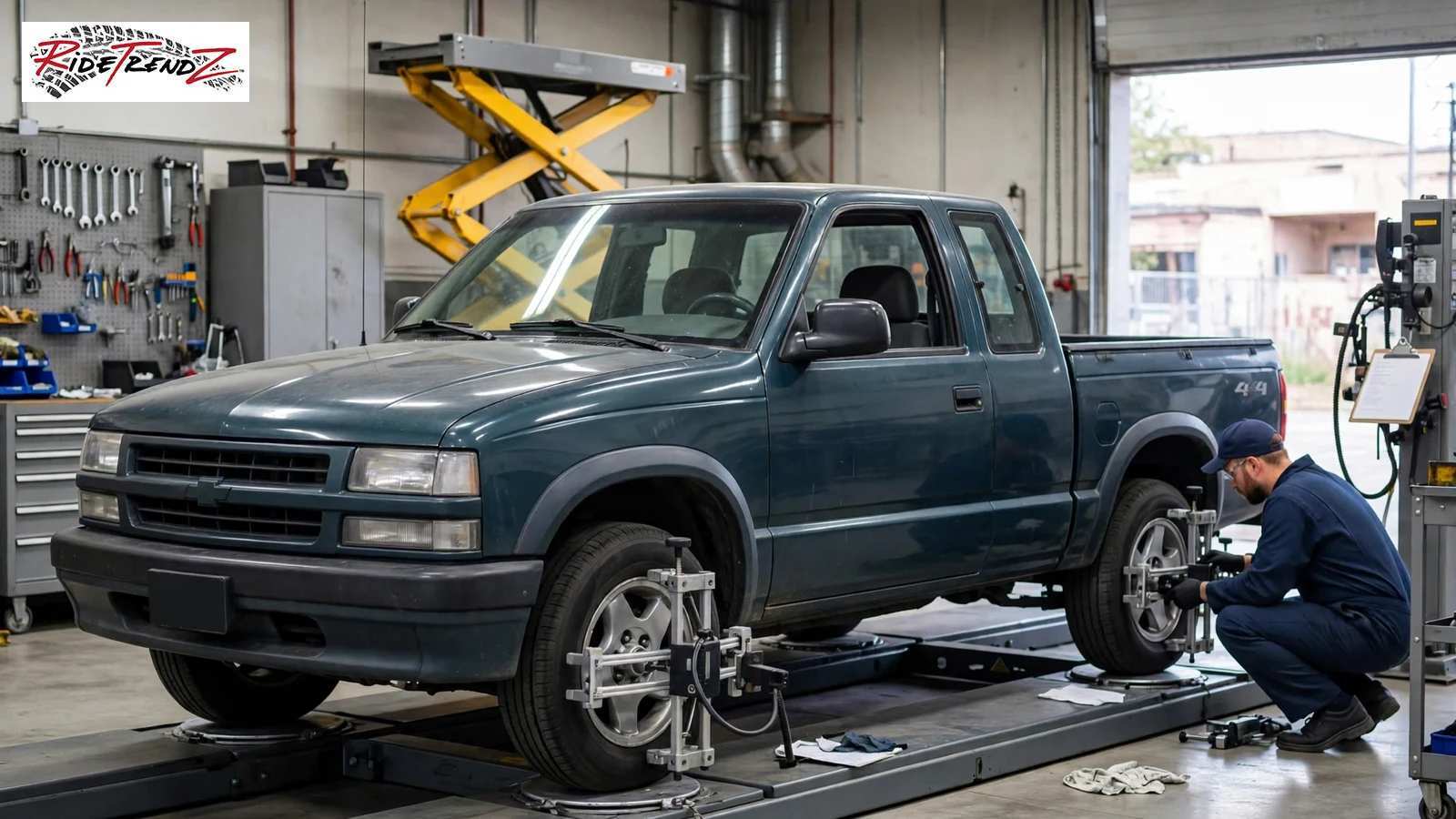
Raising the front end pulls camber positive and disturbs toe, which scrubs tires and makes the steering wander if it is left alone. A proper alignment at the new height restores tyre life and straight line calm, and fresh upper control arms on taller 4WD lifts return the adjustment range the brackets consumed. Recheck the fasteners after the first week of driving.
Brake lines, steering links and driveshaft checks
Cycle the suspension before driving and watch the brake lines at full droop and full lock, because a line fine at rest can pull banjo tight when the axle hangs. Check the driveshaft angle on rear lifts, grease every fitting the kit exposes, confirm the truck will steer lock to lock without straining a line, and replace worn tie rod ends and ball joints rather than aligning around them.
Why owners buy their S10 suspension parts from Ridetrendz?
The S10 range spans first gen and second gen trucks, two drivetrains and the pickup, Blazer and Jimmy bodies across 1982-2004, so one wrong click buys parts for the wrong truck. Ridetrendz organises its suspension parts catalogue by year, drivetrain and body, and the team answers fitment and warranty questions daily. That is the practical difference between a specialist the lift kit shelf and a generic parts bin.
Fitment help by year, drivetrain and body style
Tell the team the year, whether the truck is 2WD or 4WD, and whether it is a pickup, a two door Chevy Blazer or a 4 door, and the shortlist shrinks to parts that fit. The Chevy S10 suspension range covers the S15 and S15 Jimmy twins as well, and a 2004 Chevy S10 takes different parts from a first gen truck even though the names all sound alike.
Support, warranty thinking and honest advice
Good buying includes the weeks after installation, when questions about settling and noises show up. Ridetrendz writes its Chevy S10 suspension listings with the installation in mind, flags where a lifetime warranty applies on its own branded lines, and tells owners plainly when Rough Country lift kits or a cheaper route will disappoint.
Conclusion
The S10 and Blazer reward a sensible lift more than almost any other cheap truck, because the platform is light, simple and supported by decades of parts. Pick the route your drivetrain dictates, coils and spacers for the 2WD trucks, torsion aware 4wd lift kits for the 4WD trucks, shackles at the rear for both, and match the suspension components, shocks and alignment to the height you choose, because the Chevy S10 suspension rewards balanced parts. Pro Comp and Rough Country lift kits serve as benchmark comparisons through this guide, and the Dana 44 axle conversion belongs to dedicated trail rigs, not weekend builds. Start with the main product this guide is built around, the front 1.5 inch coil spring spacers, or step straight to the full lift kit with 2.5 inch coils and rear shackles for a matched build, and let the Ridetrendz team confirm fitment and lifetime warranty coverage for your exact year before the boxes ship.
Frequently asked questions
How much lift do I need to run 31 inch tires on an S10?
Most S10 and Blazer trucks clear a 31 inch tire with a 2 to 2.5 inch lift and sensible wheel offset. A leveling kit alone can work on some 4x4 trucks with trimming, while 2WD trucks usually want the full 2.5 inches. Check at full lock and full compression, because static clearance in the driveway is not trail clearance.
Will a lift kit from a pickup fit my S10 Blazer?
Mostly yes, because the pickup, the two door and the 4 door Chevy S10 Blazer all share the same frame design, front suspension and leaf spring rear end. The differences sit in weight and trim, so spring rates and rear heights can land slightly differently. Always order by the body style and year you own, and Blazer lift kit listings separate the two where it matters.
Can I lift a 2WD S10 and actually use it off road?
Yes, within honest limits. A lifted 2WD S10 on good all terrain tires handles dirt roads, sand, snow and moderate trails well, especially with weight over the rear axle for traction. It will not match a 4x4 on steep, loose climbs or deep mud, because only the rear wheels drive. Many owners start with a 2WD build and learn cheaply what they really need.
Do I really need new shocks after just a 2 inch lift?
At 2 inches the stock shocks work near the top of their travel, so the ride gets harsh and they can top out over sharp dips. Some owners drive a mild lift on stock shocks for a while, but matched longer shocks restore the travel the lift was meant to add. Treat shocks as part of the lift budget, as Rough Country suspension lift kits do, not an optional extra.
How hard is the install for a first timer with basic tools?
A spacer and shackle lift is a fair first project, usually a long day or a relaxed weekend with a helper. The hard parts are rusty bolts on 82-04 trucks and compressing the front coils safely on 2WD models. Bracket style 4WD kits and anything involving torsion bars sit a level higher, and no step needs rushing with the truck on stands.
Does Ridetrendz help me check fitment before I order?
Yes, and it is the smartest step in the whole build. Send the year, the drivetrain and the body style, pickup, Blazer or Jimmy, and the team confirms which spacers, coils, shackles or full kit match your truck before money moves. That one check prevents the classic mistake of ordering 2WD coil parts for a 4WD torsion bar truck.
Is a Chevy S10 lift different from lifting a GMC S15 or Sonoma?
Under the skin the GMC S15, the later Sonoma and the S15 Jimmy are the same platform as the Chevrolet S10, so the lift methods, heights and supporting parts carry straight across. Badges, grilles and trim differ, the suspension does not. Order by year and drivetrain rather than by badge, and remember the GMC trucks renamed to Sonoma and Jimmy badges partway through the run.
Source: Wikipedia, Chevrolet S-10