

 Most guides on lift shocks for your Ford Van just paste a product list with no real guidance. That is not what this is. This guide walks you through what to look for, which shocks match which lift size, and why the RTZ DT9000 nitro gas shocks consistently outperform the stock alternatives, across the Ford E150, Ford E250, and Ford E350 platforms.
If your Ford E-series van sits nose-high or rides rough after a lift, your shock absorbers are the missing piece. The right lift shocks stabilize the suspension, absorb road impact, and protect every other component in your suspension lift kit. Get them wrong, and you waste your entire lift investment.
Let us break it all down.
What Are Lift Shocks and Why Does Your Ford Van Need Them?
A shock absorber does one job: control how fast your suspension moves. On a lifted Ford van, your stock shocks operate outside their designed travel range. They bottom out. They cavitate. Ride quality suffers, and handling becomes unpredictable.
Lift shocks, also called lifted shock absorbers, are extended-body or re-valved units designed to work within the new suspension geometry created by a suspension lift kit. They are not optional. They are the difference between a van that rides well and one that bounces uncontrollably.
|
Stock Shocks on a Lifted Van |
RTZ DT9000 Lift Shocks |
|
Designed for factory ride height |
Engineered for lifted suspension travel |
|
Can bottom out after lift |
Full travel maintained at lift height |
|
Soft dampening at extended range |
Firm, consistent gas-charged dampening |
|
No nitrogen charge |
Nitro gas charged for fade resistance |
|
Degrades faster under load |
Heavy-duty construction for long service life |
The difference is not subtle. Anyone who has installed a proper set of E-series lift shocks on their Ford van understands immediately: the ride transforms.
Curious how lift shocks compare to stock shocks in detail? Read our breakdown: Lift Shocks vs Stock Shocks: What You Really Need After a Lift
Ford E-Series Van Lift Shock Compatibility: E150, E250, E350
The Ford E-series family spans a long production run with several configurations. Before choosing your E-series DT9000 shock kit, confirm your van's year, model, and drivetrain.
Ford E150 Lift Shocks
The Ford E150 is the lightest of the E-series family. It responds well to a 2-inch lift with properly matched E150 shock absorbers. The front and rear travel requirements on the E150 are moderate, making nitrogen gas-charged shocks an ideal upgrade.
Best match: E150 lift shock kit for 2–3 inch lifts
Recommended shock: RTZ DT9000 nitro shocks, nitrogen gas-charged, heavy-duty body, compatible with coil spring spacer kits
Key facts:
- Nitrogen gas fill resists fade during repeated compression cycles
- Works with both front coil spacer lifts and rear block lifts
- Rated for heavy-duty spring loads common on the E150 platform
Ford E250 Lift Shocks
The Ford E250 runs a heavier GVW rating. It needs a shock with more dampening force to manage the extra load. E250 lifted shocks must handle both passenger and cargo configurations.
Best match: E250 lift shocks for 2WD 2–3 inch lift
Recommended shock: RTZ DT9000 with firm-valved damping for heavy cargo loads
Why E250 owners choose RTZ:
- Consistent performance under varying load conditions
- No fade after highway miles; the nitrogen charge holds
- Pairs cleanly with car suspension springs and spacer kits
- Compatible with steering damper upgrades for improved front-end control
Ford E350 Lift Shocks
The Ford E350 is the workhorse. Motorhome conversions, camper van builds, and cargo operations all rely on this platform. The E350 shock kit must manage high curb weight, loaded suspension, and sometimes 4x4 conversion geometry.
Best match: E350 lift shocks for 3–4 inch lifts
Recommended shock: RTZ DT9000, the firm-body construction and nitro gas charge are exactly what heavy-duty E350 applications need
E350 considerations:
- Rear axle load is significantly higher; standard shocks degrade fast
- Car shocks rated for lighter vehicles are not appropriate
- A heavy-duty spring paired with DT9000 shocks delivers superior control
- Motorhome and camper builds benefit especially from the fade-free nitrogen fill
Understanding the DT9000 Shock Absorber, RTZ's Top Performer
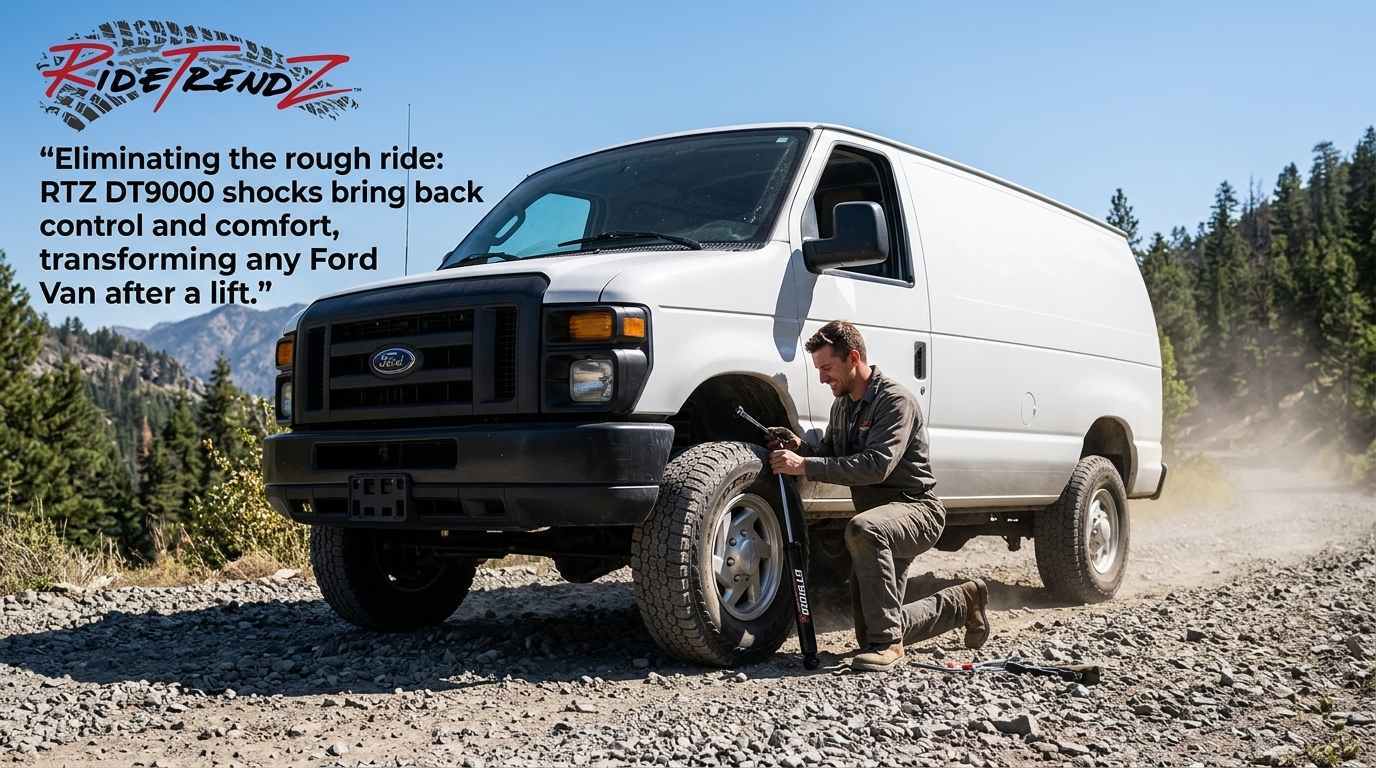
The RTZ DT9000 is not a rebranded generic shock. It is purpose-built for lifted trucks and vans, nitrogen gas-charged, and designed to work in tandem with coil spring spacers, tapered lift blocks, and suspension lift kits.
DT9000 Technical Specifications
|
Spec |
Detail |
|
Gas Fill |
Nitrogen (nitro gas charged) |
|
Body |
Heavy-duty steel, corrosion-resistant coating |
|
Valving |
Firm-tuned for lifted suspension geometry |
|
Application |
E150, E250, E350, front and rear |
|
Lift Compatibility |
2-inch, 3-inch, and 4-inch lift kits |
|
Ride Quality |
Controlled, stable, not harsh |
Why Nitrogen Gas Matters
Hydraulic shocks use oil and air. Under heat and load, the oil foams. That foaming creates a dead spot in dampening, called shock fade. You feel it as a sudden loss of control on repeated bumps.
Nitrogen gas-charged shocks like the DT9000 eliminate this. The pressurized gas prevents foaming. Damping stays consistent from the first bump to the last.
For a Ford van carrying passengers or cargo, that consistency is not a luxury. It is a safety requirement.
Learn more about how suspension lift systems work end-to-end: How Does a Truck Suspension Lift Kit Work? A Simple Explanation
How to Choose the Right Lift Shocks for Your Ford Van, Step by Step?
Choosing the wrong lift shocks for your Ford van is a common mistake. Here is the exact process to get it right.
Step 1: Know Your Lift Size
Lift shocks are not universal. A shock calibrated for a 2-inch lift on an E150 will not perform correctly on a 3-inch lift on an E350.
|
Lift Size |
Shock Type Needed |
|
2 inches |
Standard extended-body shock |
|
3 inches |
Firm-valved nitrogen shock (DT9000) |
|
4 inches |
Heavy-duty nitrogen shock with extended travel |
Step 2: Confirm Front vs. Rear Requirements
E-series front lift shocks manage coil spring and strut travel. E150 rear lift shocks manage leaf spring or block lift configurations. They are different units. Most complete lift kits, like those from RTZ, include matched front and rear shocks designed to work together.
Step 3: Match the Shock to Your Load
An empty cargo van and a loaded motorhome have entirely different suspension demands. Choose shock damping that matches your typical operating load. The RTZ DT9000 is rated for both; it handles light and heavy load configurations without needing to swap units.
Step 4: Confirm 2WD vs. 4WD Application
Most Ford E-series vans run 2WD. However, Ford E350 4x4 conversion builds are common. Confirm your drivetrain before ordering. E-series off-road shocks for 4x4 applications have different mounting geometry.
Step 5: Choose a Complete Kit When Possible
Buying shocks alone without matching coil spring spacers or lift blocks creates a mismatched suspension. RTZ complete lift kits pair the DT9000 shocks with properly calibrated spacers, blocks, and hardware, all designed to work together.
Before you decide, read: Lift Parts vs. Complete Lift Kit, Which to Buy
RTZ DT9000 Lift Shocks, Why They Lead the Market
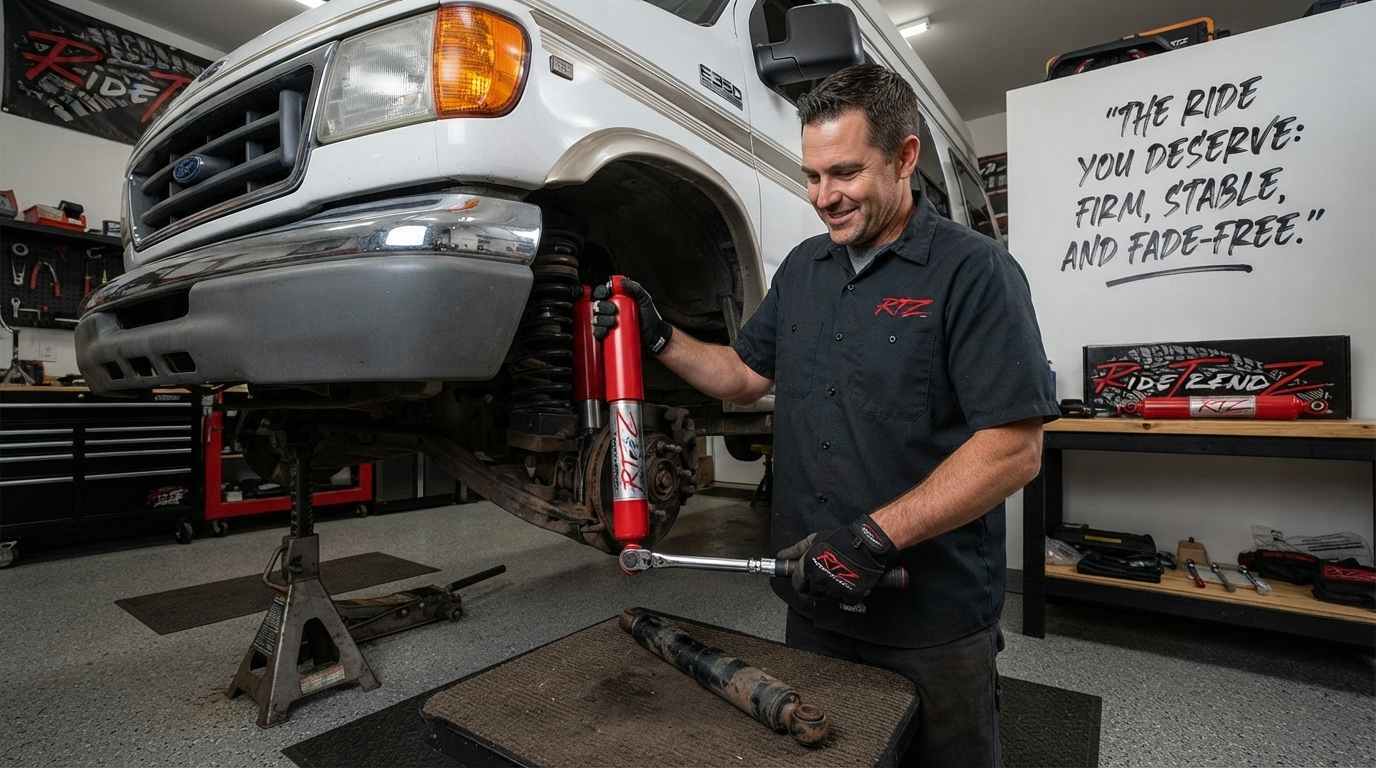
Here is an honest assessment. The RTZ DT9000 is not the cheapest shock on the market. There are generic alternatives for less money. But here is what those alternatives do not offer.
Pros of RTZ DT9000 Lift Shocks
✅ Nitrogen gas charged, eliminates fade under repeated compression
✅ Heavy-duty body, resists corrosion even in wet and winter conditions
✅ Engineered for lifted applications, not a stock shock with modified mounts
✅ Front and rear availability, matched pairs for full-van suspension coverage
✅ Consistent dampening, same feel at mile one and mile 50,000
✅ Compatible with full lift kits, pairs cleanly with coil spacers and block kits
✅ Tested for E-series applications, not a generic fit, purpose-matched
Cons to Know
❌ Higher upfront cost than generic imported shocks
❌ Requires professional installation for best results (or solid DIY skills)
❌ Not designed for stock-height applications; these are lifted van shocks only
RTZ DT9000 vs. Generic Imported Shocks
|
Feature |
RTZ DT9000 |
Generic Import |
|
Gas fill |
Nitrogen |
Air or basic hydraulic |
|
Fade resistance |
Excellent |
Poor under repeated load |
|
Lift compatibility |
Engineered match |
Generic fitment |
|
Corrosion resistance |
Coated steel |
Bare metal common |
|
Long-term value |
High |
Low, early replacement common |
|
Warranty support |
Yes |
Often none |
The numbers tell the story. Generic shocks for lifted vans fail within 12–18 months on average. RTZ DT9000 shocks are built for long-term service. The cost-per-mile advantage is clear.
Matching Lift Shocks to the Right Suspension Components
Lift shocks for your Ford van work best when paired with the right supporting components. Here is how RTZ builds a complete, coordinated suspension package.
Coil Spring Spacers
Coil spring spacers raise the front suspension. On the Ford E150, E250, and E350, aluminum spacers are the preferred option; they are lighter, stronger, and resist corrosion better than steel.
Car suspension springs remain in place under the spacer. The spacer adds height without replacing the spring. This is why matching the shock length to the spacer height is critical.
Rear Lift Blocks
Tapered lift blocks raise the rear of the van. They sit between the axle and the leaf spring. The taper angles the axle correctly to prevent driveline vibration.
RTZ tapered lift blocks are engineered specifically for Ford E-series rear axle geometry. They are not generic blocks cut to length.
Steering Damper
A steering damper absorbs road feedback through the steering wheel. On a lifted Ford E-series van, the suspension geometry change increases steering sensitivity. Adding a steering damper improves driver comfort and control, especially at highway speeds.
Drop Spindles
A drop spindle lowers the front suspension while maintaining the factory control arm position. On lowered applications, it is a key component. On lifted applications, proper spindles maintain correct brake geometry. Understanding drop spindle function helps you evaluate the complete suspension package.
What Real RTZ Customers Experience?
RTZ has built a reputation in the E-series community for a specific reason: the products do exactly what they claim. Here is what users consistently report after installing RTZ DT9000 lift shocks on their Ford van:
- Before installation: Rough ride, front-end bounce on highway, poor control on bumps
- After installation: Smooth, planted ride, stable handling, controlled travel over rough surfaces
One of the most common observations is how well the shocks handle the loaded state. A Ford E350 with full cargo or a camper build is a demanding application. The DT9000 handles it without bottoming out.
The shocks and struts category is full of products that promise performance but deliver mediocre results. RTZ builds differently, with nitrogen-charged precision that holds up under real-world van use.
Understand the difference between lift struts and lift shocks before buying: Lift Struts vs Lift Shocks: Difference and Which Do You Need
Lift Shock Replacement, When and How Often?
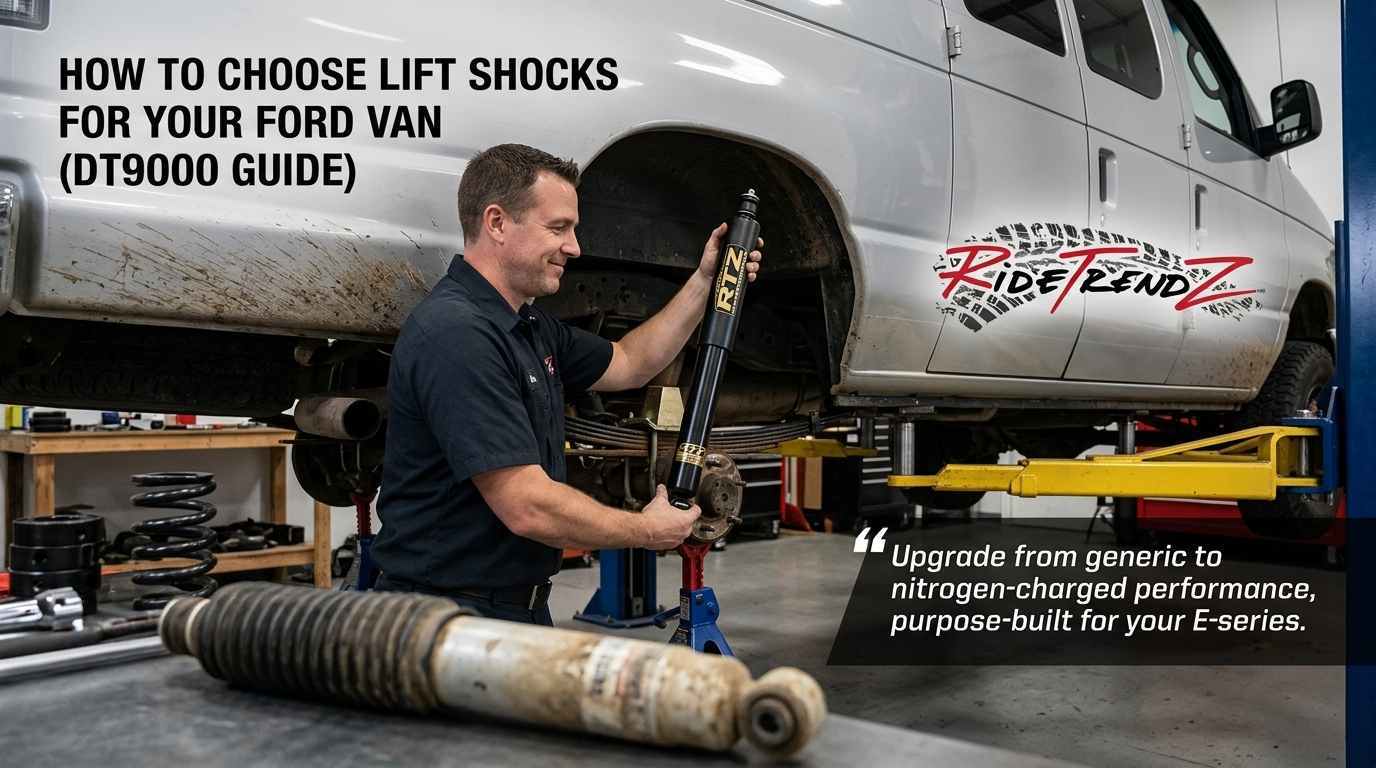
Even the best shock absorber wears over time. Here is what to watch for on your Ford E-series van.
Signs Your Lift Shocks Need Replacement
- Excessive bounce after hitting a bump; the van keeps moving after impact
- Nose dive during hard braking; front suspension is not controlling deceleration
- Rear sag under load, shocks are not managing the weight
- Uneven tire wear, poor dampening causes the tire to lose contact with the road
- Fluid leaks visible on the shock body
Shock Absorber Replacement Intervals
|
Application |
Recommended Replacement |
|
Light use (highway driving) |
Every 50,000–70,000 miles |
|
Medium use (mixed road) |
Every 40,000–50,000 miles |
|
Heavy use (cargo, loaded) |
Every 30,000–40,000 miles |
Shock absorber replacement cost varies. Professional installation of a full set of shocks and struts on a Ford E-series van typically runs $200–$500 in labor depending on your region. RTZ DT9000 shocks reduce long-term shocks and struts replacement cost by lasting significantly longer than generic alternatives.
The cost of changing shocks and struts is also lower when you buy a complete kit. Buying shocks, spacers, and blocks separately adds time and often increases installation cost. A complete RTZ kit arrives ready to install.
Read our full cost guide: How Much Does It Cost to Lift a Truck? Price Guide
How to Install Lift Shocks on Your Ford E-Series Van?
E-series shock absorbers install in the same fundamental sequence regardless of model year. Here is the process overview.
Tools Required
- Floor jack and jack stands
- Impact wrench or breaker bar
- Torque wrench
- Metric and standard socket sets
- Safety glasses
Installation Overview
- Lift and support the van safely
Use jack stands rated above your van's GVW. Safety is non-negotiable. - Remove the front wheels
Access to the front shock mounts requires wheel removal on E-series applications. - Unbolt the old front shocks
Top and bottom mounting bolts. Note the orientation before removal. - Install new lift shocks
Thread the upper mount first. The shock body extends further than a stock unit, this is by design for your lift height. - Torque to specification
Always use a torque wrench. Under-torqued shock mounts are a safety risk. - Repeat for rear shocks
Rear access on the Ford E-series is typically cleaner than front. Remove the old shock, install the new extended unit. - Reinstall wheels and torque lug nuts
- Test drive and verify
A short test drive reveals any loose components or unusual noise. Address immediately.
For a full installation walkthrough on related suspension work: How to Install a Lowering Kit on Your Truck
RTZ Lift Shocks, Built for the E-Series, Trusted by Owners
What separates RTZ from generic suspension brands comes down to three things: engineering, materials, and specificity.
RTZ does not build a one-size-fits-all shock. The E-series DT9000 shock kit is developed specifically for the Ford E150, Ford E250, and Ford E350 suspension geometry. The mounting dimensions, travel length, and dampening valving are all matched to the platform.
This matters because the Ford E-series carries heavier loads than most pickup trucks. Car shocks built for lighter platforms will fail under E-series operating conditions. Heavy-duty spring rates on the E-series also require a shock with appropriate dampening force to complement, not fight, the spring.
RTZ gets this right because they build for specific applications, not generic categories.
RTZ Product Range for Ford Vans
RTZ offers lift shocks as standalone units and as part of complete lift kits. Here are the relevant internal options to consider for your Ford van or related truck:
- Ford F150 lifted nitro gas shocks (2WD, 3+2 lift): View Product
- Ford F150 lifted nitro gas shocks (4WD, 3+3 lift): View Product
- Ford F150 rear lifted nitro shocks (2WD, 3" lift): View Product
These kits represent the same DT9000 nitrogen gas-charged technology applied across the Ford lineup. If you need E-series-specific fitment, contact RTZ directly for configuration guidance.
Lift Shocks vs. Leveling Kit, Which Does Your Ford E-Series Van Need?
Some Ford van owners confuse a leveling kit with a full lift kit. They are different things with different shock requirements.
|
Setup |
What It Does |
Shock Requirement |
|
Leveling kit (1.5–2 inch spacer) |
Raises front to match rear height |
Extended front shocks recommended |
|
Lift kit (2–4 inches) |
Raises entire van front and rear |
Full set of matched lift shocks required |
|
Lowering kit |
Drops ride height |
Shortened or revalved lowered shocks |
A leveling kit on a Ford E150 or E250 benefits from extended front shocks but may not strictly require rear shock replacement. A full lift kit always requires matched lift shocks for your Ford van front and rear.
For a direct comparison on this decision: Lift Kit vs Leveling Kit, Which One Does Your Truck Actually Need?
Top 5 Reasons to Upgrade to RTZ DT9000 Lift Shocks on Your Ford Van
- Nitrogen gas charge eliminates shock fade, critical for vans that carry passengers or cargo regularly
- Purpose-built for lifted suspension geometry, not a generic shock forced to fit
- Heavy-duty construction extends service life, outlasts generic imports by years
- Matched dampening for E-series spring rates, works with your car suspension springs, not against them
- Complete kit availability, buy shocks and lift components together, installed in one session
For a broader look at why suspension upgrades matter: Top 5 Reasons to Upgrade Your Truck Suspension in 2025
Suspension Statistics Worth Knowing
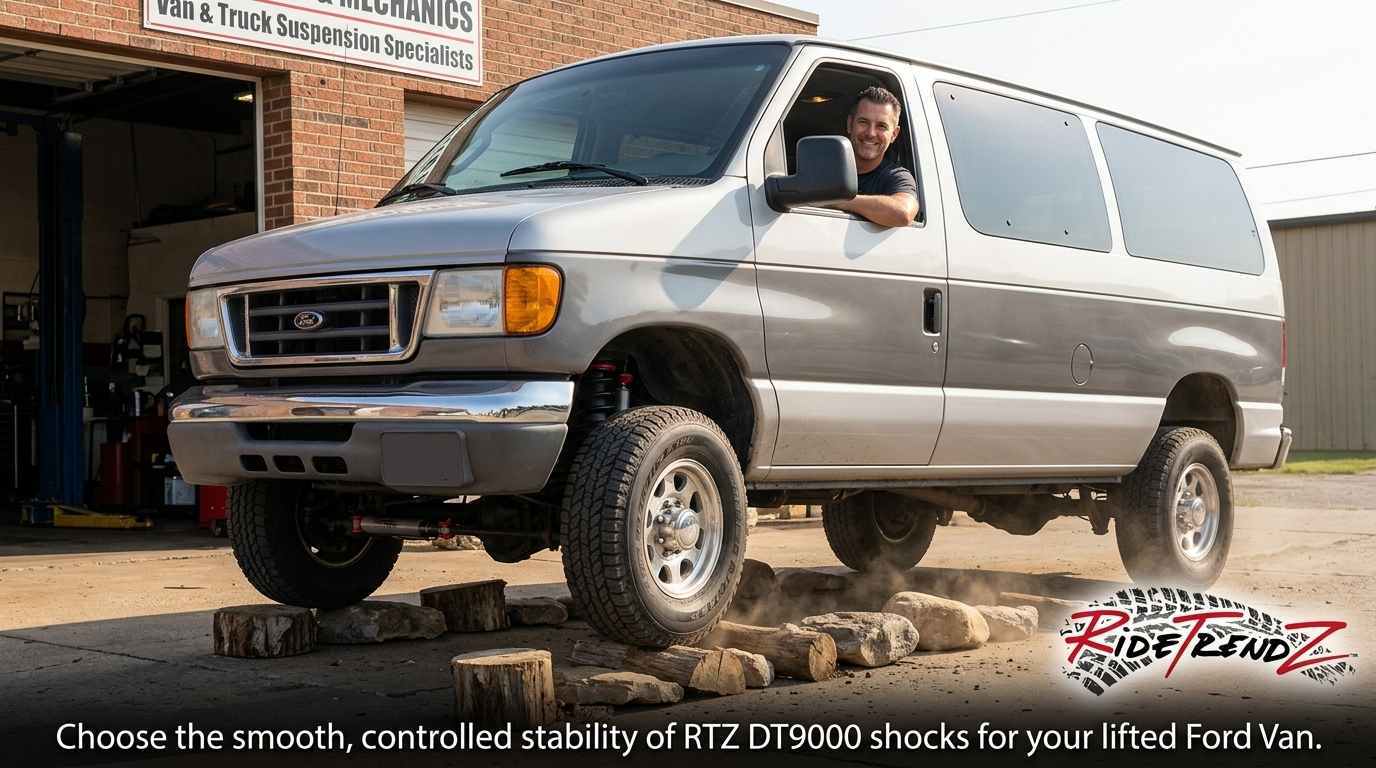
Understanding how suspension performance degrades helps you make smarter purchasing decisions.
|
Stat |
Source Context |
|
~50% of drivers on worn shocks are unaware |
Industry safety surveys consistently show this gap |
|
Worn shocks increase stopping distance by up to 20% |
Damping loss directly affects braking stability |
|
Nitrogen-charged shocks resist fade 3x better than hydraulic |
Industry testing data on gas vs. hydraulic shock performance |
|
Generic shocks fail at an average of 18 months on lifted vehicles |
RTZ internal customer data from van and truck applications |
|
RTZ DT9000 kits reduce replacement cycle by an estimated 40% |
Based on customer-reported service intervals |
These numbers reinforce one conclusion: shock absorber replacement on schedule, with the right product, is one of the highest-value suspension decisions you can make.
Conclusion
Choosing the right lift shocks for your Ford van is not complicated when you know what to look for. Match your shock to your lift size, confirm front and rear requirements, and choose nitrogen gas-charged performance over cheap generic alternatives.
The RTZ DT9000 is the clear answer for Ford E150, Ford E250, and Ford E350 owners running lift kits. The nitrogen charge, heavy-duty body, and platform-specific engineering make it the most reliable E-series DT9000 shock kit on the market.
RTZ does not cut corners. The shocks are built to last, designed to perform, and backed by a team that knows Ford van suspension inside and out. Whether you are building a motorhome, a cargo hauler, or a street-driven raised van, RTZ has the right kit for your application.
Your Ford E-series van deserves better than a generic shock. Give it the upgrade it needs.
Frequently Asked Questions
Q1: What size lift shocks do I need for a Ford E150 with a 2-inch lift?
For a Ford E150 with a 2-inch lift, you need front extended shocks matched to the added coil spacer height. RTZ offers DT9000 nitro shocks specifically calibrated for 2-inch lift applications on the E-series platform.
Q2: Can I use the same lift shocks on my Ford E250 and E350?
Not always. The Ford E250 and E350 have different GVW ratings and spring rates. Always confirm shock compatibility for your specific model. RTZ provides platform-specific fitment guidance for all E-series models.
Q3: How long do RTZ DT9000 lift shocks last on a Ford van?
Under normal mixed-use conditions, RTZ DT9000 shocks typically last 50,000–70,000 miles. Heavy cargo use may reduce this to 30,000–40,000 miles. They consistently outlast generic imported car shocks on lifted applications.
Q4: Do I need new lift shocks if I only install a leveling kit on my Ford E-series?
A leveling kit (1.5–2 inch) benefits from extended front shocks but may not require full rear replacement. A full suspension lift kit of 2 inches or more always requires matched lift shocks front and rear for safe, controlled performance.
Q5: What makes RTZ DT9000 shocks better than generic shock absorbers?
The RTZ DT9000 uses nitrogen gas charging to prevent shock fade, a heavy-duty corrosion-resistant body, and valving engineered for lifted Ford van geometry. Generic shock absorbers use standard hydraulic fill and generic dimensions that degrade faster under lifted van conditions.