

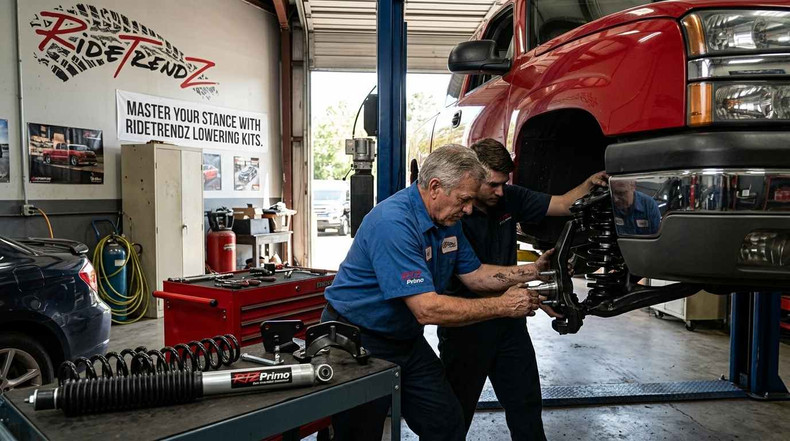
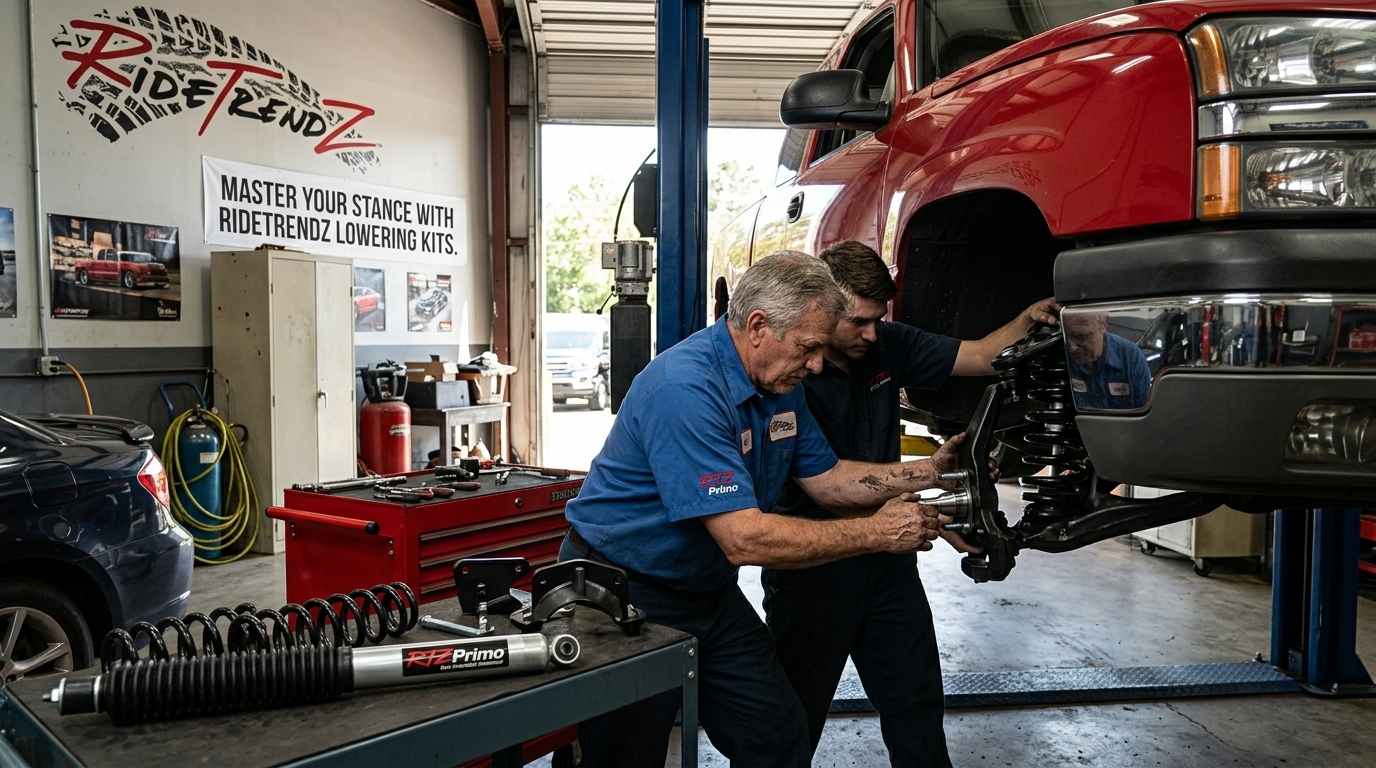
Most buyer guides on lowering kits for the GMT800 Silverado are just thin product lists with zero real-world context. They skip the technical differences between a drop spindle and a flip kit. They leave out drop measurements. They never explain why one lowering kit fits your build better than another.
This guide is different. It is built around real product knowledge, component-by-component breakdowns, and honest comparisons, so you can make the right call for your lowered Silverado.
Whether you want a mild 2-4 drop for a street-clean daily driver or a slammed 4-6 drop for a show-worthy lowered Chevy Silverado, this guide covers everything you need to know before you buy.
What Is a GMT800 and Why Does It Matter?
The GMT800 is General Motors' full-size truck platform used between 1999 and 2007. The Chevy Silverado 1500 from 1999 to 2006 rides on this platform, along with the GMC Sierra and several SUVs.
Understanding the GMT800 platform matters because suspension geometry, component fitment, and drop measurements are all tied to it. A lowering kit built for the GMT800 will not fit a first-gen (1988–1998) C1500 without modification.
This guide focuses specifically on 2WD GMT800 trucks from 1999–2006, the most popular target for truck lowering kits.
Why Lower a Truck? Benefits at a Glance
Before jumping into components, it is worth understanding why so many owners choose to lower their Chevy truck.
Handling improves. A lower center of gravity reduces body roll in turns and tightens up steering response. The truck simply feels more planted.
Aerodynamics improve. Reducing the gap between the chassis and the road reduces drag. On highway speeds, this translates to marginal fuel efficiency gains.
Aesthetics. A lowered truck simply looks better to most enthusiasts. Tighter wheel gap, aggressive stance, and a purpose-built profile are hard to argue against.
Tire wear can improve. With proper alignment post-install, a lower stance often distributes tire contact more evenly on flat roads.
|
Benefit |
Impact Level |
Notes |
|
Handling |
High |
Lower CoG reduces body roll |
|
Appearance |
Very High |
Most common motivation |
|
Fuel economy |
Low to Moderate |
Minimal on short trips |
|
Tire contact |
Moderate |
Requires post-install alignment |
|
Towing capability |
Reduced |
Not ideal for heavy towing |
One honest caveat: lowering a truck reduces ground clearance and approach angles. If you tow or haul regularly, factor that into your decision.
The Main Components in a Silverado Lowering Kit
A complete lowering kit for the 1999–2006 Chevy Silverado 1500 is built from several individual components. Understanding each one helps you choose the right drop combination.
Lowering Springs
Lowering springs replace your factory coil springs at the front of the truck. They are wound to a shorter free height, which drops the front of the vehicle by a measured amount, typically 2 or 3 inches on the GMT800.
Lowering springs are the most accessible entry point into suspension lowering. They maintain a relatively factory-like ride compared to more aggressive drop setups.
Drop Spindles
Drop spindles (also called lowering spindles) replace the factory steering knuckle at each front wheel. The spindle relocates the wheel hub lower on the spindle body, achieving front drop without compressing the spring or losing suspension travel.
A 2-inch drop spindles setup maintains full factory spring travel. This is a key advantage over lowering springs alone. Many builders combine drop spindles with lowered coils for a 4" to 5" front drop total.
Drop spindles are the preferred component for a clean, drivable daily driver build.
Flip Kit (Rear Axle Flip)
At the rear, the factory leaf spring is mounted above the rear axle. A flip kit relocates the axle to sit on top of the leaf spring instead, effectively dropping the rear of the truck by the thickness of the axle perch relocation, typically 4 to 6 inches.
A flip kit is the backbone of any serious lowered Silverado build. It delivers the rear drop needed to match a 4" to 6" front drop without compromising load capacity.
Drop Shackles and Lowering Shackles
Drop shackles and lowering shackles replace the rear leaf spring shackle. They lengthen the shackle, which pivots the leaf spring to a lower angle and drops the rear of the truck 1 to 2 inches.
Lowering shackles are often combined with a lowering hanger to achieve a rear drop of 3 to 4 inches without going to a full flip kit. This setup is common on trucks that still see occasional light-duty use.
Lowering Blocks
Lowering blocks are steel or aluminum spacers placed between the rear axle perch and the leaf spring. They drop the rear by the block height, typically 2 to 4 inches. They are a budget-friendly option but are generally considered less preferred than a flip kit for larger drops.
Lowering Arms (Lower Control Arms)
Lowering arms replace the factory lower control arms at the front. They are designed with an altered geometry to accommodate larger front drops, particularly useful when combining drop spindles and lowered coils for a 4" to 5" front setup.
Lowering Shocks
Lowering shocks, often called nitro shocks or gas-charged shocks, are purpose-built for lowered ride heights. Factory-length shocks will bind or over-extend once the truck is lowered. Matched lowering shocks ensure proper damping travel for your specific drop measurements.
At RideTrendz, every complete truck lowering kit includes a matched set of nitrogen gas-charged shocks, the RTZ Primo series, calibrated for the exact drop configuration in the kit.
Drop Configurations, Which One Is Right for You?
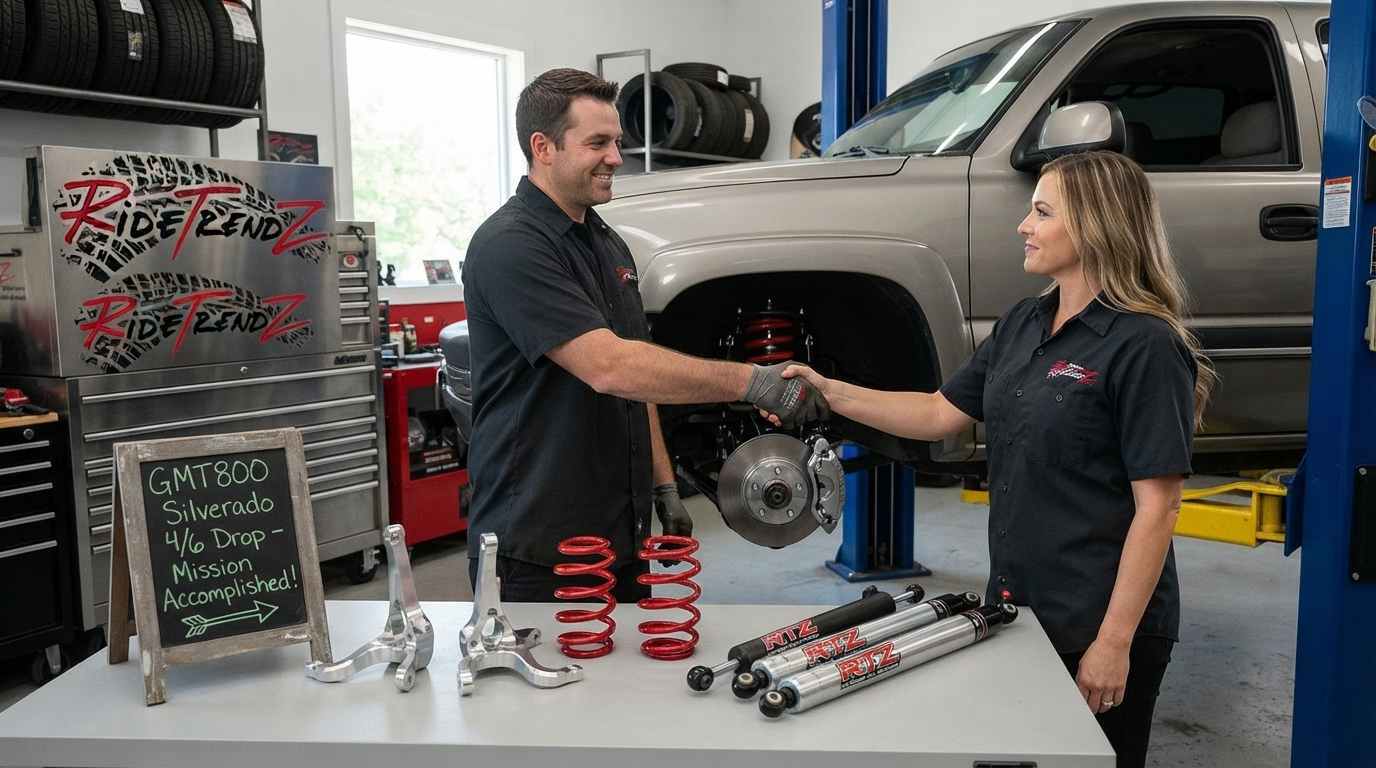
Choosing the right drop configuration depends on your goals, how the truck is used, and your budget.
|
Drop Config |
Front |
Rear |
Best For |
|
2-4 drop |
2" coils |
4" flip kit |
Street driver, mild stance |
|
3-5 drop (3.5 drop Silverado) |
3" coils |
5" flip kit |
Aggressive daily driver |
|
4-6 drop |
4" spindles + coils |
6" flip kit |
Show truck, full stance |
|
5-7 drop |
5" spindles + coils |
7" flip kit |
Slam build, low show |
The most popular configuration for the 1999–2006 Silverado 1500 is the 4-6 drop or 3-5 drop Silverado setup. These deliver a pronounced lowered look while keeping the truck functional for daily driving.
If you are looking for an entry-level stance, a 2-4 drop using lowering springs and a rear shackle kit gets you there without a full component overhaul.
Complete Lowering Kit Options for the 1999–2006 Chevy Silverado 1500
This is where RideTrendz separates itself. Rather than selling individual components and leaving the matching to you, RideTrendz offers complete, pre-matched lowering kits for the Chevy Silverado 1500 across every drop configuration.
Every kit ships with matched RTZ Primo nitrogen gas-charged shocks calibrated for the specific drop, front and rear. No guesswork. No compatibility issues.
3" Front / 3" Rear Lowering Kit, Entry Stance
This kit pairs 3" lowering springs up front with a 3" rear hanger shackle kit. It is a clean, mild setup for owners who want improved stance and handling without committing to a major drop.
- Front: 3" drop coil springs
- Rear: 3" rear hanger shackle kit
- Includes: RTZ Primo nitrogen gas-charged shocks, front and rear
- Motor fitment: V6 and V8 available
- Drive: 2WD
Best for: Daily drivers wanting improved handling and a cleaner stance without aggressive drop.
Shop the 3"/3" Silverado lowering kit →
3" Front / 4" Rear Lowering Kit, Popular Street Drop
This is one of the most commonly selected configurations for the GMT800 Silverado. The 3" front lowering springs paired with a 4" rear hanger shackle kit deliver a pronounced rake and strong visual drop without requiring a flip kit.
- Front: 3" drop coil springs
- Rear: 4" rear hanger shackle kit
- Includes: RTZ Primo nitrogen gas-charged shocks
- Motor fitment: V6 and V8 available
- Drive: 2WD
Shop the 3"/4" Silverado lowering kit →
4" Front Drop Spindles + 6" Rear Flip Kit, Full Stance
This is the complete 4-6 drop build. Drop spindles provide 4" of front drop while maintaining full front suspension travel. The 6" flip kit slams the rear down to match.
- Front: 4" drop spindles + lowering coil springs
- Rear: 6" rear axle flip kit
- Includes: Doetsch Tech premium nitrogen gas-charged shocks
- Motor fitment: V8 and V6 available
- Drive: 2WD
This configuration produces a lowered Silverado 1500 that genuinely turns heads. The drop spindle design preserves handling feel by keeping the lower control arm geometry intact.
Shop the 4"/6" spindle + flip kit →
5" Front Drop Spindles + 7" Rear Flip Kit, Maximum Drop
For builders chasing the slammed lowered Chevy Silverado look, this is the kit. A 5" front spindle setup paired with a 7" rear flip delivers the most aggressive drop available for the 1999–2006 Silverado 1500.
- Front: 5" drop spindles + lowering coil springs
- Rear: 7" rear axle flip kit
- Includes: Doetsch Tech premium nitrogen gas-charged shocks
- Motor fitment: V6 and V8 available
- Drive: 2WD
Shop the 5"/7" maximum drop kit →
2" Front / 3" Rear, Mild Daily Driver Kit
Not everyone wants a slammed truck. This entry-level kit uses 2" drop coil springs up front and a 3" rear hanger shackle kit to achieve a subtle, well-proportioned drop. Ride quality stays close to factory.
- Front: 2" drop coil springs
- Rear: 3" rear hanger shackle kit
- Includes: RTZ Primo nitrogen gas-charged shocks
- Motor fitment: V6 and V8
- Drive: 2WD
Shop the 2"/3" Silverado lowering kit →
Adjustable Rear Drop Shackles, Standalone Rear Component
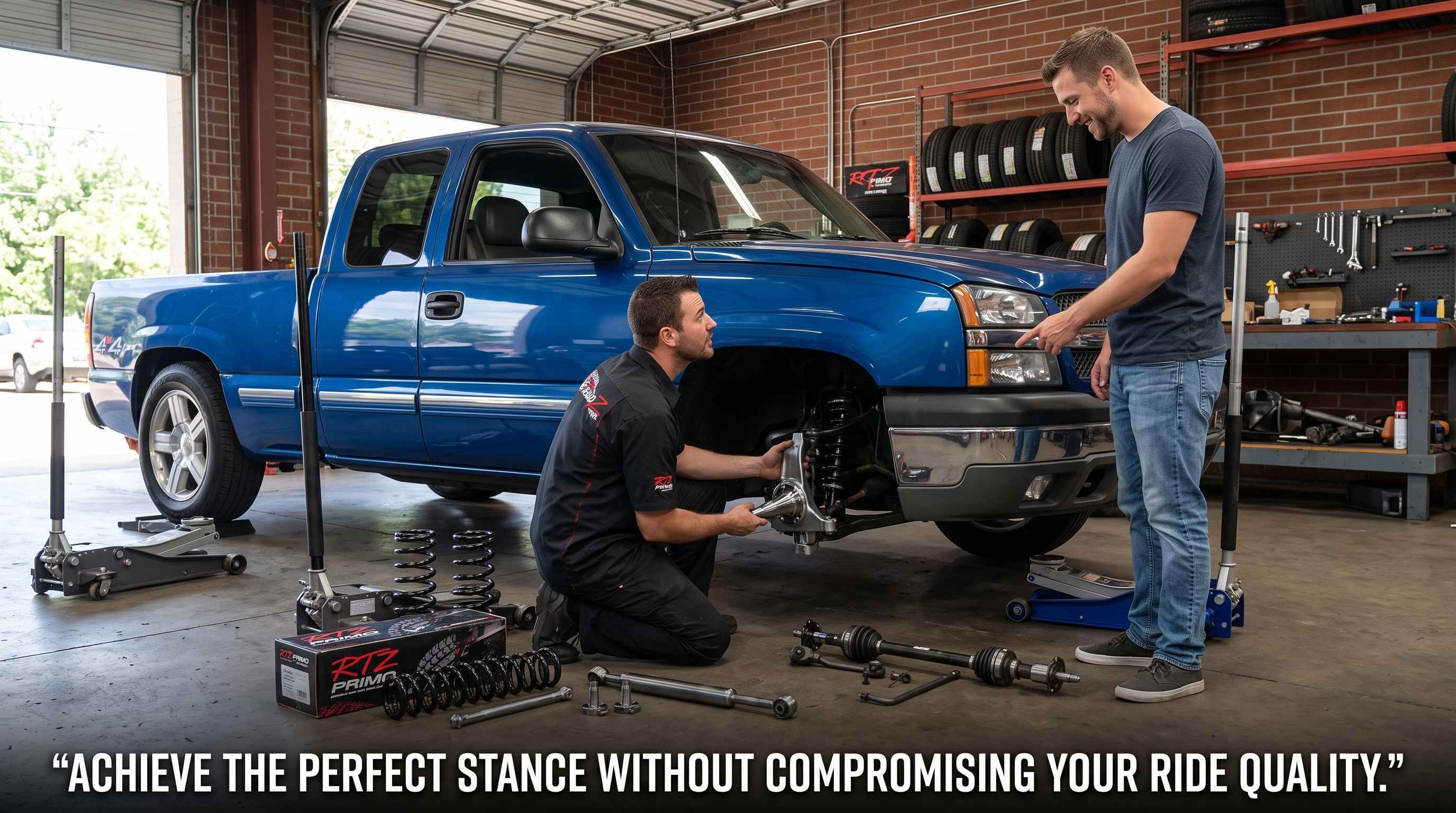
If you already have a front setup dialed in and only need to address the rear, the adjustable rear lowering shackles give you 1" to 2" of drop. They are adjustable, which allows fine-tuning without committing to a single fixed drop height.
- Rear: 1" to 2" adjustable lowering drop shackles
- Drive: 2WD
- Fitment: 1999–2006 Chevy Silverado / GMC Sierra 1500
Shop adjustable rear drop shackles →
Matched Shocks, Why This Matters More Than Most Guides Admit?
Most lowering kit guides completely skip this. It is one of the most common installation mistakes.
When you lower a truck, the factory shock absorber is now operating outside its designed travel range. At a 4" to 6" drop, a stock shock will either bind at the top of its travel or over-extend at the bottom. Both conditions destroy the shock and your ride quality.
Lowering shocks, specifically nitrogen gas-charged units matched to your exact drop, solve this completely.
At RideTrendz, every complete lowering kit includes RTZ Primo nitrogen gas-charged shocks or Doestch Tech DT9000 premium shocks, pre-matched to the front and rear drop configuration in the kit. You do not need to separately source or spec shocks. That matching is done for you.
This is one area where buying a complete kit from a specialist makes a genuine difference versus piecing together components from multiple sources.
Individual Shock Options for Partial Builds
If you are adding a lowering component to an existing partial build, RideTrendz also offers standalone lowered shocks for the Silverado C1500:
- Front lowered shocks for 2" drop spindles or lower control arms
- Rear lowered shocks for 6" flip kit
- Rear lowered shocks for 7" flip kit
Having the right shocks for your exact drop is non-negotiable for a proper install.
How Much Does It Cost to Lower a Truck?
Cost is one of the most-searched questions in the lowering kit space, and most guides give vague ranges. Here is a more honest breakdown.
|
Build Type |
Parts Cost (Approx.) |
Install Labor (Shop) |
Total Estimate |
|
Mild 2"/3" shackle kit |
$200–$350 |
$150–$250 |
$350–$600 |
|
Mid 3"/4" coil + shackle |
$300–$500 |
$200–$350 |
$500–$850 |
|
Full 4"/6" spindle + flip |
$500–$750 |
$300–$500 |
$800–$1,250 |
|
Max 5"/7" slam kit |
$650–$950 |
$400–$600 |
$1,050–$1,550 |
These figures are for the 1999–2006 Silverado 1500 2WD specifically. 4WD configurations require different components and typically cost more.
DIY installation is achievable for mechanically experienced builders, especially for shackle kits and spring swaps. Flip kits and spindle installs require proper alignment afterward, so factor in a post-install alignment regardless of who does the work.
RideTrendz vs. Generic Suppliers: What Makes the Difference?
There is no shortage of suspension lowering kit options online. Here is an honest comparison of what separates a specialist supplier from a generic marketplace seller.
|
Factor |
RideTrendz RTZ |
Generic Marketplace |
|
Drop-specific shock matching |
✅ Included in every complete kit |
❌ Usually not included |
|
Component quality |
RTZ Primo / Doestch Tech DT9000 |
Unknown / Variable |
|
Model-year specific fitment |
✅ GMT800 specific |
Often broad fitment claims |
|
Complete vs. partial kits |
Complete kits available |
Usually components only |
|
V6 and V8 variants |
✅ Separate kits by motor |
Often combined, less precise |
|
2WD/4WD separation |
✅ Clearly separated |
Often mixed or unclear |
The RTZ Primo nitrogen gas-charged shocks are worth highlighting specifically. Nitrogen gas charging reduces fade under repeated compression cycles, which matters during highway driving and spirited cornering. Stock replacement shocks and cheap alternatives are typically oil-filled, which can cavitate and lose damping under sustained use.
If you want to understand more about how suspension components work together before committing to a build, the truck suspension basics guide from RideTrendz covers the fundamentals clearly.
Pros and Cons, Lowering Springs vs. Drop Spindles
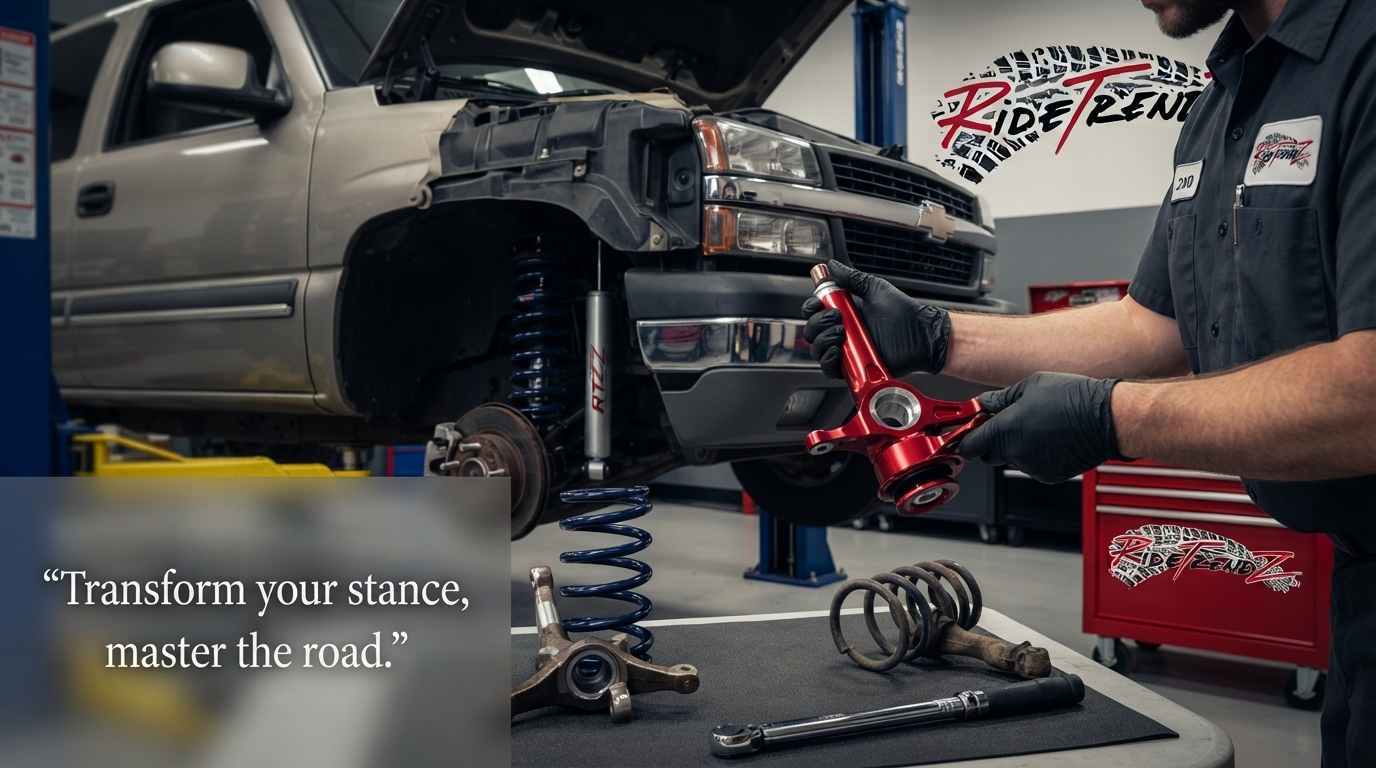
Both lowering springs and drop spindles achieve front drop on the Silverado 1500, but they work differently. Here is a direct comparison.
|
Lowering Springs |
Drop Spindles |
|
|
Drop range |
2" to 3" |
2" to 5" (combined with coils) |
|
Suspension travel |
Reduced |
Maintained |
|
Ride quality |
Slightly firmer |
Near-factory |
|
Install complexity |
Moderate |
Moderate to high |
|
Cost |
Lower |
Higher |
|
Best use case |
Mild daily driver |
Aggressive but drivable builds |
Lowering springs are the right call for a mild 2-4 drop where ride quality and budget are priorities. Drop spindles are the right call when you want a larger front drop, particularly in the 4-6 drop range, without sacrificing suspension travel or geometry.
Many complete kits from RideTrendz combine both: a modest lowered coil spring paired with drop spindles to reach a total front drop of 4" to 5" while maintaining proper handling.
Year-by-Year Fitment Notes, 1999–2006 Silverado 1500
The GMT800 platform stayed largely consistent from 1999 to 2006, but there are fitment details worth knowing.
|
Model Year |
Notes |
|
1999 Chevy Silverado 1500 |
First GMT800 year. Standard coil-over front, leaf rear. All kits apply. |
|
2000 Chevy Silverado 1500 |
No suspension changes. Same fitment. |
|
2001 Chevy Silverado 1500 |
No suspension changes. |
|
2002 Chevy Silverado 1500 |
No changes affecting lowering kit fitment. |
|
2003 Chevy Silverado 1500 |
No changes. |
|
2004 Chevy Silverado 1500 |
No changes for 1500. |
|
2005 Chevy Silverado 1500 |
No changes. |
|
2006 Chevy Silverado 1500 |
Last year of GMT800. Same fitment as prior years. |
All RideTrendz lowering kits for the GMT800 cover the full 1999–2006 range. Pay attention to whether you have a V6 or V8 motor; RideTrendz offers separate kits for each, since coil spring rates differ between the two engine weights.
Note on 2500HD and 3500HD: The heavy-duty variants of the Chevy Silverado 2500 and 3500 use different suspension geometry and different components. Kits designed for the 1500 do not transfer to HD trucks.
How to Install a Lowering Kit on Your Silverado?
A full installation walkthrough is beyond the scope of this guide, but here is the sequence for a complete 4-6 drop build.
Front Installation (Drop Spindles + Coils):
- Safely lift and support the front of the truck on jack stands.
- Remove the factory wheels and calipers. Support the caliper; do not hang it by the brake line.
- Remove the factory hub assembly from the factory spindle.
- Detach the factory tie rod end and upper/lower ball joints.
- Remove the factory steering knuckle (spindle).
- Install the drop spindle, torque to spec, reinstall ball joints and tie rod.
- If also installing lowering springs, compress and swap the front coils at this stage.
- Install the drop-matched front shocks.
- Reinstall the hub assembly and wheel.
Rear Installation (Flip Kit):
- Support the rear axle on a floor jack with the truck on jack stands.
- Remove the factory U-bolts securing the axle to the leaf spring perch.
- Lower the axle slightly and flip the factory perch plate, or install the new flip kit perch.
- Reposition the axle on top of the leaf spring.
- Install new U-bolts and torque to spec.
- Install drop-matched rear shocks.
Post-Install: A front-end alignment is mandatory after any front suspension work. Rear alignment inspection is recommended after a flip kit install.
For a more detailed walkthrough, the how to install a lowering kit guide on RideTrendz walks through each step with practical detail.
Is Lowering a Truck Legal?
This comes up frequently, and the honest answer is: it depends on your state.
Most states in the US allow vehicle lowering within limits. Common rules involve:
- Minimum headlight height: Many states require headlights at a minimum of 24" from the ground.
- Minimum bumper height: Some states regulate front bumper height.
- Fender coverage: Tires must be covered by the fender; if your stance creates tire-to-fender contact or the tire extends past the body, that is typically a violation.
Virginia, for example, has specific provisions about suspension modification. If you are in a state with strict vehicle inspection requirements, check your local regulations before committing to a slam build.
A mild 2-4 drop on the Silverado 1500 is unlikely to create compliance issues in most jurisdictions. A 5-7 drop that sits the frame near the ground may draw scrutiny depending on where you live and drive.
Related RideTrendz Content Worth Reading
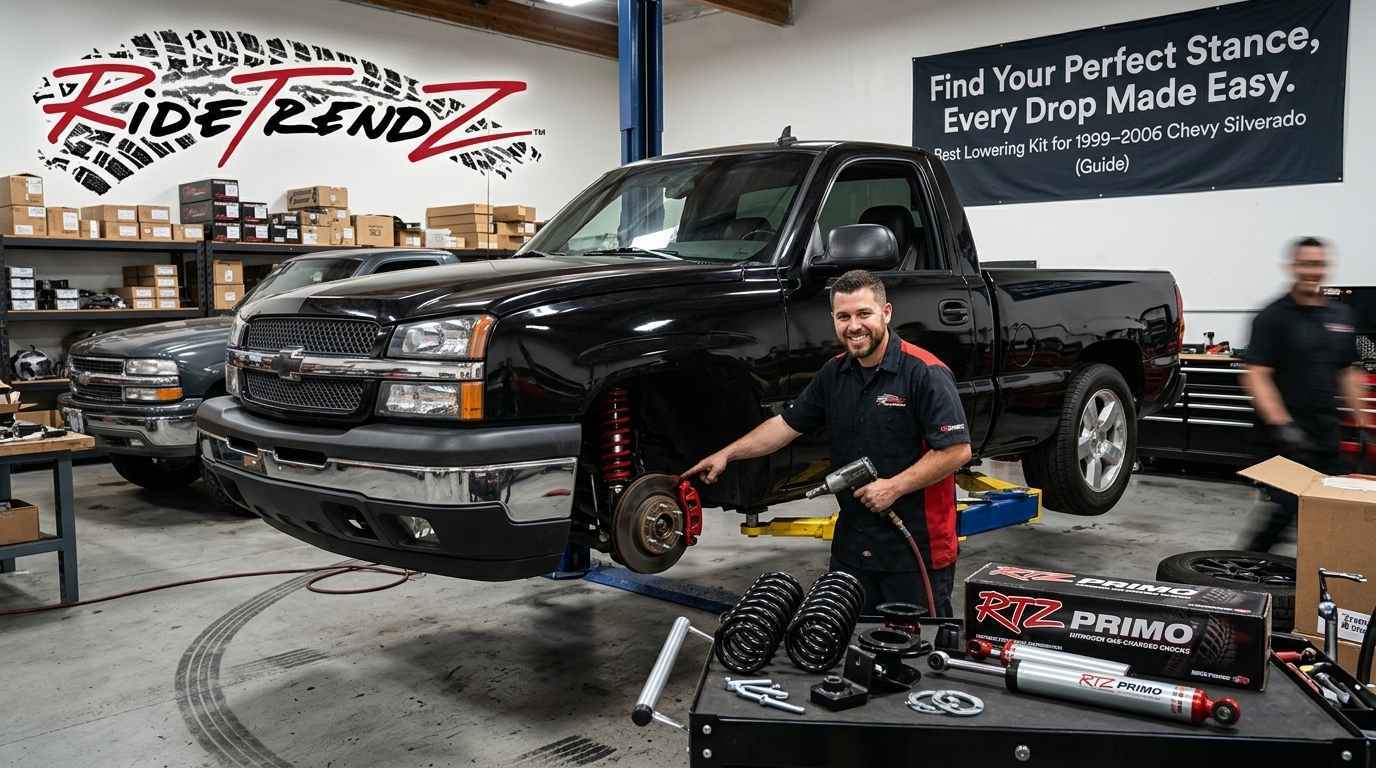
If you are building out your knowledge before choosing a kit, these guides are worth the time.
- How to Lower a Chevy Silverado, Full Guide for 1988–2013, covers component choices, drop combinations, and fitment across three Silverado generations.
- Lowering Your Truck: Benefits, Risks & the Right Lowering Kit to Buy covers the full picture of what lowering does to your truck, with honest trade-off analysis.
- Best Lowering Kit for GMC Sierra 1988–2006: the Sierra shares the GMT800 platform and much of the same fitment.
- Best Lowering Kits for Ford F150, useful comparison if you are cross-shopping platforms.
Quick Stat: Why the GMT800 Silverado Is the Most Lowered Truck Platform?
The Silverado and GMT800 platform dominate the truck lowering market for a reason.
- The Chevy Silverado 1500 was the best-selling full-size truck in the US from 1999 to 2006 in multiple model years.
- The GMT800 suspension geometry, coil-over front, leaf spring rear, is well-suited to drop spindle and flip kit configurations.
- Aftermarket fitment for lowered Silverado builds has been refined over 25+ years of production. Component quality and fitment precision are higher for this platform than almost any other.
- RideTrendz lists multiple drop configuration kits for the GMT800, covering every combination from a mild 2"/3" shackle setup to a 5"/7" maximum drop slam build.
The Chevy Silverado Z71 variant is a 4WD off-road package. Lowering kits designed for 2WD trucks do not fit the Z71 without modification. RideTrendz offers specific 4WD lowering options separately; confirm your drivetrain before ordering.
Choosing Your Kit: A Decision Guide
Use this simple decision tree before choosing your best lowering kit for 1999–2006 Chevy Silverado.
Step 1: Define your use case:
- Daily driver with light-duty use → Mild kit (2"/3" or 3"/4")
- Weekend driver/show truck → Full stance kit (4"/6" or 5"/7")
Step 2, Confirm your drivetrain:
- 2WD → Standard lowering kits apply
- 4WD → Requires 4WD-specific components; check separately
Step 3, Confirm your engine:
- V6 → Choose V6-specific coil spring kit (different spring rate than V8)
- V8 → Choose V8-specific kit
Step 4, Decide on drop spindles vs. springs only:
- Under 3" front drop → Springs only is sufficient
- 4" or more front drop → Drop spindles strongly recommended
Step 5, Confirm shocks are included:
- If buying a complete kit from RideTrendz, shocks are matched and included.
- If buying individual components from multiple sources, you must source matched lowering shocks separately.
Conclusion
The 1999–2006 Chevy Silverado 1500 is one of the most well-supported platforms in the truck lowering market. Component fitment is precise, drop configuration options cover every stance goal from mild to slammed, and complete kits from RideTrendz remove the compatibility guesswork that trips up so many first-time builders.
The key takeaways from this guide:
- Match your drop configuration to your actual use case; a 5"/7" slam is not a daily driver.
- Never install a lowered kit without matched lowering shocks; this is the most commonly skipped step.
- Drop spindles are the better front drop solution for anything over 3".
- A post-install alignment is mandatory, not optional.
- RideTrendz complete kits include matched RTZ Primo or Doetsch Tech shocks; that alone separates them from generic suppliers.
For every drop configuration listed in this guide, RideTrendz has a pre-matched, vehicle-specific lowering kit ready to ship. Browse the full truck lowering kits selection at ridetrendz.com.
Frequently Asked Questions
Q1: What is the best lowering kit for a 1999–2006 Chevy Silverado daily driver?
A 3"/4" coil spring and rear hanger shackle kit with matched RTZ Primo shocks gives the best balance of stance and daily drivability.
Q2: Do I need new shocks after installing a lowering kit on my Silverado?
Yes. Factory shocks are not designed for a lowered ride height and will bind or over-extend. Matched lowering shocks are required for proper function.
Q3: What is the difference between a flip kit and lowering blocks for the rear?
A flip kit repositions the axle above the leaf spring for large drops (4"–7"). Lowering blocks sit between the axle and spring for smaller rear drops (2"–4").
Q4: Will a lowering kit affect my Silverado's towing capacity?
Yes. Lowering a truck reduces rear suspension travel and ground clearance. Heavy towing is not recommended on a slammed build. Mild drops have minimal towing impact.
Q5: Are drop spindles better than lowering springs for the GMT800 Silverado?
For drops over 3", drop spindles are better; they maintain suspension travel and factory geometry. For mild 2"–3" drops, lowering springs alone work well and cost less.