

Best Lowering Kit for Ford F-150: Drop Your Ride the Right Way
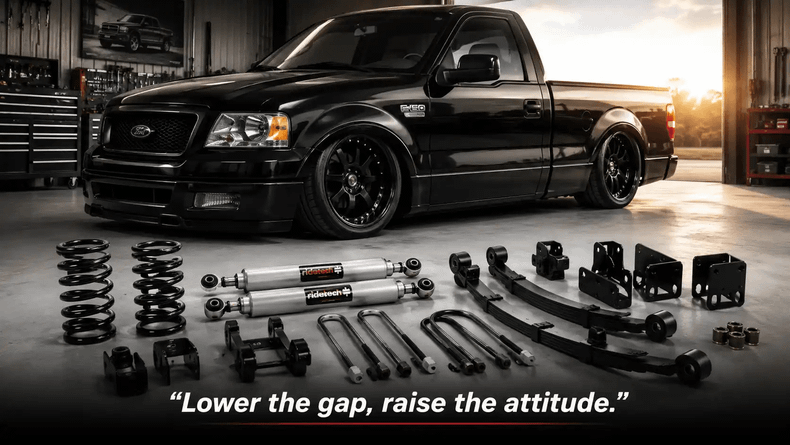
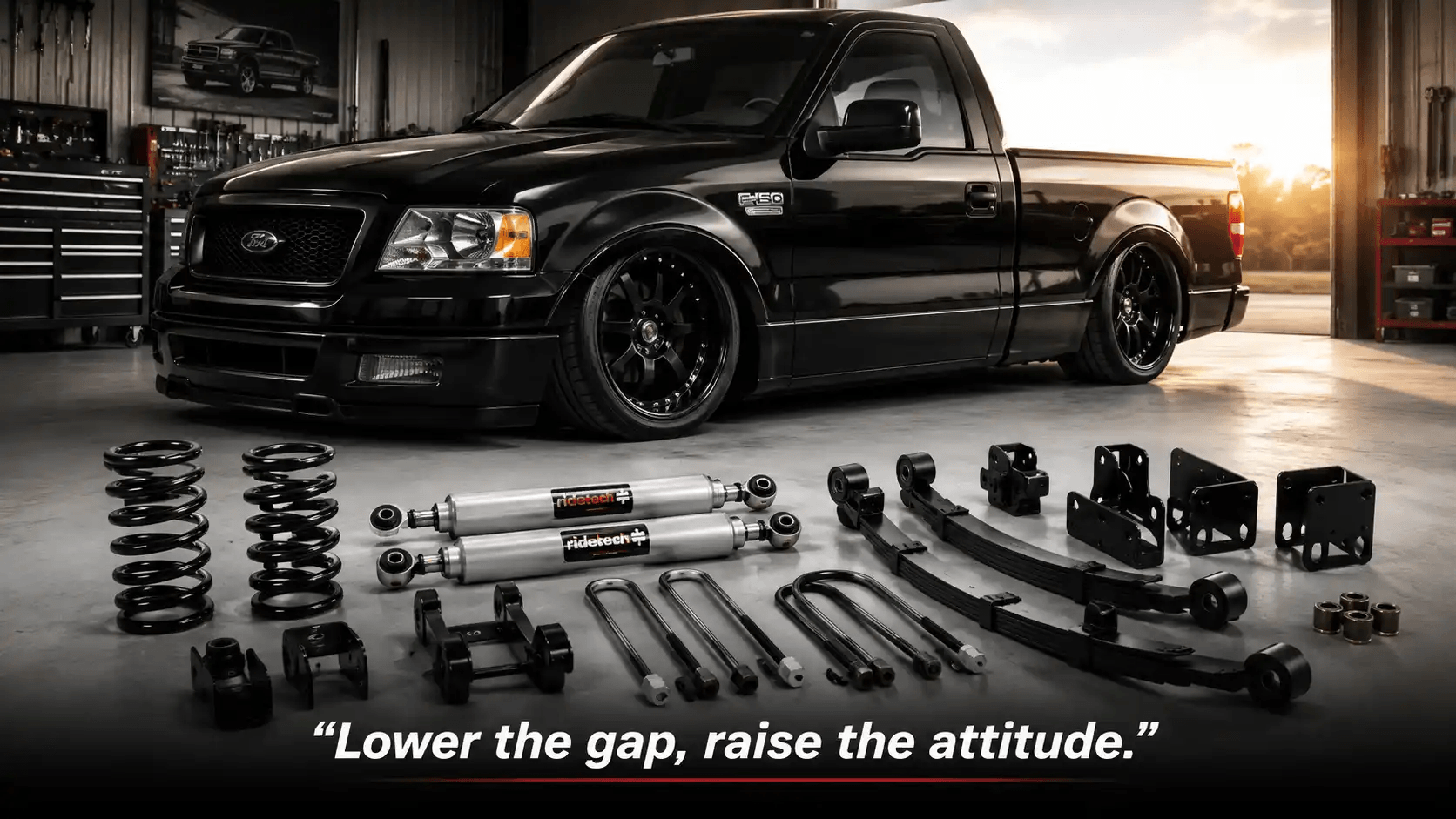
A stock F-150 rides high, and that wheel gap is the first thing serious truck owners want gone. Finding the best lowering kit for Ford F-150 trucks is the fastest way to transform a tall, work-truck stance into a clean, aggressive street look. At RideTrendz, we have spent over 20 years engineering suspension drop kits in the USA, and our F-150 lineup is built from that experience, not guesswork.
This guide walks through everything a buyer needs: how lowering kits work, which kit fits which F-150 generation, what to expect from installation, and why RideTrendz parts hold up better than the cheaper kits flooding the market. Whether someone is searching for how to lower a Ford F150 for the first time or comparing the best F150 lowering kit to buy for a specific year, this Ford F150 drop kit guide covers the details that actually matter, from spring rates to shock valving to the small hardware details that decide whether a kit lasts five years or five months.
Truck owners rarely walk into a lowering kit purchase blind. Most have seen a friend's F-150 sitting low and clean at a local meet, or scrolled through enough builds online to know the look they want. The harder part is sorting through which kit actually delivers that look without destroying ride quality, eating tires, or rattling apart within a season. That is the gap this guide, and the best lowering kit for the Ford F-150 lineup behind it, is built to close.
Quick Answer: For most 1987-2003 Ford F-150 trucks, a complete front coil/torsion drop paired with a rear hanger-and-shackle kit and matched nitrogen gas shocks delivers the cleanest stance without sacrificing ride quality. For 2004-2008 V8 trucks, pair iron drop spindles up front with a rear axle flip kit. Always finish with a four-wheel alignment, and choose a kit that documents fitment by exact year and drivetrain rather than a generic "universal" listing.
Why Owners Search for the Best Lowering Kit for Ford F-150?
Every generation of F-150 leaves the factory with extra ride height built in for towing and payload capacity. That height looks great on a work site, but on the street it creates a gap between tire and fender that most owners find unattractive. A properly engineered lowering kit closes that gap, drops the center of gravity, and gives the truck a planted, performance-oriented stance.
Lowering a truck is not just cosmetic. A correctly matched kit improves cornering response, reduces body roll, and can even help with fuel economy by lowering aerodynamic drag at highway speed. RideTrendz designs every best lowering kit for Ford F-150 package around this dual goal: looking sharp and driving better, not just sitting lower. A truck that only looks lower without the matched components to back it up usually rides worse than stock, which defeats the entire purpose of the upgrade.
There is also a practical side to this search. Many F-150 owners are not chasing a show-truck look at all. They simply want a more confident highway feel, tighter turn-in on backroads, and a stance that does not look like it is still wearing factory work-truck springs. Whatever the motivation, the best lowering kit for Ford F-150 trucks earns that label by balancing all three goals: appearance, handling, and ride comfort.
Search interest in this topic tends to spike for a simple reason: most owners only lower a truck once, and they want to get the decision right the first time. Re-doing a suspension job after a bad first purchase costs twice the money and twice the shop time, so buyers naturally gravitate toward sources that explain the full picture rather than just listing a part number and a price.
What's Inside a RideTrendz Lowering Kit?
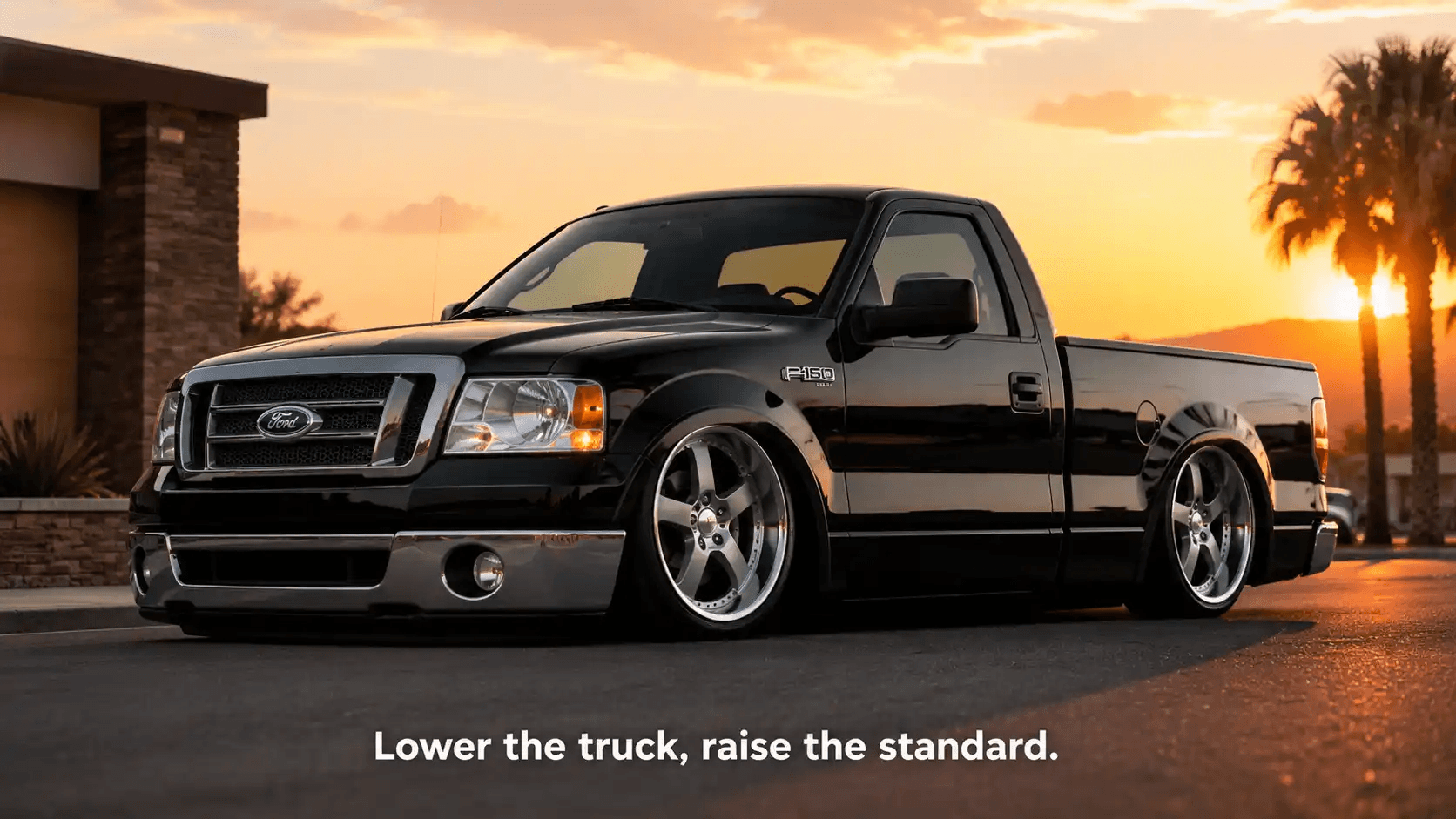
A complete drop kit is more than a pair of springs. Here is what separates a true performance kit from a budget spring-only kit:
|
Component |
Function |
Why It Matters |
|
Front drop coil springs/torsion keys |
Lowers the front end 2"-4" |
Engineered spring rate keeps ride quality close to stock |
|
Rear hanger & shackle kit |
Lowers the rear end 3"-5" |
Maintains correct pinion angle and axle travel |
|
Premium nitrogen gas shocks |
Dampens the new, lower ride height |
Prevents bottoming out and harsh impacts |
|
Hardware & brackets |
Mounts everything securely |
SAE-grade steel resists stripping and corrosion |
|
Optional axle flip kit |
Allows a more aggressive rear drop |
Needed for drops beyond 5" on certain years |
Cheaper kits often skip the matched shocks or use stamped steel that flexes under load. RideTrendz includes Doetsch Tech or RTZ Primo nitrogen shocks with most kits specifically so the best lowering kit for Ford F-150 customers buy does not ride like a pogo stick once it is dropped. Every spring is heat-set before shipping, which means it has already been compressed and released repeatedly at the factory so it will not sag or settle after a few thousand miles on the road, a problem that plagues many low-cost overseas coils.
The shackles deserve their own mention. RTZ shackles are laser cut, robotically welded, and powder-coated before they ever reach a box, which matters because a flexing or rusted shackle is one of the more common failure points on cheaper drop kits a year or two after installation.
Best Lowering Kit for Ford F-150 by Generation
Not every F-150 uses the same suspension architecture, so the best F150 lowering kit to buy depends heavily on the model year. Below is a breakdown of the most common F-150 generations RideTrendz supports, along with the typical drop range and recommended kit type for each.
|
Generation |
Front Drop |
Rear Drop |
Recommended Kit Type |
|
1987-1996 F-150 (2WD) |
2"-3" coil springs |
4"-6" hanger & shackle |
Complete lowering kit |
|
1997-2003 F-150 (2WD/4WD) |
2"-3" coil springs/torsion keys |
4" hanger & shackle |
Complete lowering kit |
|
2004-2008 F-150 (2WD) |
4" iron drop spindles |
6" axle flip kit |
Complete lowering kit with flip kit |
|
2009-2014 F-150 |
Drop spindles / lowering struts |
Axle flip or hanger kit |
Confirm current fitment before ordering |
For the 1987-1996 trucks, the best lowering kit for Ford F-150 pairs 3-inch front drop coils with an adjustable rear shackle kit and a set of RTZ Primo nitrogen shocks, giving owners a clean 1-2 inch adjustable window on the rear so the stance can be fine-tuned after installation. For 1997-2003 trucks, the best lowering kit for Ford F-150 swaps in torsion key drops up front with a 4-inch rear hanger and shackle setup, plus Doetsch Tech shocks to keep the ride controlled even with the lower ride height.
Later trucks, particularly 2004-2008 V8 models, typically move away from simple coil swaps toward iron drop spindles paired with a rear axle flip kit, since the factory leaf spring mounting geometry on these years limits how far a shackle-only kit can safely drop the rear before the axle housing risks contact with the frame. Owners shopping for these later trucks should always confirm whether their specific build is 2WD, since the best lowering kit for Ford F-150 components differ meaningfully between two-wheel-drive and four-wheel-drive front ends.
How to Lower a Ford F150: Step-by-Step Overview?
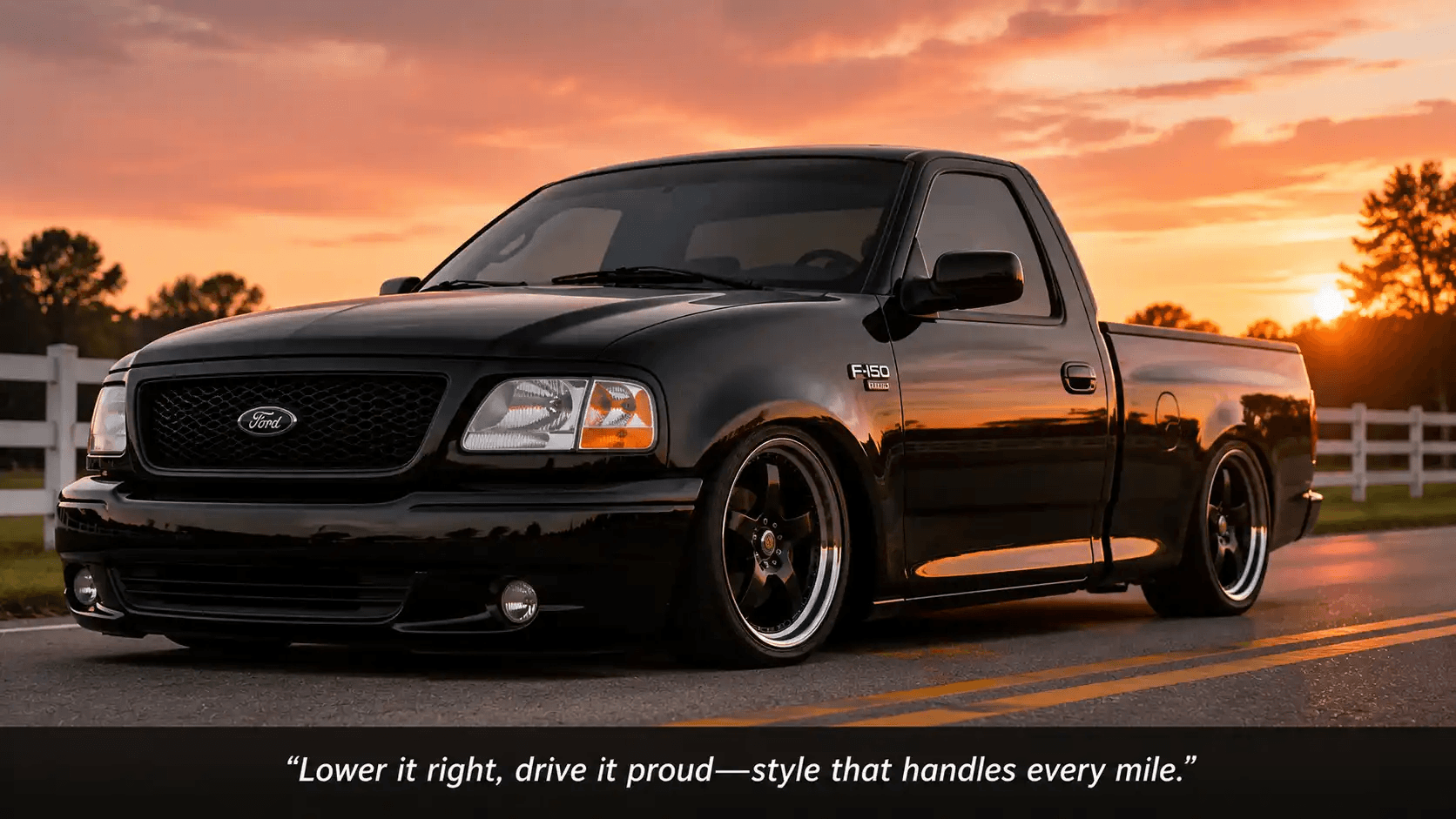
Understanding how to lower a Ford F150 before ordering parts prevents wasted money on the wrong combination. Here is the general process RideTrendz recommends, written for a shop or an experienced home installer working with basic hand tools and a floor jack:
- Confirm the exact year, drivetrain (2WD or 4WD), and cab style before ordering, since coil-spring trucks and torsion-bar trucks use entirely different front-end components.
- Lift the front end and remove the wheels to access the coil springs or torsion bar keys, supporting the lower control arms securely before disconnecting anything.
- Install the front drop coils or re-index the torsion keys to the lowered position, reconnecting the sway bar end links and brake lines as you go.
- Remove the rear leaf springs and install the lowering hangers and shackles, double-checking pinion angle once the axle is reseated.
- Bolt in matched lowering shocks front and rear to handle the new ride height, since stock shocks are valved for the factory travel range, not a dropped one.
- Torque every bolt to factory specification and get a full four-wheel alignment before putting serious mileage on the truck.
This is also where a Ford F150 drop kit guide earns its value: skipping the alignment step is the single most common reason a freshly lowered truck wears out tires within a few thousand miles. RideTrendz includes torque specs and install notes with every kit so installers are not guessing, and most experienced shops can complete a full front and rear install in a single working day.
DIY Installation vs. Professional Installation
Plenty of experienced home mechanics install a lowering kit themselves with nothing more than a jack, jack stands, and basic hand tools, and most kits are designed with that exact installer in mind. That said, a shop visit makes sense for anyone without a way to perform a proper alignment afterward, since the alignment matters just as much as the parts themselves. Some shops will also discount the alignment if they sold and installed the kit, which can make professional installation more cost-effective than it first appears once the full job is priced out.
The best lowering kit for Ford F-150 purchase still pays off either way, but matching the install method to the tools and time actually available avoids a half-finished project sitting on jack stands for weeks.
Lowering Kit vs. Lift Kit vs. Leveling Kit
Buyers occasionally confuse a drop kit with the suspension upgrades sitting right next to it in the catalog. A few quick distinctions help clear up the confusion before anyone orders the wrong parts:
- A lowering kit drops the truck for street performance and looks, reducing ride height and center of gravity.
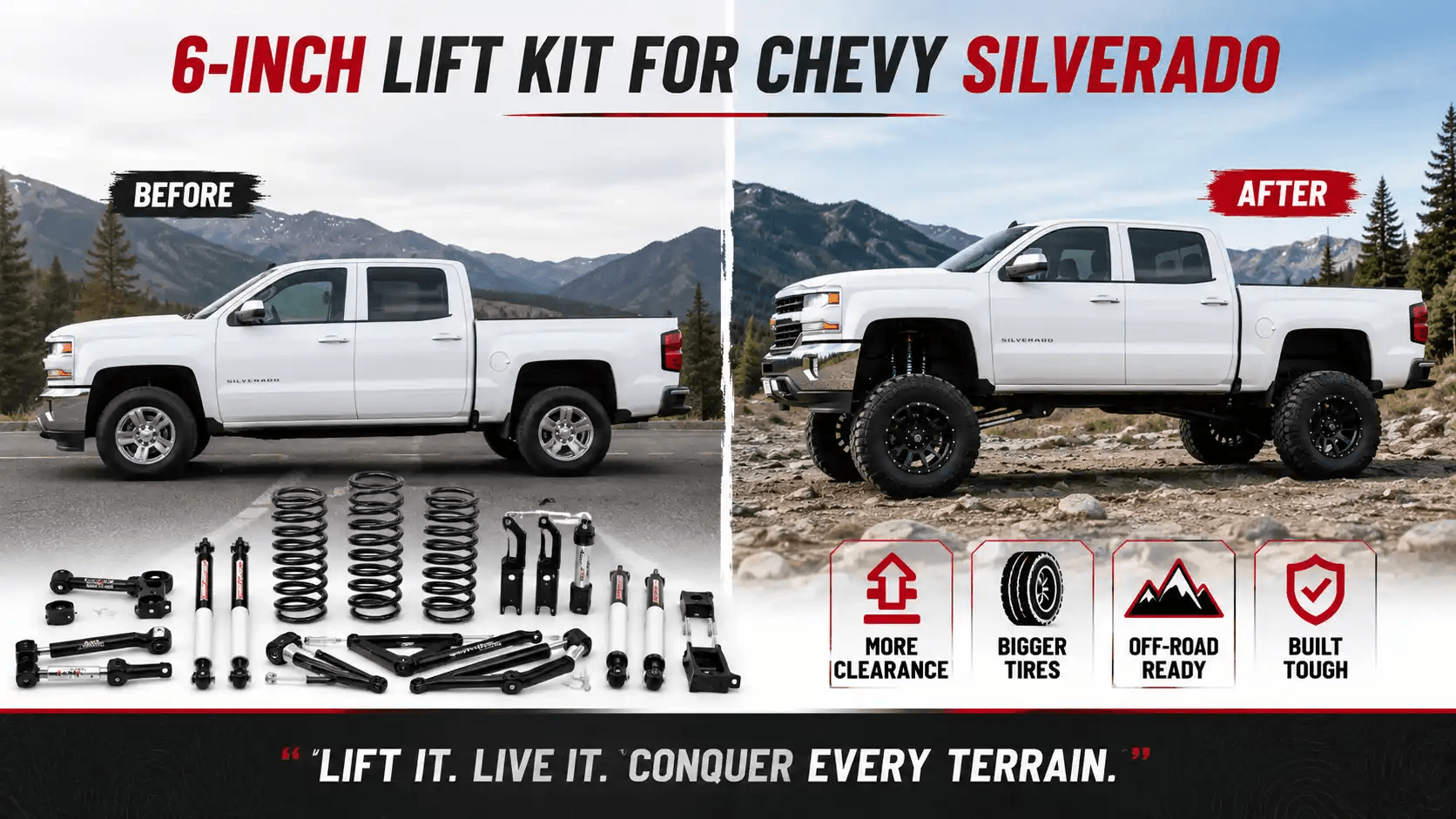
- A lift kit raises the truck for ground clearance and larger tires, the opposite goal entirely.
- A leveling kit only corrects the factory front-to-rear rake without changing overall ride height much, mainly fixing the nose-down stance many trucks have from the factory.
Owners who are cross-shopping these options should read our breakdown on lift kit vs leveling kit differences, which explains the mechanical differences in more depth than a single paragraph here can cover, including which years benefit most from each approach.
How Much Drop Should You Choose?
Picking a drop height is where many first-time buyers either get it exactly right or end up disappointed. A 1-2 inch drop is usually the safest starting point for daily-driven trucks that still see highway miles and the occasional rough road, since it preserves most of the factory suspension geometry and ground clearance. A 3-4 inch drop delivers a noticeably more aggressive stance and is popular for show trucks or weekend cruisers, but it usually requires the optional axle flip kit and wider wheel offsets to avoid tire rub. Anything beyond 4-5 inches starts to demand more involved modifications, including notched frames or bagged setups, and is generally outside what a bolt-on kit alone can safely deliver.
RideTrendz recommends matching the drop to how the truck is actually driven. A daily commuter benefits most from a moderate drop with quality shocks, while a dedicated show build can justify chasing the maximum number a kit allows. Either way, the goal is the same: the best lowering kit for Ford F-150 for one owner is not automatically the best choice for another, and an honest assessment of daily use should drive the decision more than the size of the number on the box.
Choosing Wheels and Tires for a Lowered F150
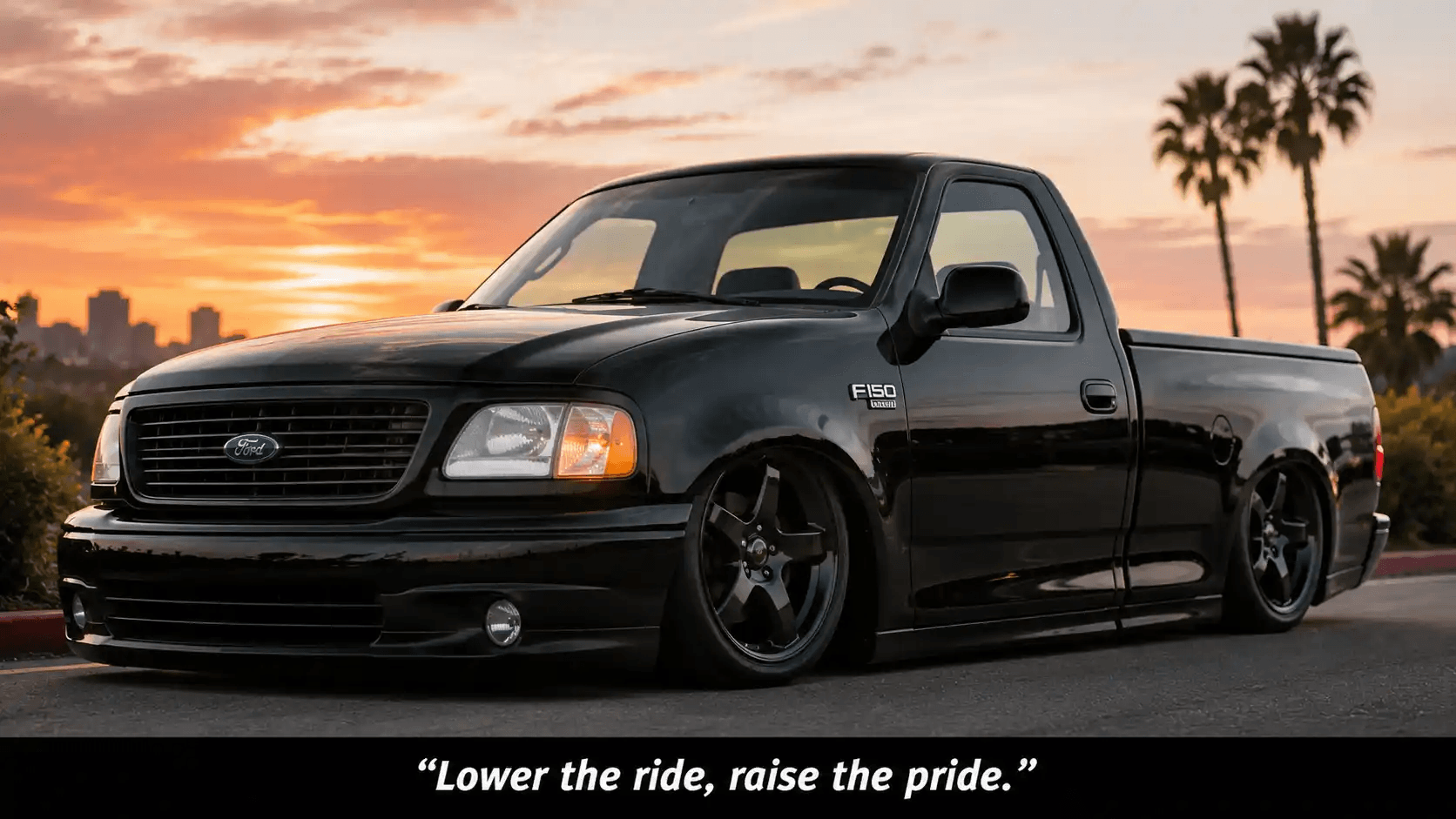
Wheel and tire choice changes once a truck is lowered. A 1-2 inch drop usually keeps stock wheel and tire sizing workable, but anything more aggressive often calls for a wider wheel with less positive offset to clear the fender lip without rubbing. Lower-profile tires also help maintain a clean fender gap without sacrificing too much sidewall comfort. Buyers should finalize their target drop height before ordering wheels, since ordering both at once without a clear plan is one of the more expensive mistakes a first-time builder can make.
Tire diameter matters just as much as wheel width. Dropping a truck several inches while keeping a tall stock-diameter tire often defeats part of the visual benefit, since the larger tire sidewall partially refills the fender gap the lowering kit just created. Many builders intentionally step down slightly in overall tire diameter to maximize the clean, tucked look a drop kit is meant to deliver, while others prioritize keeping the factory speedometer calibration accurate and accept a slightly larger gap as a tradeoff. There is no single correct answer here, only a tradeoff worth understanding before placing a wheel and tire order.
RideTrendz vs. the Competition: Why Our Kits Win
Plenty of brands sell lowering parts online, but quality varies enormously. Here is an honest pros and cons look at what separates RideTrendz from typical budget kits.
|
Factor |
RideTrendz Lowering Kits |
Typical Budget Kits |
|
Spring engineering |
Heat-set, load-tested, USA-made |
Often untested overseas stock |
|
Shocks included |
Premium nitrogen gas shocks standard |
Frequently sold separately or omitted |
|
Hardware |
SAE-grade, powder-coated, corrosion-resistant |
Mixed-grade bolts, prone to rust |
|
Warranty support |
Direct manufacturer support, 20+ years of experience |
Limited or third-party only |
|
Fitment documentation |
Year and drivetrain-specific kits |
Generic "universal" claims |
|
Install guidance |
Torque specs and notes included |
Often minimal or absent |
The difference shows up months after installation, not on day one. A budget spring will compress on a test drive just like a quality one does. The real test is whether the truck still sits at the intended height, rides comfortably, and feels controlled a year later, and that is where RideTrendz components are built to hold up. This is also why so many returning customers specifically search for the best lowering kit for Ford F-150 by brand name rather than shopping on price alone after their first build.
Cost to Expect When Lowering an F150
Budgeting for a lowering kit is straightforward once the components are understood. A complete front and rear kit with matched shocks generally runs less than a single set of aftermarket wheels, which makes it one of the more affordable ways to dramatically change how a truck looks and drives. Labor varies depending on whether the truck uses coil springs, torsion bars, or leaf springs in the rear, but most shops quote a half-day to full-day job for a complete install. Add a four-wheel alignment afterward, which is a non-negotiable line item, not an optional extra, regardless of which kit a buyer chooses.
Owners building a budget should also price out wheels and tires together with the kit itself if a more aggressive drop is planned, since the suspension components are only half of what a finished, rubbing-free build actually requires.
|
Line Item |
Typical Range |
Notes |
|
Front kit (coils/spindles/torsion) |
Entry to mid-range pricing |
Varies by drop height and generation |
|
Rear hanger & shackle or flip kit |
Entry to mid-range pricing |
Flip kits cost more than shackle-only kits |
|
Matched shocks (front & rear set) |
Mid-range pricing |
Often bundled into complete kits |
|
Four-wheel alignment |
Set shop labor rate |
Required after every install |
|
Optional wheel/tire changes |
Varies widely |
Only needed for drops beyond 2-3 inches |
Statistics: Why Lowering Kits Remain a Top Truck Upgrade
The lowered-truck and street-truck scene has stayed remarkably consistent over the past decade, and the data backs up why so many F-150 owners keep this upgrade near the top of their build list:
- Suspension modifications, including lowering and lift kits, consistently rank among the top three most-installed aftermarket categories on full-size pickups, according to aftermarket industry surveys.
- A correctly matched 2-3 inch front and rear drop typically lowers a truck's center of gravity enough to measurably reduce body roll in everyday cornering.
- Trucks lowered with mismatched or budget shocks report a meaningfully higher rate of premature tire wear compared to kits that include matched, valved shocks.
- Four-wheel alignment after a drop is the single most cited factor in tire longevity among lowered-truck owners in online community surveys.
- Owners who choose a complete kit with springs, shackles, and shocks together report fewer follow-up part replacements than owners who buy components separately and mix brands.
- Full-size pickups remain one of the most modified vehicle categories in North America, with suspension changes consistently among the first upgrades new truck owners make.
None of these data points exist in isolation. Together they point to the same conclusion: the parts matter less than the system. A drop kit assembled from matched, properly engineered components consistently outperforms a pile of individually "good enough" parts bolted together without regard for how they interact under load.
Common Mistakes When Buying a Ford F150 Lowering Kit
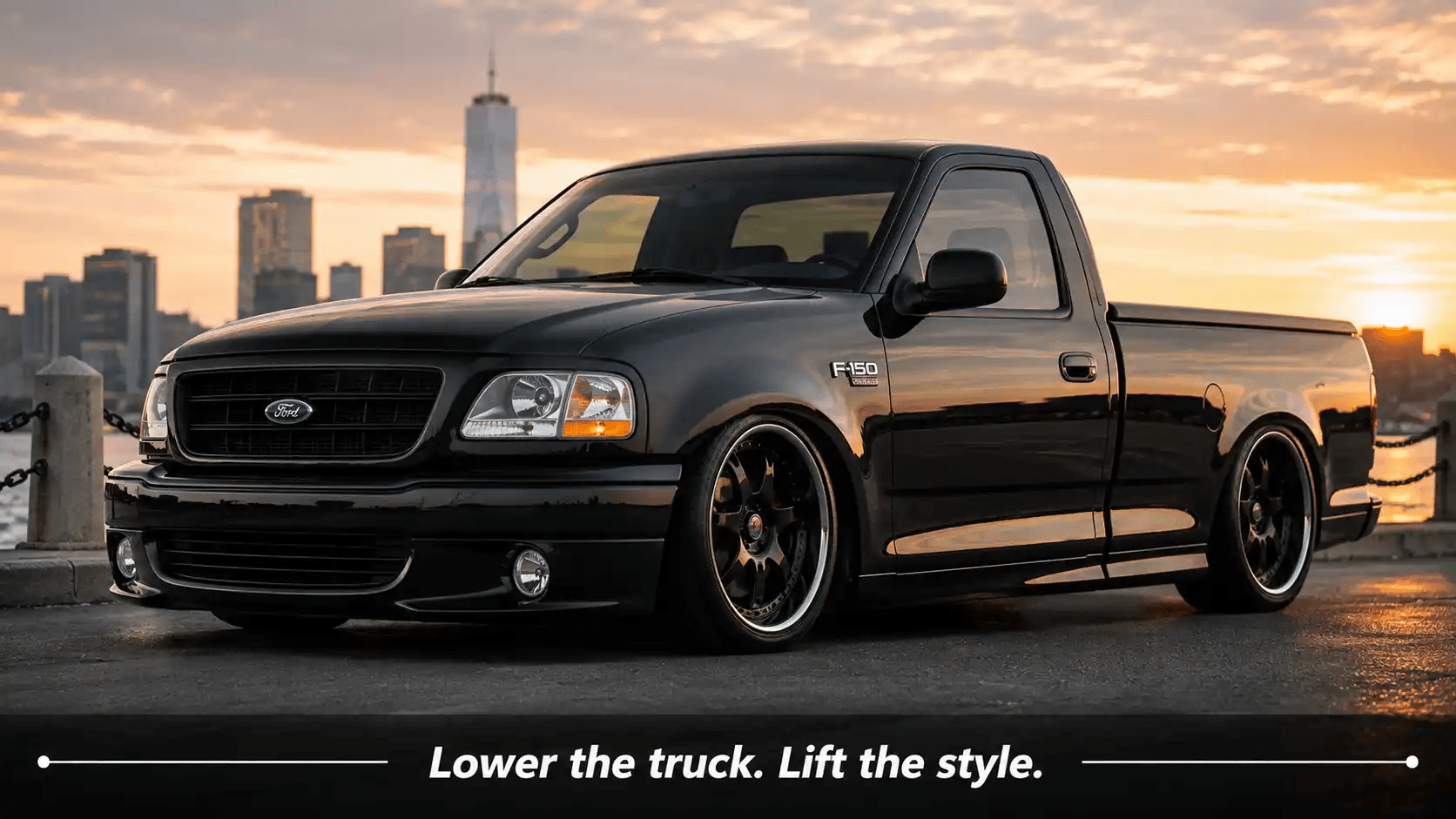
Even with the best F150 lowering kit to buy in hand, a few mistakes can ruin the result:
- Ordering by truck model alone without confirming drivetrain (2WD vs 4WD) and cab configuration.
- Skipping new shocks and reusing stock units that were never designed for the lowered travel range.
- Forgetting the post-install alignment, which is the leading cause of uneven tire wear on lowered trucks.
- Choosing the maximum drop available instead of the drop that matches the intended use and wheel/tire package.
- Buying a spring-only kit and assuming it equals a complete package with matched shocks and hardware included.
- Mixing components from different brands without checking that spring rates and shock valving were designed to work together.
Why RideTrendz Is the Right Source for Your F150 Lowering Kit?
RideTrendz has spent more than two decades manufacturing suspension parts and kits for trucks, Jeeps, and SUVs, and that experience shows in every detail of our lineup. Every spring is heat-set and load-tested before it ships, every shackle is robotically welded and powder-coated, and every kit ships with the matched shocks needed to make the new ride height actually feel good on the road, not just look good in photos.
We also believe a Ford F150 drop kit guide is only useful if the parts behind it are backed by real support. That is why our team documents fitment by exact year and drivetrain instead of relying on vague "universal fit" language, and why customers consistently come back to RideTrendz for their next build instead of gambling on an unknown overseas brand. If a customer is also working on rear-end parts, our lowering parts catalog covers axle flip kits, brackets, and hardware that pair directly with these kits.
For owners comparing platforms, our recent guide on lowering a Chevy Silverado shows the same engineering philosophy applied to a different truck, and it is a useful read for anyone cross-shopping brands before committing to a final purchase. The manufacturing standards do not change from one truck platform to another; only the part numbers do, which is precisely why so many multi-truck households end up buying every drop kit from the same source once they trust the first one.
Maintaining Your Lowered F150 After Installation
A lowering kit is not a "set it and forget it" upgrade. Re-torque all suspension hardware after the first 500 miles, since new bushings and shackle hardware settle in quickly under regular driving loads. Inspect shackle bushings every oil change, and watch for uneven tire wear that signals an alignment drifting out of spec.
Owners who paired their kit with matched lowering shocks instead of reusing stock units consistently report a smoother ride and longer component life, which is exactly why RideTrendz bundles shocks into every complete kit rather than selling springs alone. A quick visual inspection every few months, checking for cracked bushings, leaking shocks, or loose U-bolts, will catch most problems long before they become expensive repairs, and it is the easiest way to make sure the best lowering kit for Ford F-150 purchase keeps performing the way it did on day one.
Towing and Daily-Use Considerations
Most F-150 owners still use their truck for real work at least occasionally, even after lowering it, so towing and payload should factor into the decision. A moderate 1-2 inch drop with matched shocks generally preserves enough suspension travel for light towing and hauling, while a more aggressive 4-5 inch drop is better suited to trucks that are primarily street-driven and rarely loaded down. Buyers who plan to keep towing a trailer or hauling equipment regularly should lean toward the milder end of the drop range and confirm shock travel specs before ordering, since running out of suspension travel under load is uncomfortable at best and damaging at worst.
Tools You'll Need for Installation
A typical front and rear lowering kit install can be completed with a fairly standard tool set: a floor jack and a sturdy pair of jack stands, a torque wrench, a spring compressor for coil-spring front ends, a socket set covering both standard and metric sizes depending on the model year, and penetrating oil for any rusted hardware on older trucks. A shop press is helpful but not always required if the kit includes pre-assembled components. Having everything staged before starting keeps a one-day job from stretching into a weekend-long project.
Where to Buy Your Ford F-150 Lowering Kit?
Buying directly from a manufacturer that documents fitment by year and drivetrain, rather than a marketplace listing with vague compatibility claims, removes most of the guesswork from the purchase. RideTrendz sells every best lowering kit for Ford F-150 package with clear year-range and drivetrain labeling, so buyers can match parts to their exact truck before checkout instead of hoping a "universal" kit happens to fit.
Final Buying Checklist
Before checking out, run through this short list:
- Confirm exact model year, cab style, and drivetrain (2WD or 4WD).
- Decide on a target drop height based on daily use, not just looks.
- Make sure the kit includes matched shocks, not springs alone.
- Check that hardware is SAE-grade and rust-resistant.
- Budget for a four-wheel alignment as part of the total cost.
- Verify the seller documents fitment by year and drivetrain rather than listing a generic universal fit.
Conclusion
Choosing the best lowering kit for Ford F-150 is about more than picking the biggest drop number on a page. It means matching the kit to the exact year and drivetrain, installing matched shocks instead of reusing tired stock units, and getting a proper alignment once everything is bolted in. RideTrendz has built that complete approach into every kit we sell, backed by two decades of USA manufacturing experience, heat-set springs, and hardware that is designed to outlast the truck it is bolted to.
Whether the goal is a clean daily driver or a dedicated show truck, the right combination of components, the right drop height for how the truck is actually driven, and a proper post-install alignment will decide whether the result feels as good as it looks. RideTrendz remains the most dependable place to find the best lowering kit for Ford F-150 and the support to install it correctly the first time, season after season.
Frequently Asked Questions
How much does it cost to lower a Ford F150?
A complete kit with springs, shackles, and matched shocks typically costs less than a single set of aftermarket wheels, and most owners handle installation with basic tools in a weekend.
Will lowering my F150 hurt the ride quality?
Not with a matched kit. RideTrendz pairs every spring drop with nitrogen gas shocks tuned for the new ride height, so comfort stays close to stock while handling improves.
Do I need an alignment after installing a lowering kit?
Yes. A four-wheel alignment after installation is the single biggest factor in even tire wear and long-term suspension health on a lowered F150.
Can I lower a 4WD F150 the same way as a 2WD?
4WD trucks use different components, such as drop spindles or torsion key adjustments, so always confirm drivetrain-specific fitment before ordering any kit.
What is the difference between a lowering kit and a leveling kit?
A lowering kit drops the entire truck for stance and handling, while a leveling kit only corrects the factory front-to-rear rake without significantly lowering ride height.