

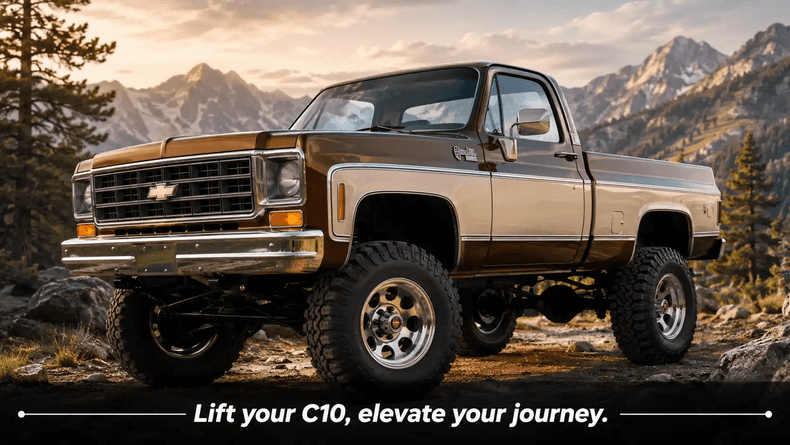
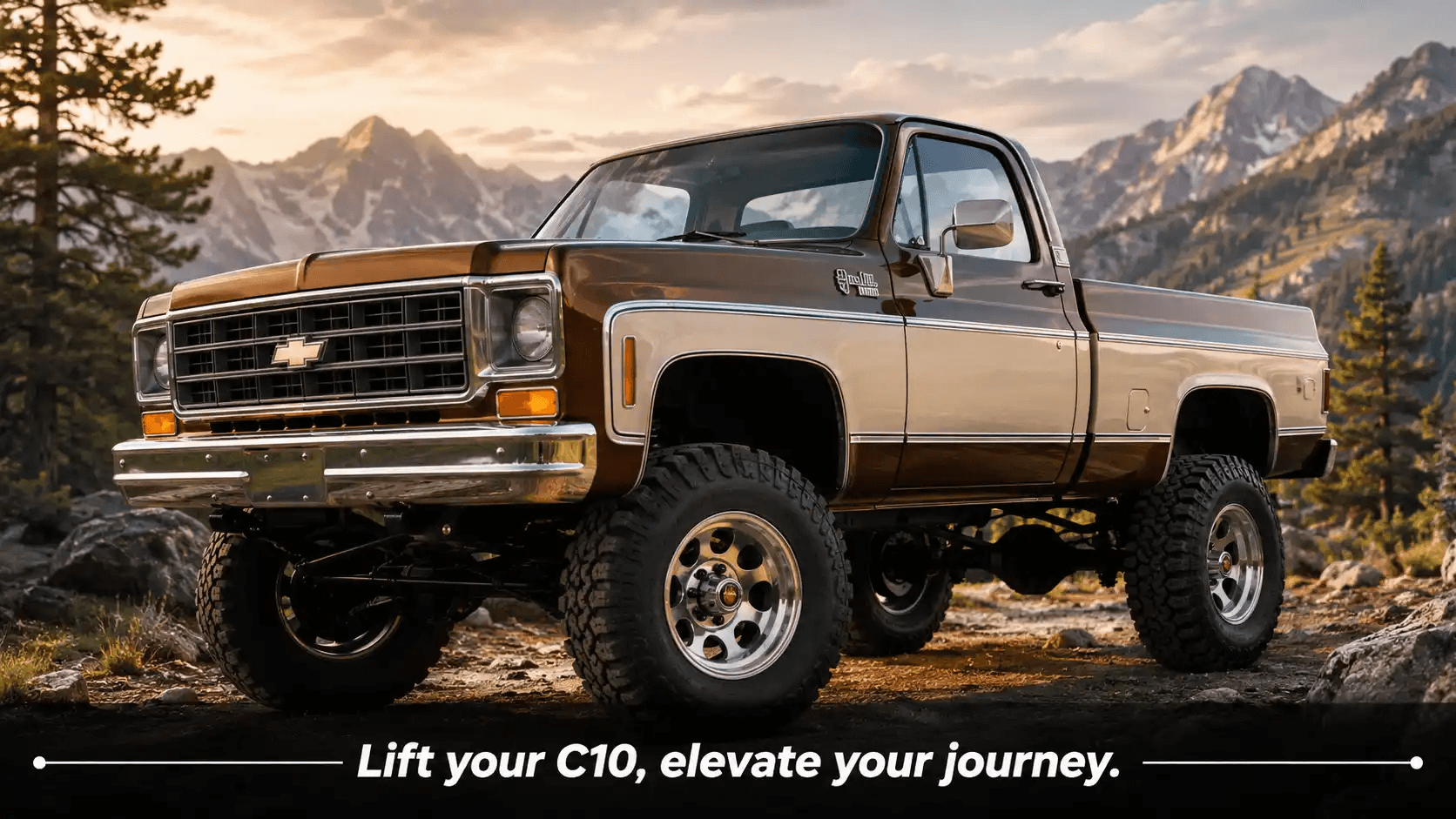
Best Lift Kit for 1973-1987 Chevy C10: Complete Guide
If you own a square-body Chevy or GMC pickup, you already know it deserves more than stock height. Finding the best lift kit for 1973-1987 Chevy C10 trucks comes down to one thing: a kit built specifically for this chassis, not a generic spacer set stretched across multiple platforms. RideTrendz builds exactly that. Every kit we engineer for the C10 is designed, tested, and shipped from the USA, and that focus shows the moment you bolt it on.
This guide walks through everything you need before you buy: lift types, height options, install difficulty, ride quality trade-offs, and why our customers keep coming back when they search for a best lift kit for square body C10. We will also cover real statistics, a pros-and-cons breakdown, and a side-by-side comparison table so you can make a confident decision the first time.
Whether you are restoring a numbers-matching survivor or building a daily-driven off-road rig, the best lift kit for 1973-1987 Chevy C10 trucks is the one that matches your goals, your budget, and your driving style. Let's get into it.
The square body generation has become one of the most collected and modified platforms in the truck world, and that popularity is not slowing down. Clean examples regularly trade hands at auctions for prices that would have seemed unthinkable a decade ago, and that rising demand has pushed the aftermarket suspension space to finally treat this chassis with the seriousness it deserves. For years, square body owners had to settle for whatever leftover parts happened to share a bolt pattern. RideTrendz changed that by engineering kits from the ground up specifically for the 1973 through 1987 C10, rather than recycling tooling built for a newer or entirely different platform.
That dedicated engineering effort matters because the square body was built across more than a decade of production changes. Suspension geometry, frame dimensions, and cab mounting points shifted subtly from the early 1973 trucks through the final 1987 model year. A kit that ignores those differences can leave you with uneven ride height, bind points in the steering, or a stance that simply looks wrong. RideTrendz accounts for those production variations so every kit fits exactly as advertised, regardless of which year you are working with.
Why the 1973-1987 Chevy C10 Needs the Right Lift Kit?
The square body C10 runs a solid front axle with leaf-sprung suspension (2WD) or a front torsion-bar/leaf combination (4WD), depending on year and drivetrain. That means the best lift kit for 1973-1987 Chevy C10 trucks is never a one-size-fits-all part. It has to respect the truck's original geometry while still adding real ground clearance.
RideTrendz designs every C10 kit around this exact chassis. We do not repurpose parts meant for a Silverado or a Ranger and relabel them. If you want to understand more about how suspension lifts work across different platforms first, our breakdown of what a suspension lift kit actually does and why types matter is a great starting point, and our piece on choosing between lift parts and a complete lift kit explains why buying a matched system beats piecing one together.
Here is why getting this right matters so much on a 40-plus-year-old chassis:
- Larger tire clearance, add 33s or 35s without rubbing the fenders or the frame.
- Improved approach angle, critical if you tow, haul, or hit a gravel driveway daily.
- Correct geometry, a kit engineered for the C10 keeps your alignment angles in spec, unlike universal spacers.
- Long-term durability, USA-made components resist the flex and fatigue that cheaper imports cannot handle.
That last point is where RideTrendz separates itself from the crowd. Every component in our best lift kit for 1973-1987 Chevy C10 lineup is engineered, not just assembled, which is exactly why thousands of square body owners trust us when they search for a 73-87 Chevy C10 suspension upgrade.
2WD Versus 4WD: Two Very Different Lift Conversations
A 2WD square body C10 runs a simple front leaf spring setup, which makes lifting relatively straightforward. Coil-style spacers do not apply here in the same way they do on independent front suspension trucks; instead, most 2WD lift solutions rely on spindle height changes, add-a-leaf kits, or shackle adjustments paired with rear blocks. The process is mechanically simple, the parts are affordable, and most owners can complete the swap in an afternoon with basic hand tools.
A 4WD square body, on the other hand, uses a front torsion bar and independent front suspension setup that behaves very differently under load. Lifting a 4WD C10 properly usually means adjusting torsion bar keys, adding strut spacers, or installing taller front coils alongside rear blocks. Get this wrong and you risk uneven ride height side to side, premature CV joint wear, or a front end that feels vague at speed. This is exactly the kind of platform-specific knowledge that separates a generic spacer kit from a properly engineered system, and it is a major reason the conversation around the best lift kit for 1973-1987 Chevy C10 4WD trucks looks so different from the 2WD discussion.
C10 Lift Kit Statistics That Matter
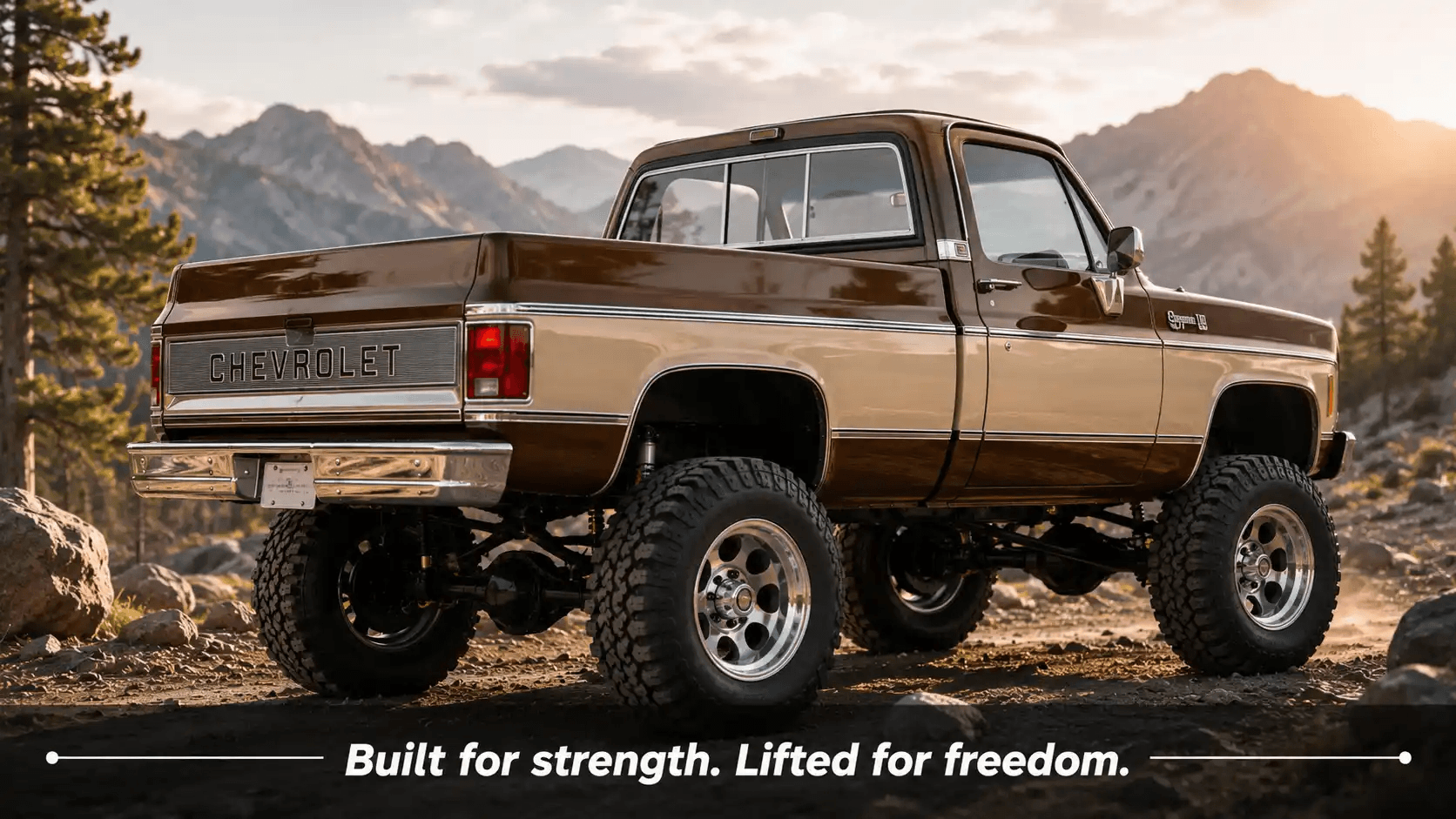
Before you buy, here are a few numbers worth knowing. They help explain why the best lift kit for 1973-1987 Chevy C10 trucks is rarely the cheapest option on the shelf.
- 2 to 6 inches, the typical lift range for square body C10 kits, depending on whether you choose a leveling spacer or a full suspension lift.
- 35 to 37 inches, the largest tire diameter, most 4-6 inch lifted C10 builds can run without trimming.
- 60-80% of square body owners report their factory shocks were undersized the moment they added lift, which is why pairing a kit with the right dampers matters so much.
- 2-1 ratio, many coil spacer kits deliver less actual lift than the spacer height suggests because of suspension geometry; always check the real-world lift, not just the part's listed size.
These figures are not arbitrary. They come from how leaf spring and torsion bar suspensions actually behave once you change ride height. A 3-inch spacer rarely produces exactly 3 inches of real-world lift once the suspension settles under the truck's weight, which is why reputable manufacturers publish actual measured lift rather than just the raw dimension of the part itself. RideTrendz lists real, measured lift heights on every product page so you know precisely what you are getting before the parts ever arrive.
Tire clearance numbers also depend heavily on backspacing and wheel width, not just lift height alone. Two trucks running an identical 4-inch lift kit can end up with very different maximum tire sizes if one is running narrower factory wheels and the other has switched to a wider aftermarket wheel with less backspacing. This is one of the most common points of confusion for first-time square body owners, and it is worth measuring your specific wheel and fender combination rather than assuming the listed maximum tire size will apply automatically to your build.
If you are already running a lift and wondering whether your factory shocks can keep up, our guide on lift shocks versus stock shocks after a lift lays out exactly what changes and when an upgrade becomes mandatory rather than optional.
Types of Lift Kits for the Square Body C10
Not every square body owner wants the same outcome. Some want a mild stance correction. Others want serious ground clearance for trail use. RideTrendz carries both ends of that spectrum, and every option below qualifies as the best lift kit for 1973-1987 Chevy C10 depending on your specific goals.
1. Leveling and Coil Spring Spacer Kits (2-3 Inches)
This is the most popular entry point for square body owners. A solid aluminum coil spacer kit corrects the factory front rake, fits larger tires without major fabrication, and installs in an afternoon. It is the simplest path to a C10 lift kit buy that still looks intentional rather than thrown together.
Leveling kits are also the most forgiving option for someone modifying a square body for the first time. Because the lift height is modest, the impact on steering geometry, driveline angle, and brake line length stays minimal. Most owners report no noticeable change in daily driving manners after installing a 2 to 3 inch spacer kit, which is exactly why this remains the default recommendation for anyone who simply wants a more aggressive stance and slightly larger tires without committing to a full suspension overhaul.
2. Full Suspension Lift Kits (4-6 Inches)
For owners chasing serious clearance, a full kit replaces or augments shocks, spindles, and rear blocks together. This is where the best lift kit for 1973-1987 Chevy C10 trucks earns its price tag, bigger tires, better approach angles, and a stance built for trail use, not just parking lot looks.
At this lift range, the suspension geometry changes enough that several supporting components typically need attention as well. Driveshaft angles steepen, which can introduce vibration if left unaddressed. Brake lines often need extended versions to handle the increased wheel travel without stretching tight at full extension. Sway bar end links may need longer versions too. None of this should discourage you from going big if that is the build you want, but it does mean budgeting for a few supporting parts beyond the core kit itself, and RideTrendz can point you toward the correct matching components for whichever configuration you choose.
3. Rear Block and Shackle Kits
Rear lift blocks and adjustable shackles let you fine-tune rake independently from the front lift. Paired with the right front spacers, this combination is how most square body owners dial in a perfectly level stance.
Adjustable shackles deserve special mention because they give you flexibility that a fixed block simply cannot. If you tow a trailer occasionally and need a slightly more aggressive rear stance for hauling weeks, then want to drop back down for solo driving, an adjustable shackle setup lets you make that change in minutes rather than swapping hardware entirely. This kind of flexibility is particularly valuable on a square body that pulls double duty as both a weekend project and an occasional work truck.
Curious how a similar lift-versus-lower decision plays out on a different GM platform? Our walkthrough on lowering a Chevy Silverado the right way and our buying guide for the 2002-2008 Dodge Ram 1500 lift kit both cover the same core principles, matched geometry, the right shocks, and realistic lift height that apply directly to the square body C10.
Lift Height Comparison Table
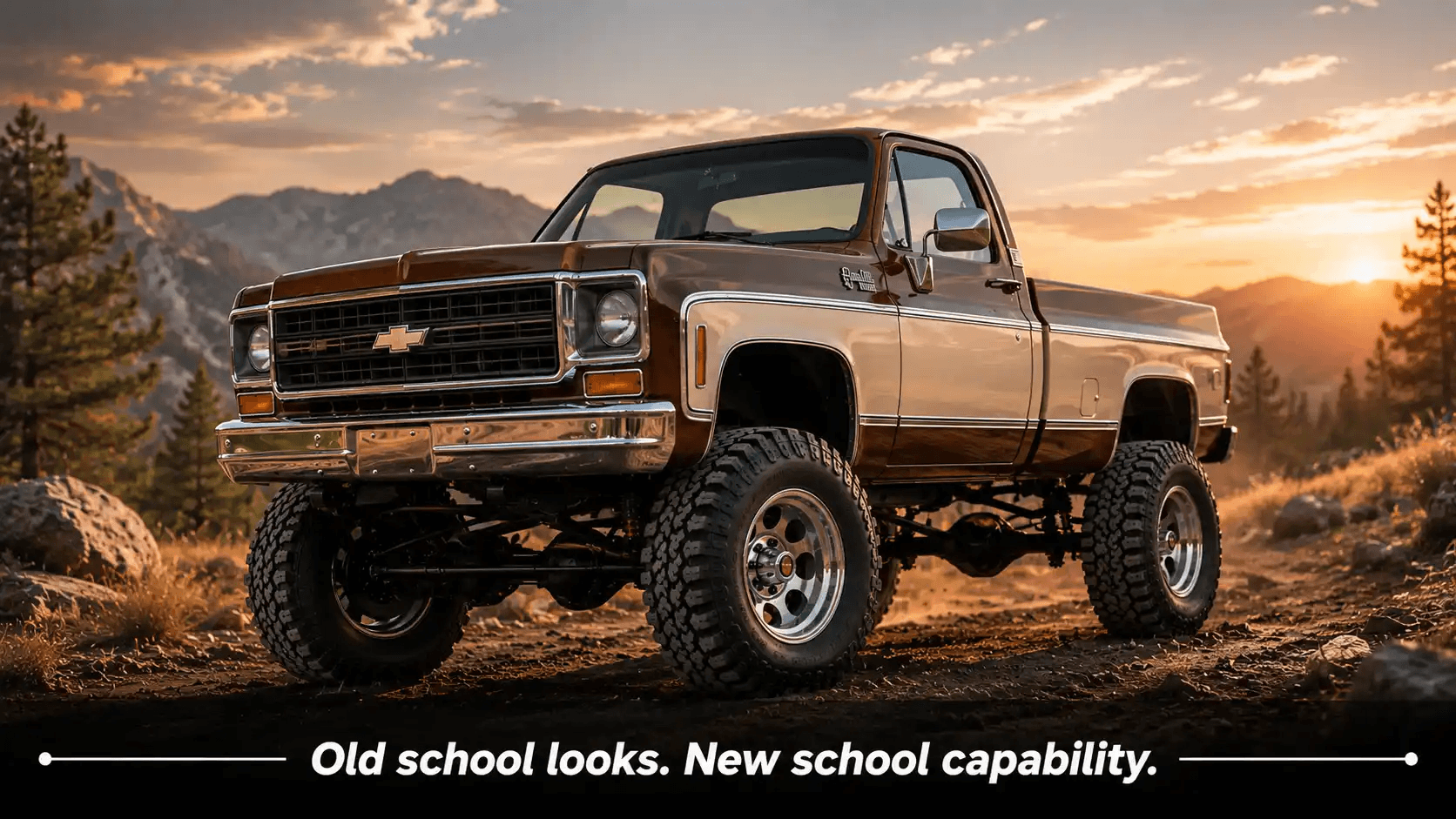
Here is a quick side-by-side look at how each option stacks up. This is the kind of breakdown that makes choosing the best lift kit for 1973-1987 Chevy C10 trucks far easier.
|
Kit Type |
Lift Height |
Max Tire Size |
Install Time |
Best For |
|
Coil Spacer / Leveling |
2-3 in. |
Up to 32 in. |
2-4 hours |
Daily drivers, stance correction |
|
Rear Block + Shackle |
1-3 in. rear |
Up to 33 in. |
1-3 hours |
Leveling out rear sag, towing setups |
|
Full Suspension Lift |
4-6 in. |
Up to 37 in. |
1-2 days |
Off-road builds, serious clearance |
Tire and Wheel Fitment After Your Lift
Lift height is only half of the fitment equation. Wheel width, offset, and backspacing all play a major role in whether your new tires clear the fenders cleanly or rub at full lock. Square body C10 trucks have relatively narrow factory fender openings compared to modern trucks, which means going too wide on wheel width without enough lift can cause rubbing even on a truck that technically has the clearance height to support a larger tire.
A few practical guidelines tend to hold true across most square body builds. Sticking close to factory backspacing keeps the tire tucked under the fender rather than poking outward, which is generally the safer choice if you are not planning to run flares. Moving to a wheel with less backspacing pushes the tire outward for a more aggressive stance, but it also increases the likelihood of rubbing against the fender lip during hard turns unless paired with adequate lift. If you are unsure which combination will work for your exact build, measuring your current fender clearance before ordering tires saves a return shipment and a frustrating afternoon.
- Stock backspacing + moderate lift: Safe, predictable fitment with minimal rubbing risk.
- Reduced backspacing + moderate lift: Aggressive stance, but check clearance carefully at full steering lock.
- Stock backspacing + full suspension lift: Maximum tire size with the least fitment risk, the combination most off-road builds use.
RideTrendz Lift Kits: Pros and Cons
We believe in giving you the full picture, not just a sales pitch. Here is an honest pros-and-cons look at what you get when you choose the best lift kit for 1973-1987 Chevy C10 from RideTrendz.
Pros
- USA-made components, designed and manufactured domestically, not relabeled overseas stock.
- Guaranteed fit, every kit is built specifically for the 1973-1987 C10 chassis, so there is no guesswork.
- Bolt-on installation, no cutting or welding required on most kits, which keeps labor costs down.
- Decades of suspension experience, RideTrendz has built lift and lowering parts for over 20 years.
- Strong aftermarket support, matching shocks, shackles, and hardware are all available from the same trusted source.
Cons
- Larger lifts (4-6 in.) may require a longer install window if you are doing it yourself.
- Bigger tire sizes paired with a serious lift may call for a gear ratio change for best performance.
- Like any lift, height changes alter handling slightly, so a proper alignment afterward is non-negotiable.
Even with those trade-offs in mind, this lift lineup remains, in our experience, the single most transformative upgrade you can make to a square body build. The pros consistently outweigh the minor cons, especially when the kit is engineered correctly from the start.
Why RideTrendz Is the Trusted Source for C10 Lift Kits
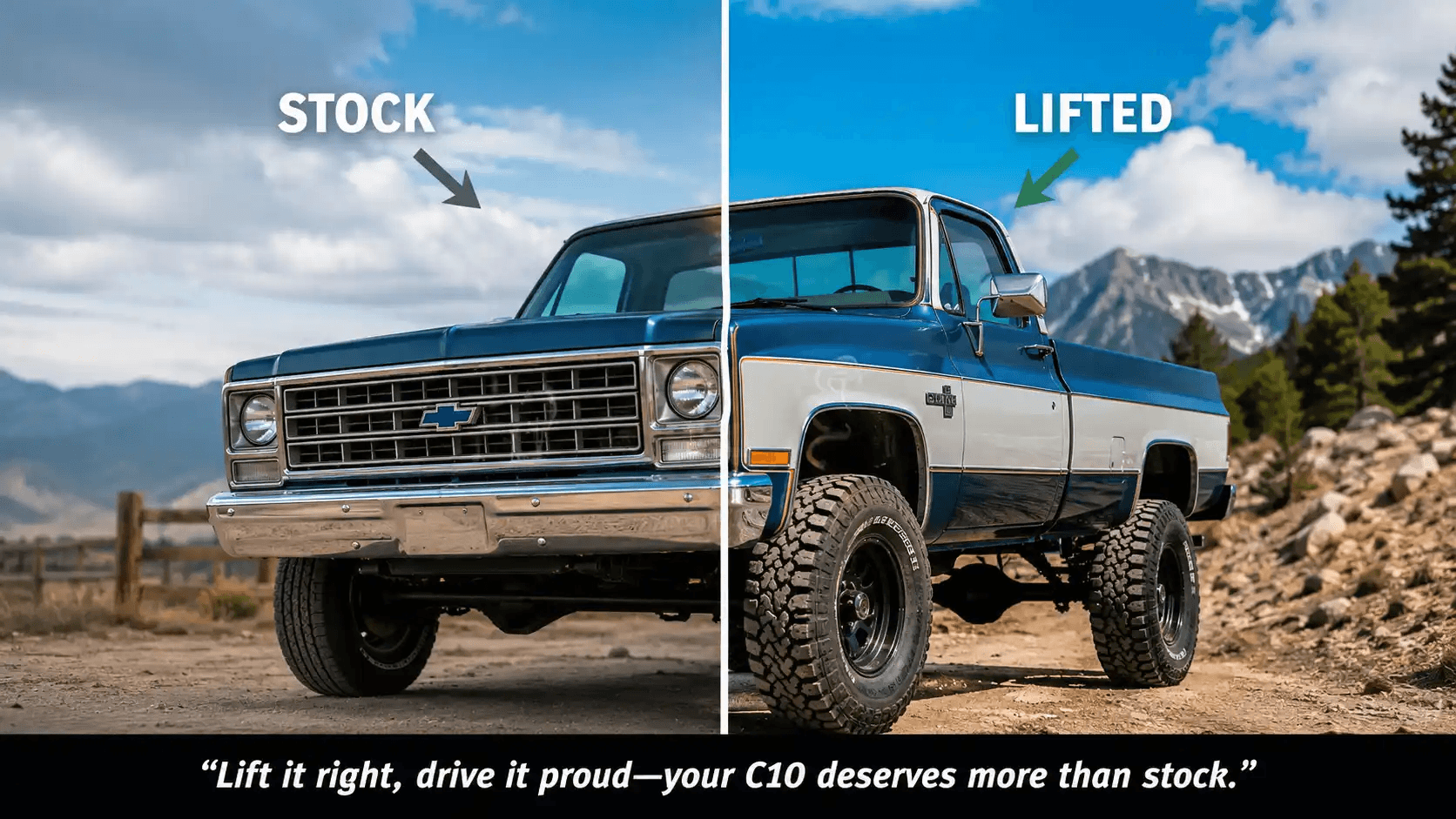
Plenty of sellers list square body parts. Very few actually engineer them. RideTrendz has spent over two decades building suspension components specifically for trucks and SUVs, and our C10 lineup reflects that depth of experience. When you search for the best lift kit for 1973-1987 Chevy C10, you deserve a company that has already solved the fitment, durability, and ride-quality problems before you ever open the box.
Here is what sets RideTrendz apart from generic suspension sellers:
- Designed in the USA, every kit is engineered domestically with quality control that overseas-only sellers cannot match.
- Direct drop-in fitment, no trimming, no surprise modifications, and no guesswork on bolt patterns.
- Real customer support, our team understands square body trucks because we build for them every day.
- Proven hardware, powder-coated, corrosion-resistant components built to outlast cheaper alternatives.
This is why so many square body owners land on RideTrendz when they need a C10 lift kit buy they can trust for years, not just for one season. You can browse our complete C10-specific lineup directly here: RideTrendz 1973-1987 Chevrolet C10 Lift Kits.
Installation: What to Expect
Most RideTrendz kits for the square body C10 are designed for bolt-on installation, which keeps the process accessible even for a confident home mechanic with basic tools. Here is the general installation flow for a typical coil spacer and rear block setup:
- Lift the truck and support it securely on jack stands at all four corners.
- Remove the front wheels, then disconnect the shocks and sway bar links as needed to relieve spring pressure.
- Install the front coil spacers per the included instructions, then reconnect the shocks and sway bar.
- Remove the rear wheels, support the rear axle, and swap in the new lift blocks with the supplied U-bolts.
- Torque every fastener to the included specification sheet, then lower the truck and bounce-test the suspension.
- Schedule a front-end alignment before extended driving, since ride height changes affect camber and toe.
This is also a good moment to evaluate your current shocks. If you are reusing factory dampers after installing the best lift kit for 1973-1987 Chevy C10 trucks, double-check their travel range against your new ride height. Our detailed comparison on lift shocks versus stock shocks after a lift walks through exactly when stock shocks are fine and when they will bind, bottom out, or wear prematurely.
Tools You Will Need
- Floor jack and a full set of jack stands rated for the truck's weight.
- Standard and metric socket sets, since square body trucks mix both fastener standards depending on the era and prior repair history.
- A torque wrench capable of reaching the specifications listed in your kit's instructions.
- Penetrating oil for any rusted hardware, especially on trucks that have spent decades exposed to road salt.
- A spring compressor if your specific kit calls for compressing the front coils during installation.
Budget roughly four to six hours for a leveling kit installation if this is your first time doing the job, and a full weekend for a complete suspension lift with rear blocks and shock upgrades included. Experienced home mechanics often complete the same jobs in half that time, but rushing through torque specifications or skipping the alignment step afterward is where most installation problems come from, not the actual wrenching itself.
Maintaining Your Lift Kit for the Long Haul
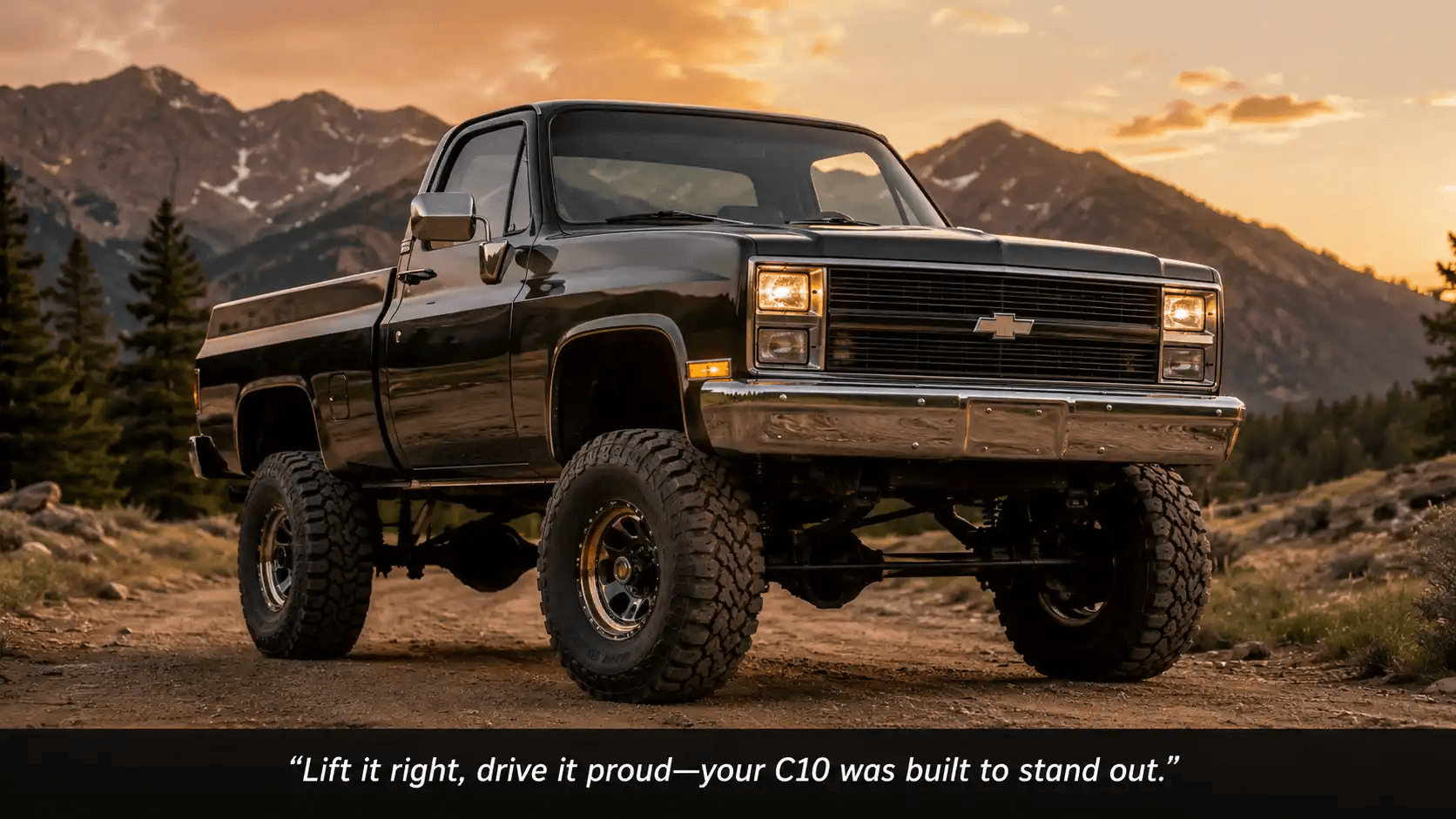
A properly installed lift kit should last for years, but a few simple maintenance habits go a long way toward protecting that investment. Square body trucks are old enough that any neglected component becomes a bigger problem than it would be on a newer vehicle, so staying ahead of routine checks matters more here than on a modern daily driver.
- Re-torque after the break-in period. Check all lift kit hardware again after the first 100 to 200 miles, since components settle slightly once they have been under real driving load.
- Inspect U-bolts annually. Rear block kits rely on U-bolt clamping force, and that force can diminish slowly over years of use, especially in trucks that see regular towing.
- Grease suspension pivot points. Shackles, sway bar links, and any greasable bushings should be serviced on a regular schedule to prevent premature wear.
- Watch for uneven tire wear. This is often the first visible sign that an alignment has drifted out of spec or that a component needs attention.
- Inspect powder coating annually. Catching chips or scratches early and touching them up prevents rust from taking hold on otherwise solid hardware.
None of this maintenance is complicated, but it is the difference between a lift kit that still rides great a decade later and one that starts developing squeaks, sag, or uneven wear within the first couple of years. RideTrendz components are built to handle normal wear gracefully, but no hardware on earth is exempt from basic upkeep on a truck this age.
How to Choose the Right Lift Kit for Your C10
With so many configurations available, narrowing down the best lift kit for 1973-1987 Chevy C10 trucks comes down to answering a few honest questions about how you actually use your truck.
- What tire size do you want? Bigger tires need more lift and possibly a gear ratio adjustment.
- Is this a daily driver or a weekend build? Daily drivers usually do better with a moderate 2-3 inch leveling setup.
- Do you tow or haul regularly? A rear block and shackle kit can correct sag without overcorrecting the front.
- What is your install comfort level? Bolt-on coil spacer kits are far more approachable than a full suspension overhaul.
Whatever your answers, RideTrendz has a configuration that fits. Our team built every option in the best lift kit for 1973-1987 Chevy C10 catalog around real-world square body use cases, not generic guesswork. Browse the full range and find your exact fit here: Shop 1973-1987 Chevrolet C10 Lift Kits at RideTrendz.
Budgeting for Your Lift
Cost is naturally part of this decision, and it is worth setting realistic expectations before you start shopping. A basic coil spacer and rear block combination typically represents the most affordable entry point into lifting a square body, while a complete suspension lift with matched shocks, spindles, and supporting hardware sits at the higher end of the spectrum. Neither option is objectively the right choice; the right choice is whichever one matches the goals you outlined when answering the questions above.
It is also worth factoring in a few line items that are easy to forget during the initial budgeting stage: a front-end alignment after installation, possibly extended brake lines on larger lifts, and a fresh set of tires sized to actually use the new clearance you have created. Skipping the alignment to save a little money up front almost always costs more later in uneven tire wear, so it is one expense worth building into the plan from day one rather than treating it as optional.
Why USA-Made Suspension Parts Matter for a 40-Year-Old Truck?
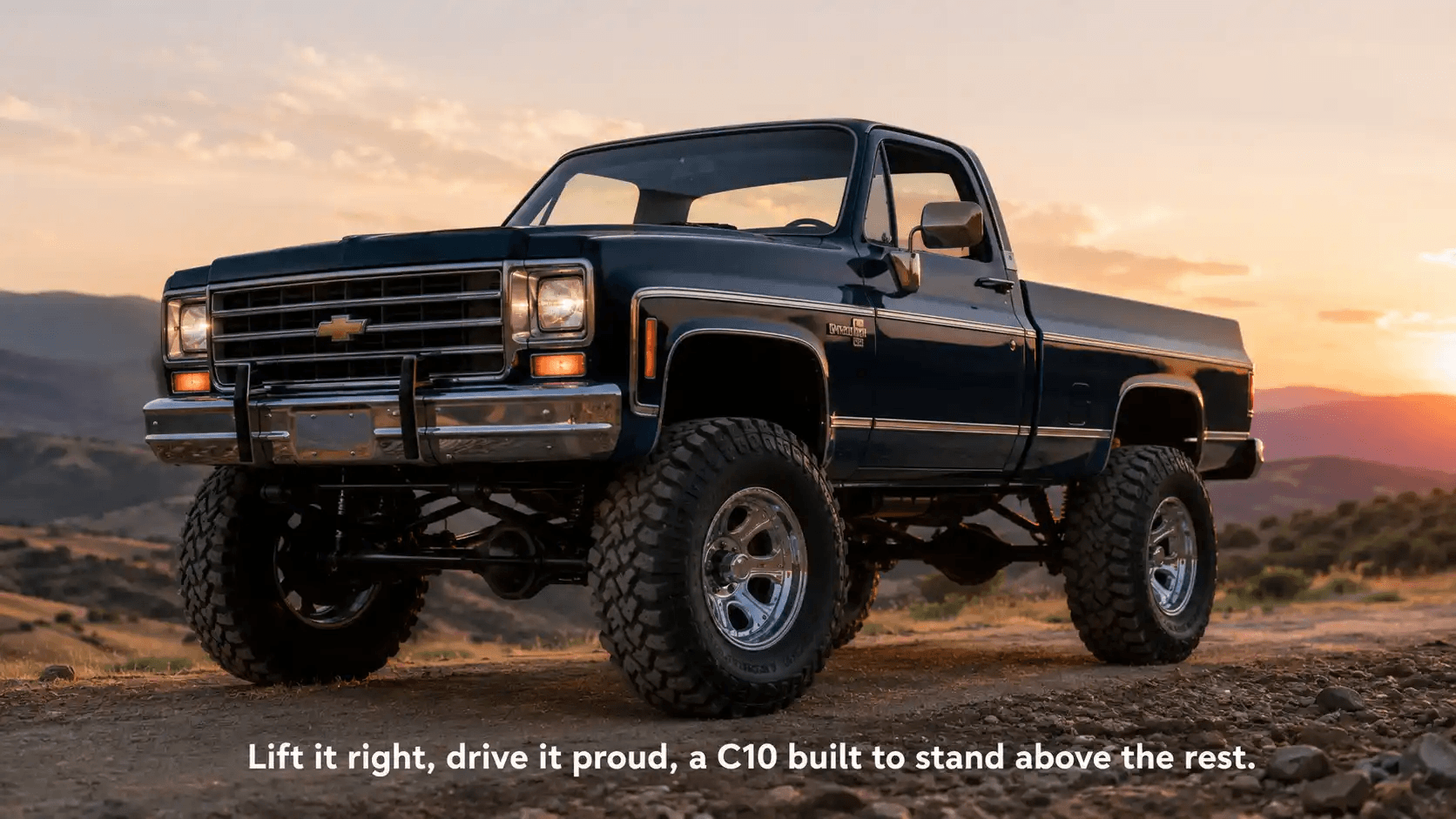
A square body C10 has already survived four decades of road salt, sun, and daily abuse. The last thing it needs is a lift kit that cuts corners. RideTrendz manufactures its components domestically, which means tighter tolerances, better metal quality, and powder coating that actually holds up to years of exposure.
This is part of why so many long-time square body owners specifically search out the best lift kit for 1973-1987 Chevy C10 from a USA manufacturer rather than gambling on an unknown import brand. Quality control matters even more on a vehicle this age, where every other component is already decades old and has less margin for error.
Domestic manufacturing also means faster answers when something does not look right out of the box. RideTrendz designs and produces these kits close to home, which means our team can speak directly to fitment questions, material specifications, and warranty concerns without the multi-week delays that come with overseas-only suppliers. For a part that directly affects your truck's handling and safety, that kind of accountability is not a nice-to-have. It is the baseline every suspension component should meet, and it is exactly the standard RideTrendz holds itself to on every kit we ship.
Conclusion
Choosing the best lift kit for 1973-1987 Chevy C10 trucks does not have to be complicated. Decide how much lift you actually need, pick a configuration that matches your driving habits, and choose a manufacturer that has already solved the fitment and durability questions for you. RideTrendz checks every one of those boxes with two decades of suspension engineering behind every kit we ship.
If you are ready to move forward with your 73-87 Chevy C10 suspension upgrade, explore the complete lineup and find the exact configuration for your truck: RideTrendz 1973-1987 Chevrolet C10 Lift Kits.
Frequently Asked Questions
1. What is the best lift kit for 1973-1987 Chevy C10 trucks?
The best lift kit for 1973-1987 Chevy C10 trucks depends on your goals. A 2-3 inch coil spacer kit suits daily drivers, while a 4-6 inch full suspension kit suits serious off-road builds.
2. How much lift can a square body C10 handle?
Most square body C10 trucks can safely run 2 to 6 inches of lift, depending on the kit type, tire size goals, and whether the front and rear are matched correctly.
3. Do I need new shocks after installing a lift kit?
In most cases, yes. Factory shocks are often too short for the new ride height and can bind or bottom out, so a matched shock is strongly recommended.
4. Will a lift kit affect my C10's alignment?
Yes. Any ride height change alters camber and toe angles, so a professional alignment after installation is required for safe, even tire wear.
5. Can I install a C10 lift kit myself?
Most coil spacer and rear block kits are bolt-on and doable with basic tools and jack stands. Full suspension kits take longer and may benefit from a professional install.